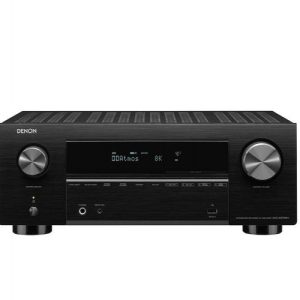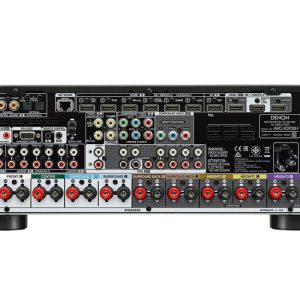
Denon AVC-X8500H AV Amplifier
3 999,00 €
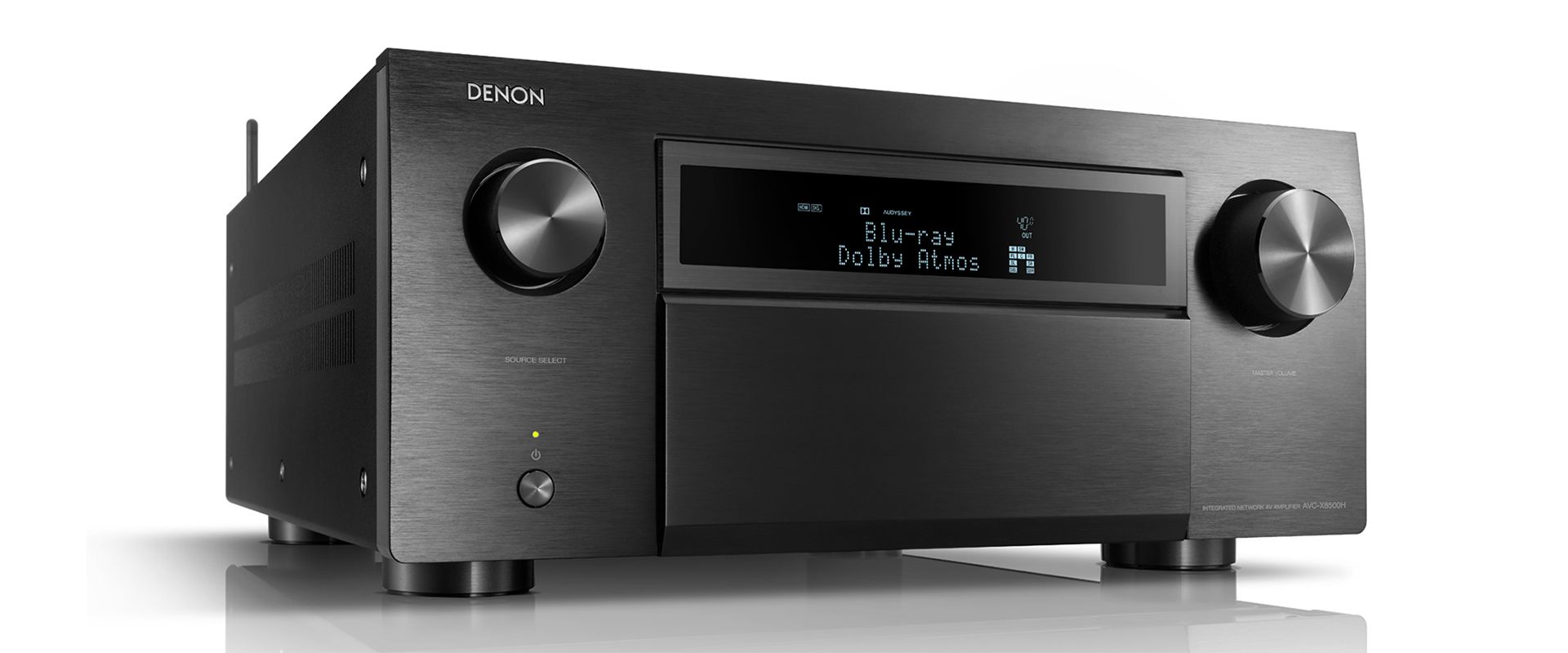
Denon AVC-X8500H AV amplifier is designed for a demanding multichannel home cinema system. Thirteen integrated power-amplifier channels allow supported Dolby Atmos layouts to be installed without an additional power amplifier. Eight HDMI inputs and three outputs simplify the connection of multiple video sources. Audyssey MultEQ XT32 helps match the channels to the room acoustics, while Wi-Fi and Bluetooth expand the choice of music sources.
Denon AVC-X8500H AV amplifier is designed for an advanced home cinema system with 13 integrated power-amplifier channels. It decodes Dolby Atmos, DTS:X and Auro-3D. As a result, the supported surround-sound layouts do not require an additional power amplifier.
Who it is for
This model is intended for a system larger than a conventional 5.1 or 7.1 setup. Thirteen amplification channels allow the main, surround and height speakers to be connected to a single unit. This reduces the need for additional power amplifiers and the associated connections.
Two-channel music can be played through the front speakers. However, the amplifier delivers its greatest practical value in a multichannel home cinema system. In a simple stereo system, most of its integrated channels would remain unused.
Construction and power channels
The amplifier uses a monolithic amplifier design with Denon-customised DHCT high-current output transistors. The unit is assembled by hand in Japan. Eight 192 kHz, 32-bit stereo D/A converters serve its 13.2-channel architecture.
The 150 W rating applies at 8 ohms over the 20 Hz-20 kHz frequency range with 0.05% THD. Two channels were driven for this measurement. The 210 W rating applies at 6 ohms and 1 kHz with 1% THD. In this case, one channel was driven.
These power figures cannot be compared directly. The load, frequency range, distortion limit and number of simultaneously driven channels are different.
Surround-sound layouts
Dolby Atmos can be configured in a 7.1.6 or 9.1.4 layout without an external power amplifier. A 7.1.6 system assigns six channels to height speakers. A 9.1.4 system uses more speakers at the main listening level and four height channels.
A 7.2.6 configuration with two subwoofer channels and six height channels is also possible. Auro-3D decoding supports up to 13.1 channels. Its three-layer layout can include top and centre-height channels.
Choose the final layout before running the cables. Count the required speaker positions and plan the installation of the height channels. This helps prevent unused cable runs or the need to alter the room later.
Video and HDMI connections
There are eight HDMI inputs, including one on the front panel. The front connection is convenient for an HDMI source that will only be connected temporarily. Permanent players and other sources are generally more practical to connect at the rear.
Three HDMI outputs provide additional options for routing the video signal. This is useful in a system with multiple displays. The video section supports 4K signals at 60 Hz with 4:4:4 colour sampling.
Supported video formats include HDR, BT.2020, Dolby Vision and HLG. HDCP 2.2 content protection is supported on every HDMI input. The source, display and HDMI cable must also support the selected video mode.
Network sources and audio files
Wi-Fi provides access to network functions and music libraries. Bluetooth is suitable for a direct connection to a nearby compatible source. Network music playback also provides access to files stored on the home network.
HEOS, AirPlay, internet radio, Spotify Connect, Tidal and Deezer formed part of the original network platform. HEOS was designed for distributing music across multiple rooms using other compatible HEOS devices. Current support for apps, accounts and regional services is not guaranteed.
The amplifier can play 2.8 and 5.6 MHz DSD, FLAC, ALAC and WAV files, allowing it to be used with a locally stored high-resolution music library. Alexa smart-home integration was also included, although its present regional availability and operation may vary.
Room correction and control
Audyssey MultEQ XT32 performs room-acoustic correction using measurements taken during calibration. Complete the calibration only after the speakers and listening positions have been placed in their final locations. If the speakers or furniture are moved, it is worth taking the measurements again.
Audyssey Sub EQ HT helps align two subwoofers before correction is applied to the complete system. Audyssey LFC is intended to reduce the transmission of low-frequency sound into adjoining rooms. Select this function when minimising disturbance to people in other rooms is important.
Dynamic EQ adjusts the tonal balance when listening at lower volume levels. After calibration, compare its effect from your normal listening position. Dynamic Volume reduces sudden differences in volume, making it useful when watching films or television quietly.
Position in the system and room
Housing thirteen power-amplifier channels in one enclosure requires unrestricted airflow. Do not cover the top of the unit or squeeze it between other heat-producing components. Plan the speaker arrangement around the selected audio format rather than simply using whichever wall positions are available.
When using two subwoofers, adjust them from the main listening position. Sub EQ HT can help make their operation more consistent.
Technical specifications
| Type | 13.2-channel home cinema AV amplifier |
|---|---|
| Integrated amplification | 13 power-amplifier channels |
| Rated power | 150 W per channel, 8 ohms, 20 Hz-20 kHz, 0.05% THD, two channels driven |
| Alternative power measurement | 210 W per channel, 6 ohms, 1 kHz, 1% THD, one channel driven |
| Amplifier construction | Monolithic design with Denon-customised DHCT high-current output transistors |
| Assembly | Hand-assembled in Japan |
| Surround-sound formats | Dolby Atmos, DTS:X and Auro-3D |
| Dolby Atmos layouts | Up to 7.1.6 or 9.1.4 without an additional power amplifier |
| Other configuration | Up to 7.2.6 |
| Auro-3D | Up to 13.1 channels, three speaker layers, top and centre-height channels |
| D/A converters | Eight 192 kHz, 32-bit stereo converters for the 13.2-channel architecture |
| Room correction | Audyssey MultEQ XT32, LFC and Sub EQ HT |
| Dynamic functions | Audyssey Dynamic Volume and Dynamic EQ |
| Video support | 4K 60 Hz, 4:4:4, HDR, BT.2020, Dolby Vision and HLG |
| HDMI inputs | Eight, including one on the front panel |
| HDMI outputs | Three |
| Content protection | HDCP 2.2 on every HDMI input |
| Wireless connectivity | Wi-Fi and Bluetooth |
| Network platforms | HEOS, AirPlay and network music playback |
| Original online services | Internet radio, Spotify Connect, Tidal and Deezer |
| Audio files | 2.8 and 5.6 MHz DSD, FLAC, ALAC and WAV |
| Smart-home function | Alexa integration |
FAQ
Does a 7.1.6 system require a separate power amplifier?
No. The thirteen integrated channels can drive this layout without an external power amplifier. The speakers must be assigned according to the selected configuration.
What is the difference between 7.1.6 and 9.1.4 layouts?
A 7.1.6 layout assigns more channels to sound above the listener. A 9.1.4 layout uses nine channels at the main listening level and four height channels.
Which HDMI input should be used for a temporary source?
Use the front HDMI input for a device that will be connected and disconnected frequently. The rear inputs are more convenient for permanently connected system sources.
Is this amplifier suitable for stereo music?
Yes. Music can be played through the two front speakers. However, the purchase is most worthwhile when a multichannel home cinema system is planned.
When should Audyssey calibration be repeated?
Run the calibration again after moving the speakers, subwoofers or main listening position. Significant changes to the furniture arrangement can also affect the result.
Can the 150 W and 210 W power ratings be compared directly?
No. The 210 W figure was measured under different conditions: 6 ohms, 1 kHz, 1% THD and one channel driven. It therefore cannot be compared directly with the 150 W rating.
Can HEOS be used in multiple rooms?
HEOS was designed to distribute music to compatible devices in different rooms. Current operation of the app and online services may depend on the region.
Related products