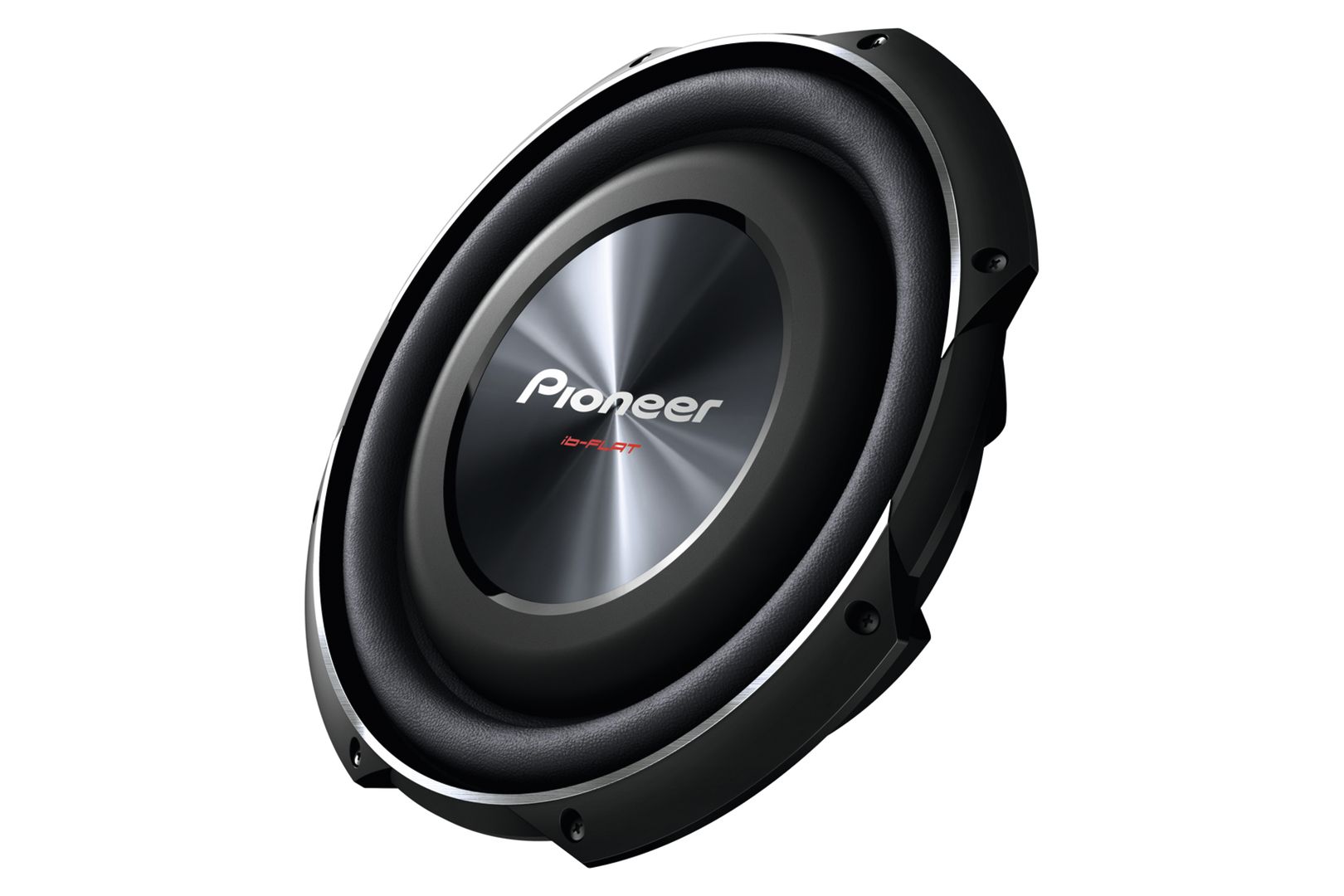


Pioneer TS-SW3002S4 Subwoofer
157,00 €
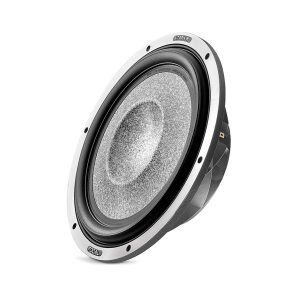
The Pioneer TS-SW3002S4 is a 30 cm subwoofer for car audio systems. It is installed in a separate, recommended 22.7-litre sealed enclosure. Its 400 W RMS rating and 4 Ω impedance help you select a suitable amplifier channel. A mica-reinforced IMPP cone works with a copper voice coil, while the 86 mm mounting depth simplifies planning a compact enclosure.
The Pioneer TS-SW3002S4 subwoofer is a 30 cm car audio subwoofer designed for installation in a separate enclosure. It is not a complete, ready-to-use subwoofer system. Its shallow mounting depth makes it easier to plan an enclosure where installation space is limited.
Power and system matching
The nominal and RMS power rating is 400 W. Use this figure when selecting an amplifier and adjusting its gain. The stated 1500 W maximum input power describes short-duration loading and must not be treated as the continuous operating power.
The 4 Ω nominal impedance is suitable for an amplifier channel designed to operate with this load. If you intend to use a bridged amplifier configuration, make sure the amplifier supports a 4 Ω bridged load.
The specified frequency response is 20-125 Hz, while the resonant frequency is 35 Hz. The 93 dB sensitivity rating can help you compare this subwoofer with other models when the measurements have been taken under equivalent conditions. The final bass character will also depend on the enclosure, filter settings, amplifier and installation position inside the vehicle.
Cone and magnetic system
The mica-reinforced IMPP cone combines a polypropylene base with a reinforcing filler that increases rigidity. A copper voice coil operates within a strontium ferrite magnetic system.
The voice-coil former material is identified as “Polymide”. A vented, projected pole yoke assists airflow through the magnetic system. The ib-FLAT construction is combined with an 86 mm mounting depth, an important consideration when designing a shallow enclosure.
Connection and adjustment
The push terminals accept speaker cable from an external power amplifier. This is a passive subwoofer driver and cannot be connected directly to an RCA or LFE line-level output. Maintain consistent polarity between the amplifier and subwoofer when connecting the speaker cable.
Set the low-pass filter on the amplifier or audio processor. Begin with a setting no higher than 125 Hz, then reduce it while listening to the system. The aim is to achieve a smooth transition between the subwoofer and the vehicle’s main speakers.
Start adjusting the amplifier gain from a low setting. Increase it until the sound is balanced, while avoiding audible distortion. If the system provides adjustable phase, compare both available positions from the driver’s seat and retain the one that produces the smoother transition.
Enclosure and installation position
A 22.7-litre sealed enclosure is recommended. It does not require a bass-reflex port, allowing the construction to remain compact. The enclosure design must also account for the 1.11-litre volume occupied by the subwoofer itself.
The mounting-hole diameter is 298 mm and the mounting depth is 86 mm. The overall dimensions of 326.6 × 326.6 mm determine the front-panel area required around the driver. Before building the enclosure, check the available clearance behind the mounting panel and around the outer edge of the subwoofer.
A sealed enclosure must be rigid and airtight. Air leaks will alter its intended acoustic behaviour. The surfaces of the boot and the direction in which the enclosure faces can also affect the result you hear. Try several orientations without changing the filter or gain settings so that each position can be compared under the same conditions.
The subwoofer weighs 5.92 kg, so the enclosure panel must be able to support its mass securely. The complete 22.7-litre volume must also be reconciled with the space available in the vehicle. The 0.039 ft³ displacement figure is useful when preparing a precise enclosure drawing.
Acoustic parameters
Thiele-Small parameters are provided for enclosure modelling. The listed Qts, Qms, Qes, Rms, Mms and Bl figures form the available set of calculation data. In enclosure-design software, select a sealed enclosure and use the recommended volume as the initial reference point. These parameters should not be judged individually as direct measures of sound quality or output level.
When calculating the actual internal volume, subtract the space occupied by the subwoofer and any internal bracing. Before finalising the drawing, check the mounting-hole diameter, mounting depth and overall dimensions once again. This connects the modelling result to the physical enclosure and the space available in the vehicle. If the software requests a parameter that is not included in the table, do not estimate it or substitute data taken from another model.
Technical specifications
| Model | Pioneer TS-SW3002S4 |
|---|---|
| Type | Car audio subwoofer |
| Nominal diameter | 30 cm (12 inches) |
| Nominal impedance | 4 Ω |
| Frequency response | 20-125 Hz |
| Resonant frequency Fs | 35 Hz |
| Nominal input power | 400 W |
| RMS power | 400 W |
| Maximum input power | 1500 W |
| Maximum music power | 1500 W |
| Sensitivity | 93 dB |
| Cone | Mica-reinforced IMPP |
| Voice coil | Copper |
| Voice-coil former | “Polymide” |
| Pole yoke | Vented and projected |
| Construction | ib-FLAT |
| Terminals | Push type |
| Recommended enclosure | Sealed |
| Recommended enclosure volume | 22.7 l (0.8 ft³) |
| Dimensions | 326.6 × 326.6 × 103.6 mm |
| Mounting-hole diameter | 298 mm |
| Mounting depth | 86 mm |
| Weight | 5.92 kg |
| Magnet material | Strontium ferrite |
| Force factor Bl | 17 Tm |
| Speaker displacement | 1.11 l (0.039 ft³) |
| Total Q factor Qts | 0.61 |
| Mechanical resistance Rms | 4.29 Ns/m |
| Mechanical Q factor Qms | 13.95 |
| Moving mass Mms | 243 g |
| Electrical Q factor Qes | 0.64 |
FAQ
Is this a complete subwoofer system?
No. It is a separate passive subwoofer driver that must be installed in an enclosure. It also requires an external power amplifier.
What amplifier should I choose?
The amplifier channel must be able to operate with the subwoofer’s nominal load. Match the amplifier using the RMS rating rather than the maximum music power figure.
How is the subwoofer connected?
Speaker cables from the amplifier connect to the push terminals. A line-level RCA signal cannot be connected to these terminals.
What type of enclosure does it require?
It is intended for a sealed enclosure. When designing the interior, allow for the volume occupied by the subwoofer and ensure that the finished enclosure is airtight.
Is it suitable for a stereo or home cinema system?
This driver is designed for a car audio system and is not an active home subwoofer. Using it in another passive system would require a separate, correctly matched amplifier and filter.
Can two subwoofers be connected to one amplifier?
Yes, provided that the amplifier supports the resulting load. Two subwoofers connected in parallel will present a 2 Ω load, while a series connection will produce an 8 Ω load.
What should I measure before building the enclosure?
Check the mounting hole, installation depth and the space required by the outer frame. This helps prevent obstructions behind the front panel and ensures that the panel has sufficient surface area.