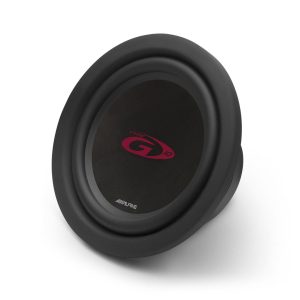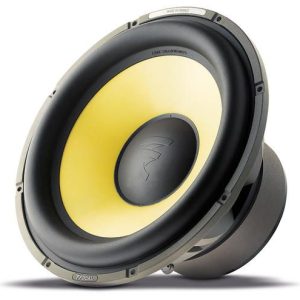
Pioneer TS-SW2502S4 Subwoofer
144,00 €
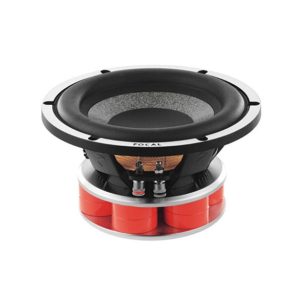
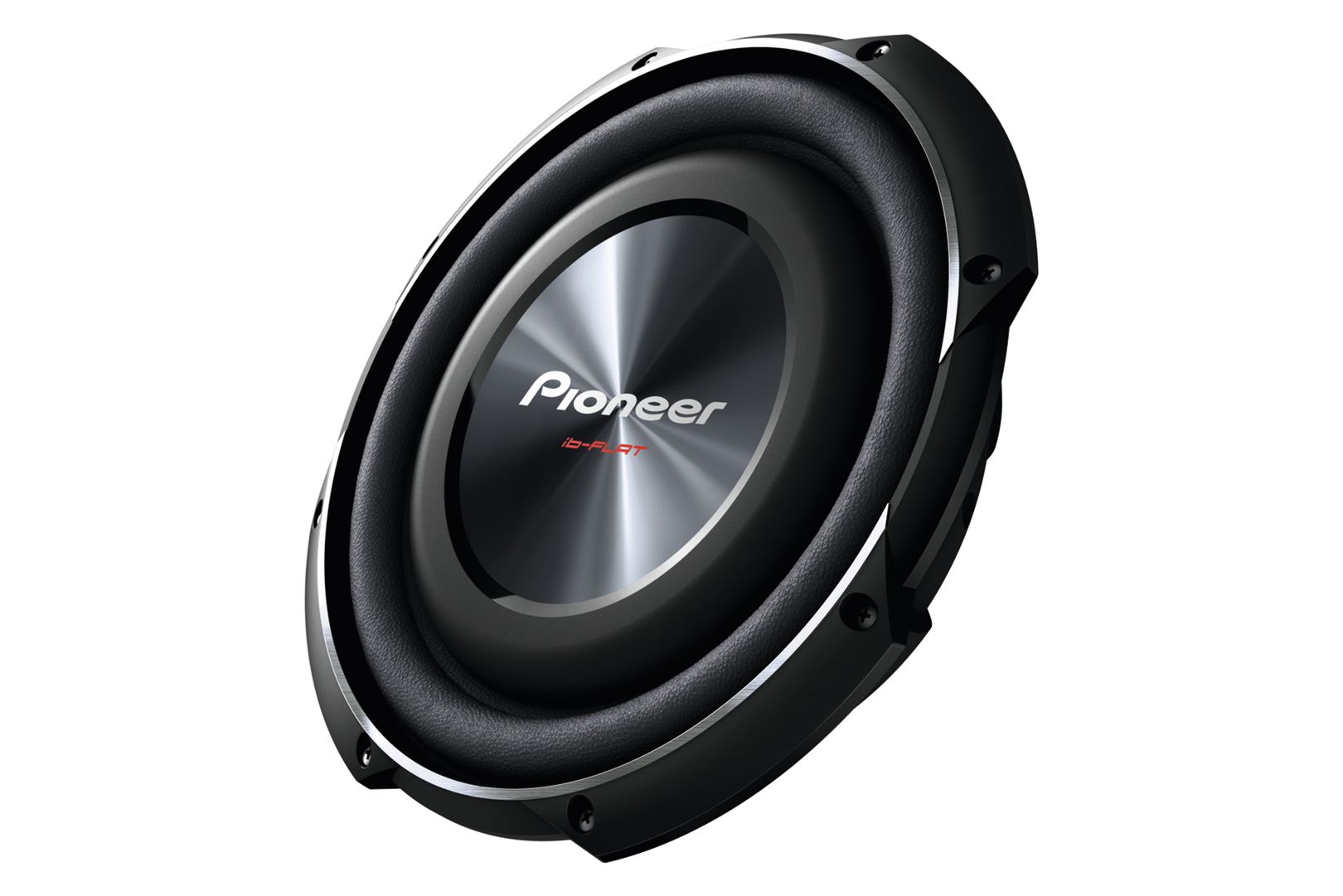
Pioneer TS-SW2502S4 is a 25 cm passive automotive subwoofer for installations with limited depth. Its 78 mm mounting depth makes enclosure planning easier, although space is still required for the terminals and cables. The 4 Ω voice coil is designed for a corresponding amplifier load. A recommended 17-litre sealed enclosure provides a clear basis for planning the installation, while the 300 W nominal power rating is the key figure when choosing suitable amplifier headroom.
Pioneer TS-SW2502S4 is a shallow-mount 25 cm automotive subwoofer designed for installation in a separate enclosure. Its 4 Ω impedance is intended for an amplifier channel that can operate reliably with this load. The low-profile design is useful where installation space inside the vehicle is limited.
Purpose and System Components
This is a passive, single-voice-coil model for an in-car audio system. It requires an external power amplifier and a properly designed enclosure. Its 20-125 Hz frequency range must be coordinated with the system’s filters and other speakers.
This model is not a ready-to-use powered subwoofer for a home stereo system. In a vehicle, the enclosure, amplifier and filtering are selected as separate parts of the complete audio system.
Construction and Materials
The cone is made from mica-reinforced IMPP. The reinforcement helps the cone retain its rigidity while moving. The copper voice coil is wound on a “Polymide” former, while the magnetic system uses a strontium ferrite magnet.
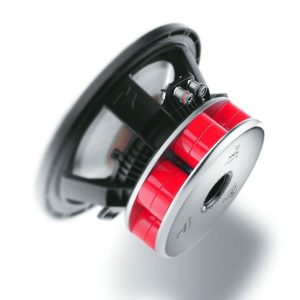
The vented, extended pole yoke provides an airflow path around the moving voice coil. The coil has a diameter of 48 mm and a height of 23 mm.
Connections and Amplifier Load
Push terminals allow the speaker cable to be connected without screw-type fittings. Connect the positive and negative conductors with consistent polarity throughout the system. This helps prevent phase mismatch with the other speakers.
The amplifier channel must operate reliably with the nominal load stated in the specifications. An RCA output or the subwoofer output of an AV receiver cannot power this speaker directly. The driver requires an amplified, speaker-level signal.
Choosing Amplifier Power
Choose amplifier power with reference to the nominal input power. The maximum power figure describes a short-term limit rather than a continuous operating level. The 1200 W value should therefore not be used as the main criterion when selecting an amplifier.
Set the amplifier’s gain control so that the amplifier does not drive the subwoofer with a distorted signal. A higher gain setting does not, by itself, indicate a safe operating level.
Enclosure and Installation Position
A 17-litre sealed enclosure is recommended. It must be airtight and mechanically rigid. An inaccurate volume or an air leak will alter the intended performance of the speaker.
The Vas parameter is not a direct enclosure-volume recommendation. It is used together with other Thiele and Small parameters for acoustic modelling.
The mounting opening requires a diameter of 249 mm. The outside width and height are both 277.5 mm. The 78 mm mounting depth reflects the driver’s shallow construction. Space must still be left behind the basket for the terminals, cables and cable bends.
The cone and its surround must be able to move freely at the front. The mounting surface should be flat so that the speaker frame is not distorted when secured.
Filtering and Initial Setup
The speaker does not contain an integrated amplifier or built-in controls. Filtering, phase and signal level must be adjusted on an external amplifier or audio processor.
As a starting point, the low-pass filter can be set to around 80 Hz. The crossover point can then be adjusted according to the capabilities of the front speakers and the continuity of the bass response. Begin with bass boost switched off.
If the amplifier provides a phase switch, compare both settings from the driver’s seat. Select the position that produces a smoother transition between the subwoofer and the front speaker system.
Purpose of the Thiele and Small Parameters
These parameters are used when calculating an enclosure and analysing the moving system. Fs, Qes, Qms and Qts help model resonance and damping. Cms, Mms, Rms and Sd describe the suspension, moving mass, mechanical losses and radiating area.
Xmax specifies the cone’s linear one-way excursion. Revc is the voice coil’s DC resistance, not the amplifier’s nominal load. F0 and Q0 in the enclosure apply to the driver when installed in the specified enclosure configuration.
Technical Specifications
| Product type | Passive automotive subwoofer |
| Number of voice coils | 1 |
| Nominal diameter | 25 cm / 10 inches |
| Impedance | 4 Ω |
| Frequency range | 20-125 Hz |
| Lowest resonant frequency, Fs | 42 Hz |
| Dimensions | 277.5 × 277.5 × 93.2 mm |
| Mounting depth | 78 mm |
| Mounting-hole diameter | 249 mm |
| Weight | 3.55 kg |
| Nominal input power | 300 W |
| Maximum input power | 1200 W |
| Cone material | Mica-reinforced IMPP |
| Voice coil | Copper |
| Voice-coil former material | “Polymide” |
| Pole yoke | Vented and extended |
| Terminals | Push terminals |
| Magnet | Strontium ferrite |
| Recommended enclosure | Sealed, 17 l / 0.6 ft³ |
| Qes | 1.06 |
| Qms | 12.04 |
| Qts | 0.97 |
| Cms | 0.000082 m/N |
| F0 in enclosure | 61 |
| Q0 in enclosure | 1.4 |
| Vas | 18.5 l / 0.65 ft³ |
| Mms | 171 g |
| Rms | 3.79 Ns/m |
| Sd | 0.0399 m² / 0.43 ft² |
| Xmax | 6.5 mm / 0.26 inch |
| Vd | 0.26 l / 0.00916 ft³ |
| Hvc | 23 mm / 0.91 inch |
| Hag | 10 mm / 0.39 inch |
| Voice-coil diameter | 48 mm |
| Revc | 3 Ω |
| Levc at 2000 Hz | 1.91 mH |
| Zmax | 40.99 Ω |
| Efficiency | 0.13% |
| Magnetic flux density | 5600 G |
| Sp. Displacement | 0.68 l / 0.024 ft³ |
| Mg.Wt. | 1030 g |
| BI | 12 Tm |
FAQ
Can this speaker be used without a separate amplifier?
No. This passive speaker requires a power amplifier that supplies a filtered, speaker-level signal.
Can it be connected directly to an RCA output?
No. An RCA connection carries a line-level signal. A suitable power amplifier must be installed between that output and the speaker.
How should it be integrated into a car stereo system?
Apply low-pass filtering to the subwoofer channel through the amplifier or processor. If possible, apply a high-pass filter to the front channels.
What is the recommended initial setup procedure?
Switch off bass boost and begin with a low input level. Then adjust the filter, level and phase while listening from the driver’s seat.
Is this model suitable for a home cinema AV receiver?
Not directly. The subwoofer output of an AV receiver would require a separate power amplifier and an enclosure designed for this speaker.
Can two of these speakers be used together?
Connecting two units in parallel would produce a total load of 2 Ω, while a series connection would produce 8 Ω. The wiring arrangement must suit the amplifier’s operating requirements.
Does Vas indicate the required enclosure volume?
No. Vas is a modelling parameter. Use the separately stated sealed-enclosure recommendation when selecting the enclosure size.
Is mounting depth the only measurement that needs to be considered?
No. You must also account for the mounting opening, outside frame, terminal position and the bending radius of the cables.