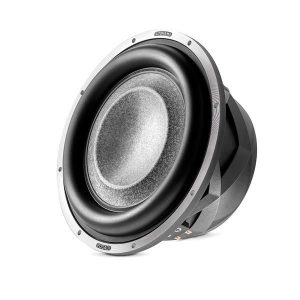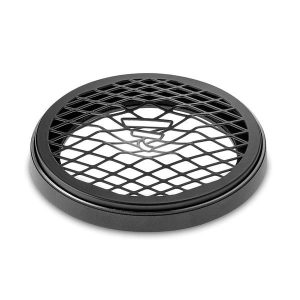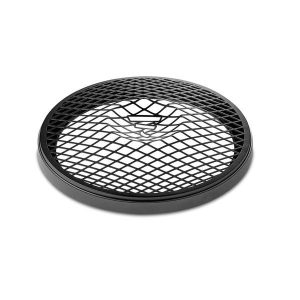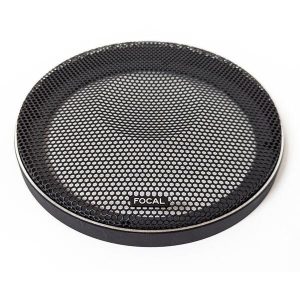
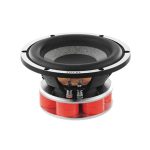
Focal E 30 KX Car Subwoofer
499,00 €
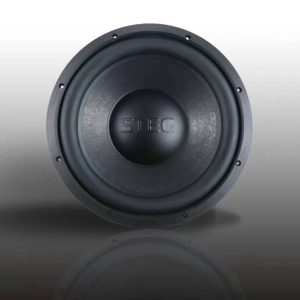
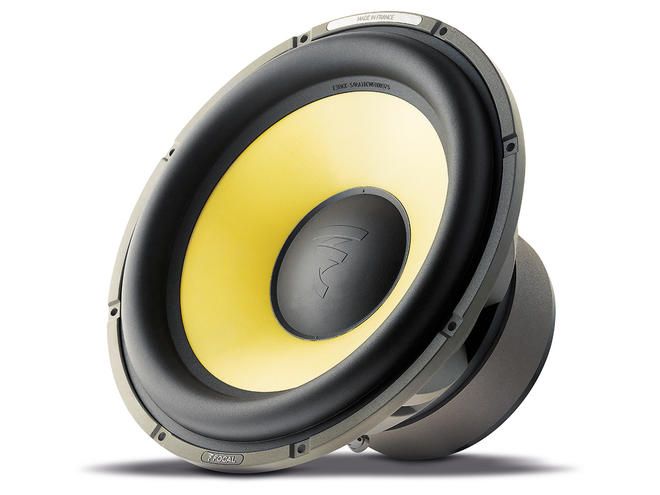
Focal E 30 KX is a 12-inch subwoofer for a custom in-car audio system. Its dual 4 Ω voice coils allow a 2 or 8 Ω connection to suit the amplifier. The 800 W RMS rating is intended for a high-power bass channel, while the composite K2 Power “W” sandwich cone balances structural rigidity and mass.
Focal E 30 KX is a 12-inch car subwoofer designed for a custom bass system. It is installed in a separately selected enclosure and connected to an external power amplifier. Its dual voice coils allow the total load to be matched to the amplifier’s capabilities.
This model is suitable for buyers building a system from separate components. It is not an active subwoofer with a built-in amplifier. The enclosure, amplifier and wiring configuration must be selected as parts of one complete system.
Cone and voice-coil construction
The K2 Power “W” composite sandwich cone combines several structural layers. This construction is designed to balance cone rigidity and mass. That balance is important when controlling the high-excursion movement required to reproduce low-frequency signals.
The voice coil has a diameter of 65 mm and a height of 55 mm. These measurements describe the subwoofer’s electromechanical construction. They do not remove the need to match the amplifier power, final impedance and enclosure correctly.
The nominal diameter of 300 mm helps indicate the overall scale of the installation. However, it is not the mounting-hole measurement. Exact fixing dimensions and mounting-depth information are required before designing the enclosure.
Voice-coil wiring
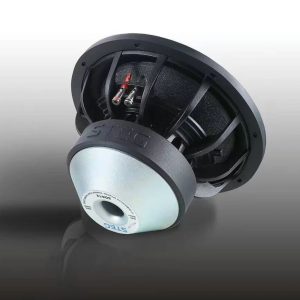
The subwoofer has two 4 Ω voice coils. Wiring them in parallel presents the amplifier with a 2 Ω load. Wiring them in series produces an 8 Ω load. The correct option depends on the impedance supported by the amplifier and the power it delivers into that specific load.
A parallel connection will generally allow more amplifier power to be used. However, the amplifier must be stable when operating into a 2 Ω load. An 8 Ω series connection places a lighter load on the amplifier, but the amplifier will usually deliver less power.
Both coils must receive the same signal and be connected with matching polarity. Reversing the polarity of one coil would make the coils work in opposing directions. This would interfere with normal cone movement and prevent the system from operating correctly.
If more than one of these subwoofers is used, the system’s total impedance must be recalculated. The final load will depend on how the coils of each subwoofer are wired and how the subwoofers themselves are connected to one another.
Understanding power and measurements
The rated RMS power is the main figure to use when choosing an amplifier and matching the system. Select the amplifier with reference to the 800 W RMS rating. Do not treat the 1600 W figure as a continuous-power specification.
Sensitivity is measured using an input of 2.83 V at a distance of one metre. When comparing this subwoofer with another model, the measurement conditions must be considered. A result stated at 2.83 V/1 m is not directly equivalent to a measurement taken at 1 W/1 m.
The specified 25-500 Hz frequency range defines the limits of the frequencies reproduced. The final result in a vehicle will also be affected by the enclosure, cabin acoustics, filters and installation position. The upper limit of this range is not a required crossover setting.
System matching
When configuring the system, first choose an amplifier that operates reliably with the selected 2 or 8 Ω coil connection and provides power appropriate for the subwoofer’s 800 W RMS rating. Design the enclosure using the electromechanical parameters and exact installation dimensions specified for this model, as the 12-inch diameter alone is not enough. Set the final system level only after these elements have been matched.
Enclosure and installation position
The enclosure type and volume determine the load placed on the subwoofer and influence the final frequency response. The 12-inch diameter alone is not sufficient for calculating an enclosure. The design requires the electromechanical parameters and precise mounting dimensions for this specific model.
Inside a vehicle, the result is affected by the direction of the enclosure, its distance from body panels and the shape of the luggage compartment. Test several enclosure orientations before fixing it permanently in position. Leave enough free space for the cone to move and protect it from being pressed or obstructed by cargo.
Technical specifications
| Model | Focal E 30 KX |
|---|---|
| Type | Car subwoofer |
| Speaker diameter | 12 inches (300 mm) |
| Voice-coil configuration | Dual 4 Ω voice coils |
| Voice-coil diameter | 2 9/16 inches (65 mm) |
| Voice-coil height | 2 3/16 inches (55 mm) |
| Cone | K2 Power “W” composite sandwich cone |
| Rated power | 800 W RMS |
| Maximum power | 1600 W |
| Sensitivity | 86.5 dB, measured at 2.83 V/1 m |
| Frequency range | 25-500 Hz |
FAQ
What amplifier impedance is suitable for this subwoofer?
The amplifier must operate reliably with the selected final load. Connecting the coils in parallel produces 2 Ω, while connecting them in series produces 8 Ω. Assess the amplifier’s power output at the impedance you intend to use.
When should I choose parallel voice-coil wiring?
Choose it when the amplifier supports a 2 Ω load and can control the subwoofer properly. This connection will usually allow a larger share of the amplifier’s available power to be used.
Which power figure matters most when choosing an amplifier?
Use the rated RMS power because it is the relevant figure for matching continuous operation. The maximum-power figure is not an appropriate basis for selecting the amplifier’s long-term output.
Can the subwoofer be installed in any 12-inch enclosure?
No. The nominal diameter does not define the required enclosure volume, mounting opening or installation depth. The enclosure must be designed around the parameters of this particular model and the space available in the vehicle.
How should I choose the low-pass filter setting?
Begin near the lower reproduction limit of the vehicle’s main speakers. Make adjustments while listening from the driver’s seat. The aim is a smooth transition without a gap in the frequency response or an excessive overlap.
Is this model suitable for a home stereo or cinema system?
This is a car subwoofer driver, not a complete active home subwoofer. Using it in a home system would require a specially designed enclosure, a suitable amplifier and separate filtering.
Can two of these subwoofers be used in one system?
A system with multiple subwoofers can be designed, but the total load presented to the amplifier will change. Before making the connections, calculate the combined impedance produced by all four voice coils.
Can its sensitivity be compared directly with figures for other models?
Yes, provided that the models being compared were measured under the same conditions. This model’s result is stated at 2.83 V/1 m, so figures obtained using different measurement conditions can be misleading.