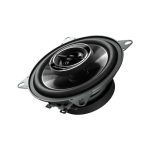
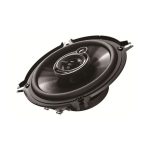
Pioneer TS-G1332i Coaxial Speaker
30,00 €
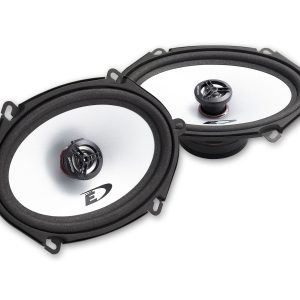
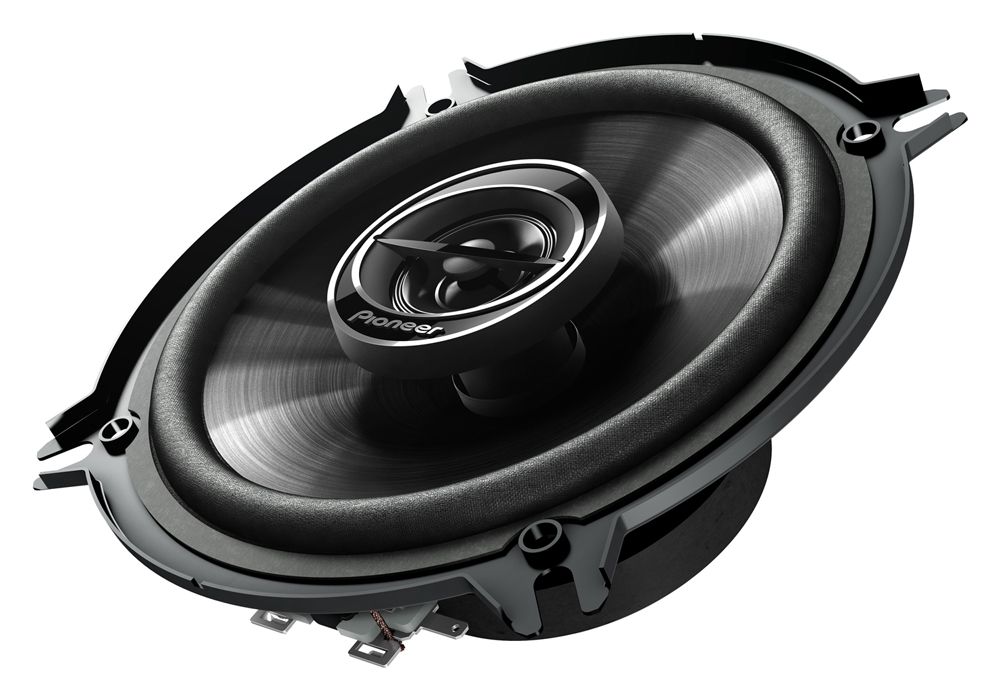
The Pioneer TS-G1332i is a 13 cm two-way coaxial speaker for car audio systems. Its 4 Ω impedance allows it to be matched with a head unit or amplifier that supports this load. The IMPP composite cone reproduces the lower-frequency range, while the 30 mm PET element handles the midrange. Installation requires a 121 mm cutout and 45.5 mm of mounting depth.
The Pioneer TS-G1332i coaxial speaker is a 13 cm two-way model designed for car audio systems. It fits into a 121 mm diameter cutout and requires at least 45.5 mm of clearance behind the mounting surface. Its 4 Ω impedance is an important consideration when matching the speaker to a head unit or amplifier output.
The model has a rated power of 35 W and a maximum input power of 240 W. Rated power is the more useful figure for everyday system matching. The maximum power figure should not be treated as a continuous power-handling rating.
Two-way coaxial design
In a coaxial design, both speaker elements are arranged on the same axis. This allows two frequency bands to be reproduced from a single 13 cm mounting position. The layout is useful when replacing one factory-installed speaker with another model of the same general format.
The 13 cm designation refers to the speaker’s nominal size, not its actual installation dimensions. Compatibility therefore cannot be determined from the nominal size alone.
Cone, voice coil and magnet
The woofer uses an IMPP composite cone. This is the main surface that moves air for this driver. In the store description, the 30 mm PET element is identified as the midrange driver.
The copper voice coil converts the electrical signal into mechanical movement of the cone. The coil is wound on a polyimide former. A ferrite magnet produces the magnetic field required for the voice coil to operate.
Power and electrical matching
The speaker output of the selected car head unit or amplifier must support a 4 Ω load. One speaker with the appropriate impedance should be connected to each channel. Do not connect several speakers to one channel without first calculating the resulting total load.
The 35 W rated power is a more practical guide for amplifier selection than the 240 W maximum input power. Amplifier distortion can also damage a speaker. Reduce the volume if you hear harshness, crackling or obvious compression of the sound.
The 86 dB sensitivity helps indicate how much amplifier power may be needed to achieve the desired listening level. Adequate power headroom is useful when higher volume is required, as it helps avoid operating the source continuously at the edge of its capabilities.
Frequency reproduction and system tuning
The specified frequency response extends from 34 to 25,000 Hz. The lowest resonant frequency is 95 Hz. The final bass performance inside a vehicle will also be affected by the rigidity and sealing of the mounting position, as well as the acoustics of the cabin.
After installation, begin with neutral tone and equaliser settings on the head unit. This makes differences between the two channels easier to hear. Only then should you adjust the bass, midrange and treble to suit the listening position.
Installation in a vehicle
Before installation, measure more than the diameter of the existing opening. Check the available space behind the mounting surface as well. Insufficient depth can prevent the speaker from fitting even when the nominal size appears to match.
Keep the polarity consistent on both channels when making the connections. Reversed polarity on one speaker can weaken bass reproduction between the left and right sides. After connecting the speakers, use the head unit’s balance control to compare the two channels.
A weight of 0.43 kg is stated in the description, but it is not specified what this measurement applies to. The mounting surface must hold the speaker securely and should not move with the cone. Loose trim components may produce unwanted vibrations.
Use in a stereo system
Matching speakers are recommended for the left and right channels of a car stereo system. Using the same model on both sides helps maintain a similar tonal character. The number of units included in the package should not be assumed solely from the requirements of a stereo installation.
This is a car audio speaker, not a home cinema loudspeaker. If the system includes a separate subwoofer, adjust its level only after the main speakers have been installed.
Technical specifications
| Model | Pioneer TS-G1332i |
|---|---|
| Type | Two-way coaxial speaker |
| Nominal size | 13 cm |
| Impedance | 4 Ω |
| Frequency response | 34-25,000 Hz |
| Sensitivity | 86 dB |
| Lowest resonant frequency | 95 Hz |
| Maximum input power | 240 W |
| Rated power | 35 W |
| Woofer material | IMPP composite cone |
| Midrange driver size | 30 mm |
| Midrange driver material | PET |
| Voice coil material | Copper |
| Voice coil former | Polyimide |
| Magnet | Ferrite |
| Mounting cutout diameter | 121 mm |
| Mounting depth | 45.5 mm |
| Weight | 0.43 kg (application not specified) |
FAQ
Will this speaker fit any 13 cm mounting position?
Nominal size alone does not determine compatibility. The mounting position requires a 121 mm cutout and at least 45.5 mm of available depth.
What type of output can it be connected to?
Connect it to a car head unit or amplifier speaker output that supports a 4 Ω load. A line-level RCA output cannot power the speaker directly.
Which power rating should I use when choosing an amplifier?
The 35 W rated power and 4 Ω impedance are the most important figures for matching an amplifier. The 240 W figure describes the maximum input power.
Is a separate car amplifier required?
No, provided that the head unit’s speaker output supports a 4 Ω load. A separate amplifier is useful when more power headroom is needed.
How can I maintain a proper stereo image?
Use matching speakers on the left and right and keep their polarity consistent. After installation, compare the channels using the balance control.
Does the 34 Hz lower limit mean that a subwoofer is unnecessary?
No. The final output at the lowest frequencies depends on the installation and the acoustics of the vehicle cabin. A separate subwoofer is intended to provide a higher output level in the low-frequency range.
Is this model intended for a home cinema system?
No. It is a 4 Ω coaxial speaker designed for a car audio system. Home cinema speakers have a different construction and installation purpose.