
Steg MT 650CII Speakers
280,00 €
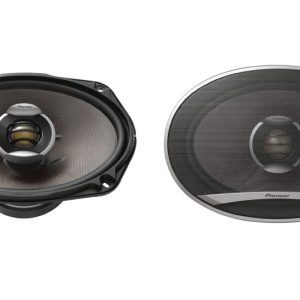
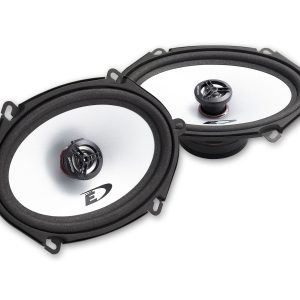
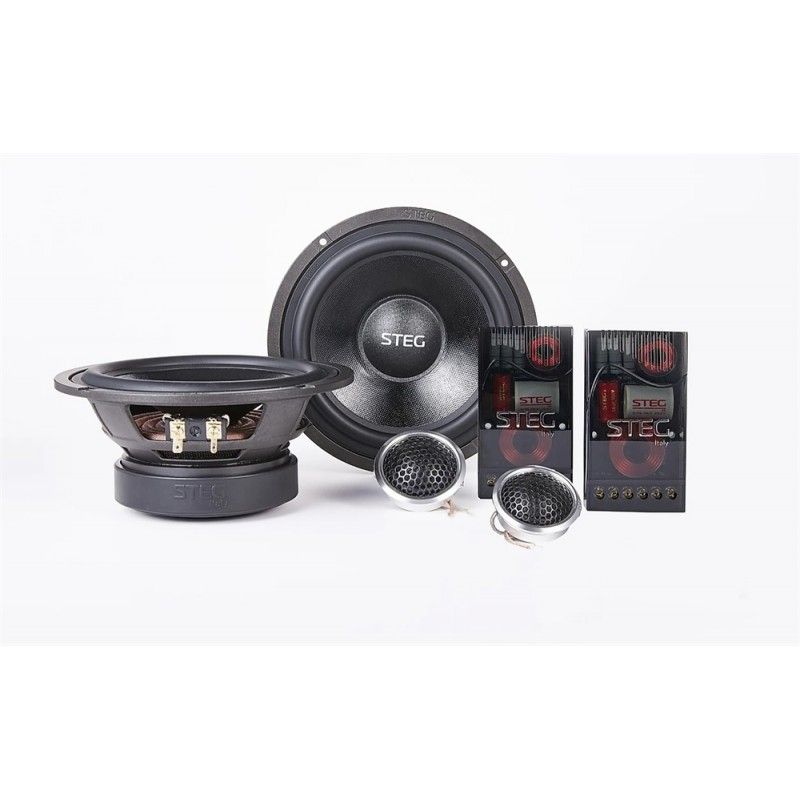
Steg MT 650CII speakers are designed for car audio systems. Their 2.6 Ω impedance matters when choosing an amplifier channel, while the 74 mm mounting depth matters when planning a position in the door. The midwoofer has a coated paper cone and a ventilated cast aluminium basket. The tweeter uses a 28 mm silk dome. Protective grilles are not included.
Steg MT 650CII speakers are designed for a car audio system, with a midwoofer and a tweeter. Two measurements deserve attention before installation: the 2.6 Ω impedance when choosing an amplifier channel, and the 74 mm mounting depth when planning a position in the door.
Speaker construction
The midwoofer has a coated paper cone and a ventilated cast aluminium basket. Openings in the basket provide a path for air to move behind the speaker. When planning the installation, check that there is room for the basket behind the mounting surface and that it will not rest against any part of the door.
The 28 mm tweeter has a silk dome and a copper cap. Its position in the car affects what the driver and passenger hear. Before fastening it permanently, try a few directions and listen from your usual seating position.
Check both sides of the proposed mounting location before drilling or modifying the door trim. Allow room for the wiring as well as the speaker itself. Secure the wires so they cannot interfere with the moving window glass or its mechanism.
Choosing and connecting an amplifier
Before connecting the speakers, check the minimum speaker impedance allowed by your chosen amplifier channel. 2.6 Ω must fall within that channel’s permitted load range. If a channel is specified only for a 4 Ω load, do not treat the two ratings as equivalent.
100 W RMS is the speakers’ power rating. It does not mean that the amplifier must provide exactly 100 W per channel. When setting up the system, raise the level gradually and stop if you hear clear distortion.
If the amplifier has an input sensitivity control, start with a lower gain setting and adjust it while listening at your usual source volume. If frequency filter controls are available, set them according to the instructions for the filters and other equipment in your system. The information for this model does not specify one frequency setting that suits every installation. If there is a bass boost control, leave it off initially so it is easier to hear whether distortion appears as the volume rises.
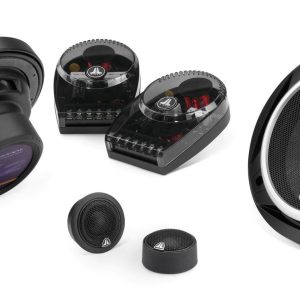
The tweeter needs frequency filtering suited to it. Plan that filtering around the equipment you are using before connecting the tweeter to an amplifier. Do not use this model’s specifications to guess the filter connections or assume that a filter is included.
If you use a passive crossover, connect its input and speaker outputs according to the diagram for that crossover. If an active processor or amplifier filters divide the frequencies, give each separately amplified speaker an appropriately filtered channel. In either arrangement, check wire polarity and connections before switching on the system. This helps you identify connection mistakes that might otherwise be difficult to distinguish from unsuitable filter settings.
Finding a mounting position in the car
Measure the 74 mm mounting depth against the space behind the intended mounting surface. In a door, leave clearance for the window mechanism and moving glass. An opening in the front trim alone cannot tell you whether the speaker will fit.
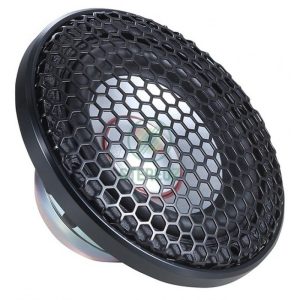
Before fastening the midwoofer, check its position relative to the door trim. Its cone must be able to move without touching the trim. Protective grilles are not included, so consider them separately if the speaker will be exposed.
Choose the tweeter position with both front seats in mind. Place it temporarily in the proposed location and listen to the same recording from the driver’s and passenger’s seats. If you change its direction, compare the sound at the same volume. Settle on a final position only after checking that the mount and wiring will not interfere with the door trim, visibility or normal use of the cabin fittings.
For a stereo system, the same impedance requirement applies to the left and right channels. If your system also has a subwoofer, adjust the frequency filters with all the speakers in mind, listening from a seated position.
If there are rear speakers, check the permitted load of each amplifier channel separately. Connecting several speakers to one channel changes its total load, so the load cannot be judged from this model’s 2.6 Ω impedance alone. If you are considering these car speakers for a home theatre system, check the receiver’s permitted load and provide suitable filtering for the tweeter.
Technical specifications
| Type | Car speaker system |
|---|---|
| Power rating | 100 W RMS |
| Impedance | 2.6 Ω |
| Sensitivity | 88 dB, measured at 1 W / 1 m |
| Tweeter | 28 mm silk dome with copper cap |
| Midwoofer | Coated paper cone, ventilated cast aluminium basket |
| Voice coil diameter | 38 mm |
| Magnetic system details | Twisted pole plates, drilled pole core, air gap |
| Mounting depth | 74 mm |
| Protective grilles | Not included |
FAQ
Can I connect the speakers directly to a car stereo?
That depends on the loads permitted by the car stereo’s outputs. Before connecting them, confirm that its channel can operate with a 2.6 Ω speaker.
Does 100 W RMS mean I need an amplifier rated at exactly 100 W?
No. The power rating alone does not identify a single suitable amplifier. First check the load permitted for the channel, then set the gain appropriately when using the system.
How do I connect the tweeter?
Check the wiring diagram for your chosen crossover and connect the tweeter to its designated output. Do not connect the tweeter without suitable filtering.
Will the midwoofer fit in my door?
Lower the window fully and compare the available space behind the proposed mounting surface with the 74 mm mounting depth. Check that the speaker has clearance throughout its intended position.
What if the speaker will be visible in the door trim?
Plan for protective grilles separately. Before installation, check that the trim leaves enough space for the cone to move freely.
How do I use these speakers in a stereo system?
Connect the left and right channels separately. Every amplifier channel used must permit a 2.6 Ω load.