EAR Yoshino 509 Balanced monophonic tube power amplifier
12 816,00 €
The EAR Yoshino 509 Balanced is a monophonic tube power amplifier for one channel of a home audio system. Designed by Tim de Paravicini, it was originally intended for recording studios. Its stated output is 100 W into a 4 Ω or 8 Ω load across 20 Hz-20 kHz. Idle current is adjusted using controls while observing four LEDs. A stereo system requires two separate amplifiers.
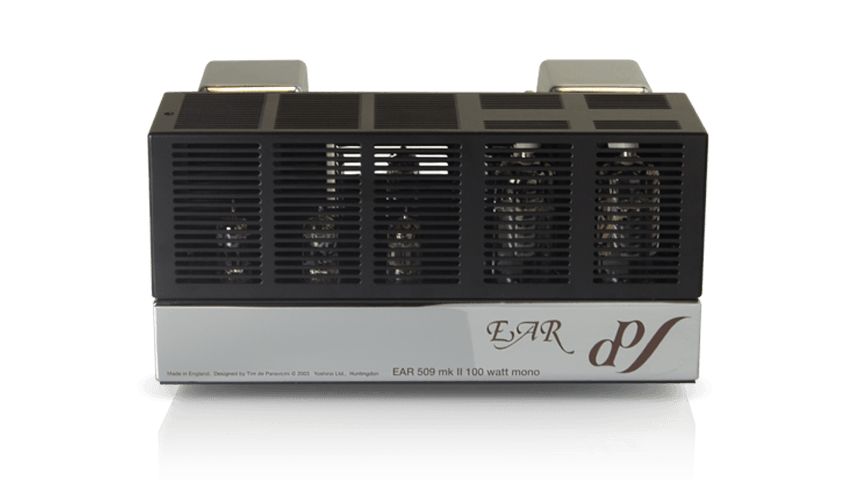
The EAR Yoshino 509 Balanced is a monophonic tube power amplifier designed by Tim de Paravicini. Originally developed for recording studios, it can also serve one channel of a home audio system. Its stated output is 100 W into either a 4 Ω or an 8 Ω load, measured across 20 Hz-20 kHz. Because each amplifier handles one channel, a stereo system requires a separate unit for the left and right channels.
Chassis and placement
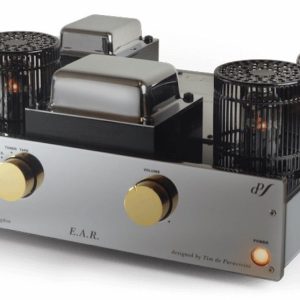
The rectangular chassis is hand finished in polished chrome. It measures 300 mm long, 254 mm wide and 150 mm high, and weighs 15.3 kg. Consider both the size and weight when choosing a shelf. Leave room behind the amplifier to connect cables and open space around it for heat from the tubes to disperse. An enclosed, tight fitting space is unsuitable for that purpose.
Signal connections
One unbalanced RCA line input is specified. Its sensitivity is 1.2 V and its input impedance is 25 kΩ; these figures are useful when matching the amplifier to a preamplifier’s line output. A balanced XLR input is listed as an option, so check which connector is fitted to the particular amplifier before choosing an RCA or XLR cable.
These connections carry the audio signal from a preamplifier. Connect the line output for the chosen channel to the corresponding input on the 509 Balanced. In a stereo setup, the left and right signals go to their respective amplifiers. The appropriate connection depends on the outputs available on the preamplifier and the input fitted to each amplifier.
Tubes and adjustment
The amplifier uses two PL509 (EL519), two ECC83 (12AX7) and one ECC85 (6AQ8) tubes. Keep these type designations in mind when looking for replacements. Idle current is adjusted with two pairs of controls while observing four LEDs. The aim during adjustment is for the LEDs to glow with equal intensity. Allow for this adjustment step when changing tubes; replacement is not simply a matter of inserting them and relying on an automatic setting.
Power and measured performance
The 100 W output rating includes both a load condition and a frequency range. When comparing it with another amplifier’s rating, consider those conditions together rather than treating the wattage as a standalone figure. The specified frequency response extends from 3 Hz to 30 kHz with a tolerance of +0/-1 dB.
A 96 dB signal to noise ratio and intermodulation below 0.2% describe different aspects of measured performance. The stated damping factor is 20. These figures can help you compare technical specifications, although no individual measurement describes how an entire audio system will sound. Speakers, the preamplifier and the rest of the system still form part of that listening context.
Power supply
Specified power consumption is 180 W. The amplifier exists in 240 V, 110 V and 100 V mains versions. Check the rated voltage of the particular unit before connecting it to the electricity supply; the listed voltages refer to different versions of the amplifier.
Technical specifications
| Type | Monophonic tube power amplifier |
|---|---|
| Designer | Tim de Paravicini |
| Chassis finish | Hand finished polished chrome |
| Tubes | 2 × PL509 (EL519), 2 × ECC83 (12AX7), 1 × ECC85 (6AQ8) |
| Idle current adjustment | Two pairs of controls and four LEDs |
| Output power | 100 W into 4 Ω or 8 Ω, across 20 Hz-20 kHz |
| Frequency response | 3 Hz-30 kHz, +0/-1 dB |
| Signal to noise ratio | 96 dB |
| Intermodulation | Less than 0.2% |
| Unbalanced input sensitivity | 1.2 V |
| Unbalanced input impedance | 25 kΩ |
| Damping factor | 20 |
| Signal input | One RCA line input; balanced XLR input listed as an option |
| Weight | 15.3 kg |
| Dimensions | 300 × 254 × 150 mm (length × width × height) |
| Power consumption | 180 W |
| Mains versions | 240 V, 110 V or 100 V, depending on version |
FAQ
Is one amplifier enough for a stereo system?
No. The 509 Balanced amplifies one channel. A stereo system needs a separate unit for the left channel and another for the right. Feed each amplifier the line level signal for its corresponding channel.
Can I connect it to an AV receiver?
Check whether the AV receiver has a preamplifier output for the channel you want to amplify. Connect that output to the amplifier’s line input so the 509 Balanced receives the signal for the correct channel.
When should I choose an XLR connection?
Choose XLR when the optional balanced input is fitted to the particular amplifier and the signal source has a balanced output. If you use the RCA input, connect it to an unbalanced line output on the preamplifier.
Does idle current set itself automatically after a tube change?
No. The amplifier provides adjustment controls and LEDs for setting idle current. After changing tubes, allow for the adjustment procedure and observe the LEDs until they glow with equal intensity.
How should I choose a place for it on a shelf?
Account for the chassis dimensions, its 15.3 kg weight and space for the cables. The tubes produce heat, so leave open space around the amplifier rather than placing it in a cramped enclosure.
What do the different mains versions mean before connection?
The 240 V, 110 V and 100 V figures identify different versions of the amplifier. Before plugging in a unit, check its own rated mains voltage and make sure you know which version you have.
Related products and categories
Related products