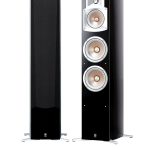
Yamaha NS-333 Speakers
Original price was: 350,00 €.300,00 €Current price is: 300,00 €.
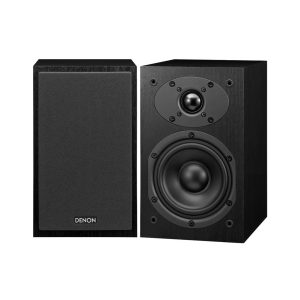
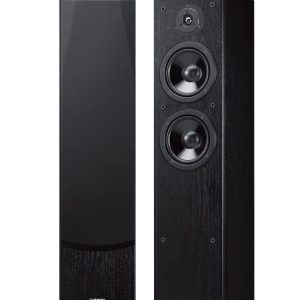
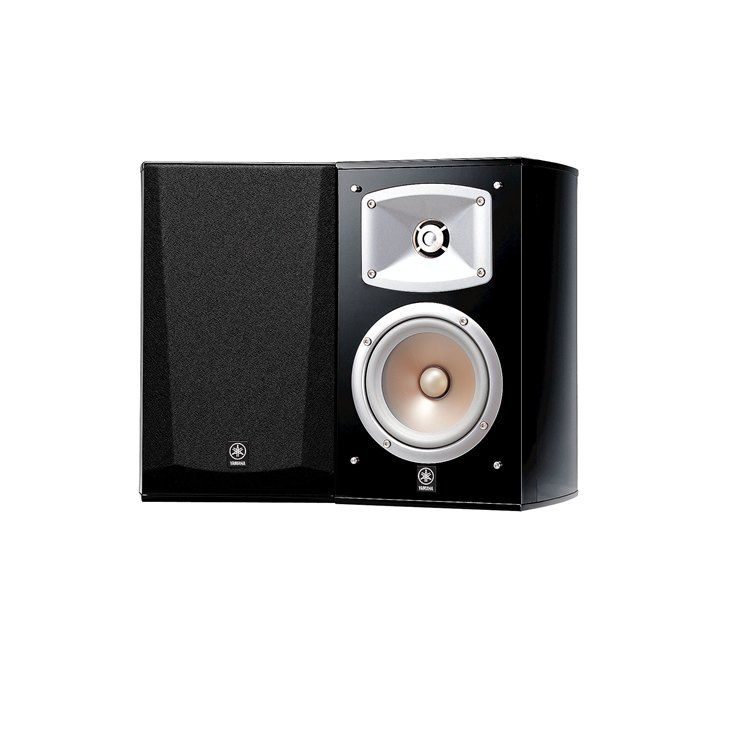
Yamaha NS-333 is a pair of surround sound speakers designed for the side or rear channels of a home cinema system. The two-way bass-reflex design combines a 5-inch PMD driver with a 1-inch aluminium dome driver and waveguide. The 6-ohm impedance helps determine amplifier compatibility, while the separately stated 60 W nominal and 150 W maximum input power ratings support appropriate system planning.
Yamaha NS-333 speakers are a pair of two-way bass-reflex speakers designed for surround sound channels. They are intended for home cinema systems that use separate speakers for the rear or side channels.
The 6-ohm nominal impedance is one of the main specifications to consider when checking amplifier compatibility.
What These Speakers Are Designed For
The NS-333 speakers are primarily intended for surround sound channels. The pair can form the left and right rear or side channels of a home cinema system. Their exact channel assignment depends on the AV receiver configuration and the selected speaker layout.
They can also be used in a two-channel system if the amplifier is suitable for a 6-ohm load. Their main purpose, however, is surround sound. This distinction is worth considering when choosing the primary speakers for a larger room.
Cabinet and Driver Design
The two-way design divides the frequency range between two different drivers. A 5-inch driver with a PMD diaphragm reproduces the low and midrange frequencies, while a 1-inch aluminium dome driver handles the high frequencies.
The high-frequency driver is paired with a waveguide, which helps control treble dispersion across the listening area. For consistent results, aim both speakers at a similar angle and keep their distances from the main listening position as equal as possible.
The bass-reflex design uses the cabinet’s internal volume to support low-frequency reproduction. Avoid placing the speaker directly against a wall or enclosing it in a tight recess. Choose the distance from the wall by listening, as room boundaries can change the perceived amount of bass.
Connecting the Speakers
The pair connects to the speaker outputs of an amplifier or AV receiver. Connect the left and right channels with the same polarity. If the positive and negative connections are reversed on one side, the surround image may become indistinct.
Before connecting the speakers, confirm that the amplifier can operate with 6-ohm speakers. In a home cinema system, connect each speaker to its assigned channel. These passive speakers cannot be connected directly to a television’s line-level or headphone output.
Choose speaker cable according to the connector type, cable-run length and installation method.
System Setup
On the AV receiver, select the speakers’ actual positions and assign the corresponding surround channels. Then enter the distance from each speaker to the listening position and adjust the level of every channel. Automatic room calibration can be used as a starting point.
The lower frequency limit of 65 Hz indicates that these speakers should not be responsible for the deepest bass in film soundtracks. In a system with a subwoofer, a crossover frequency of around 80 Hz can serve as an initial setting. Adjust the final value to suit the room and achieve a smooth transition between the speakers and subwoofer.
A stereo amplifier may not provide distance or crossover settings. In that case, symmetrical placement, matching polarity and sufficient volume headroom become especially important. Do not continue operating the amplifier at high levels if clearly audible distortion is present.
Placement in the Room
Each speaker cabinet measures 20 cm wide, 32 cm high and 22 cm deep. These dimensions make it possible to plan shelf or stand placement in advance. Leave enough space around the cabinet for the cable and for small positioning adjustments.
In a surround sound system, position the pair as symmetrically as possible in relation to the main seating position. For side channels, place the speakers on either side of the listener. For rear channels, choose positions behind the listening area in accordance with the layout used by the AV receiver.
Avoid placing one speaker in a corner while leaving the other in an open part of the room. Different nearby wall surfaces can reinforce bass by different amounts. If this type of placement cannot be avoided, adjust the individual channel levels while listening from the main seating position.
Magnetic shielding is most relevant when the speakers are placed near a CRT display or other video equipment that is more sensitive to magnetic fields. Each speaker weighs 12.1 pounds, so the shelf or stand must be stable enough to support it securely.
Power and Sensitivity Ratings
The 60 W nominal input power describes the rating intended for continuous use. The 150 W figure is the maximum input power and does not define a continuous amplifier operating level. In practice, it is important to avoid a distorted signal and excessive listening volume.
The 87 dB sensitivity is measured with a 2.83 V input at a distance of one metre. This figure should only be compared directly with speakers measured under the same conditions. The amplifier, listening distance and room also affect the final sound level.
The stated frequency range extends from 65 Hz to 35 kHz. The upper limit describes the declared reproduction range rather than a separate listening mode. The lower limit helps determine when adding a subwoofer may be beneficial.
Technical Specifications
| Model | Yamaha NS-333 |
|---|---|
| Recommended application | Surround sound speakers |
| Quantity | Pair |
| Design | Two-way bass-reflex |
| Low-frequency driver | 5-inch, with PMD diaphragm |
| High-frequency driver | 1-inch aluminium dome, with waveguide |
| Frequency range | 65 Hz-35 kHz |
| Sensitivity | 87 dB at 2.83 V / 1 m |
| Nominal input power | 60 W |
| Maximum input power | 150 W |
| Nominal impedance | 6 ohms |
| Magnetic shielding | Yes |
| Dimensions | 20 × 32 × 22 cm, width × height × depth |
| Weight per speaker | 12.1 pounds |
FAQ
Is this listing for one speaker or a pair?
This listing includes a pair. The speakers can be used for two corresponding surround sound channels or in a two-channel system.
What type of amplifier do these speakers require?
Choose an amplifier or AV receiver that can operate with a 6-ohm load. Consider the nominal input power rather than relying only on the maximum rating.
Can the speakers be connected directly to a television?
They connect to the speaker outputs of an amplifier or AV receiver. Television audio must first pass through an audio system equipped with suitable speaker outputs.
Where should they be placed in a home cinema system?
Use them as a pair of side or rear channel speakers. Select their precise positions according to the AV receiver’s channel layout and the location of the seating area.
Is a subwoofer essential?
A subwoofer is not essential in every system. However, a separate subwoofer can reproduce the deepest cinema effects and reduce the low-frequency load placed on the surround channels.
Can this pair be used for stereo music?
Yes, provided that the stereo amplifier is suitable for 6-ohm speakers. The model’s intended primary application is nevertheless surround sound channels.
Are the speakers magnetically shielded?
Yes. Magnetic shielding is most relevant when the speakers are placed near a CRT display or other video equipment that is more sensitive to magnetic fields.