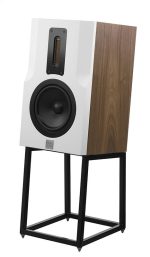
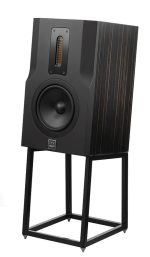
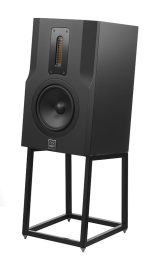
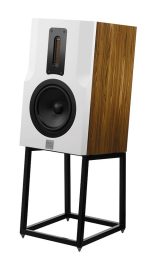
Fink KIM Passive Loudspeaker
11 900,00 €
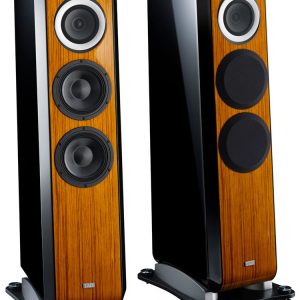
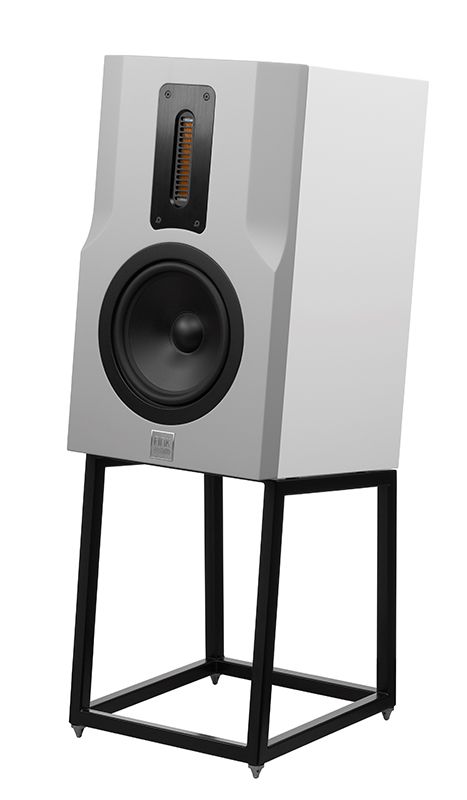
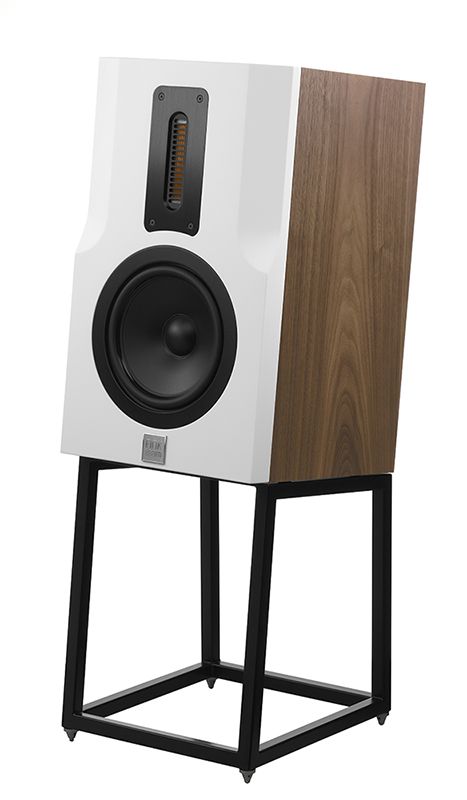
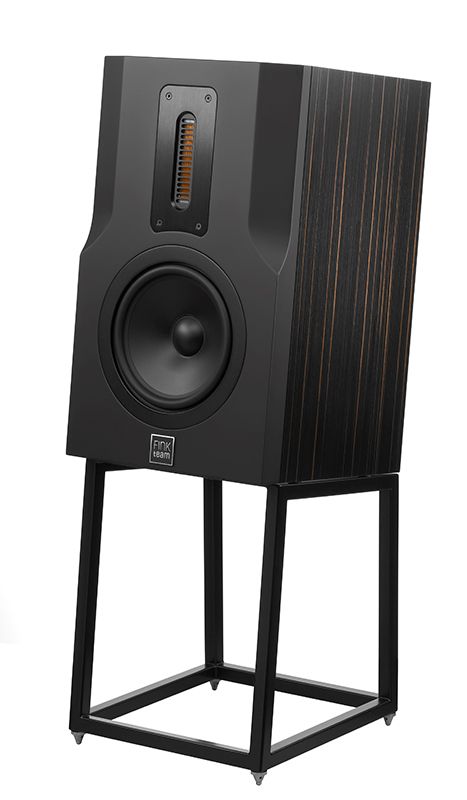
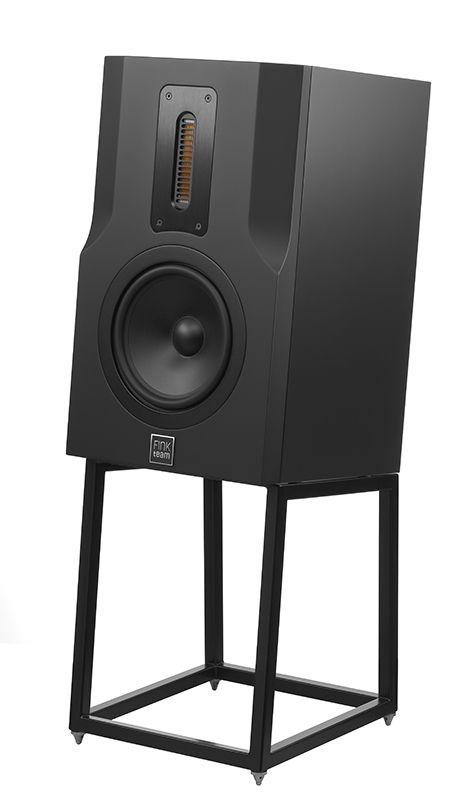
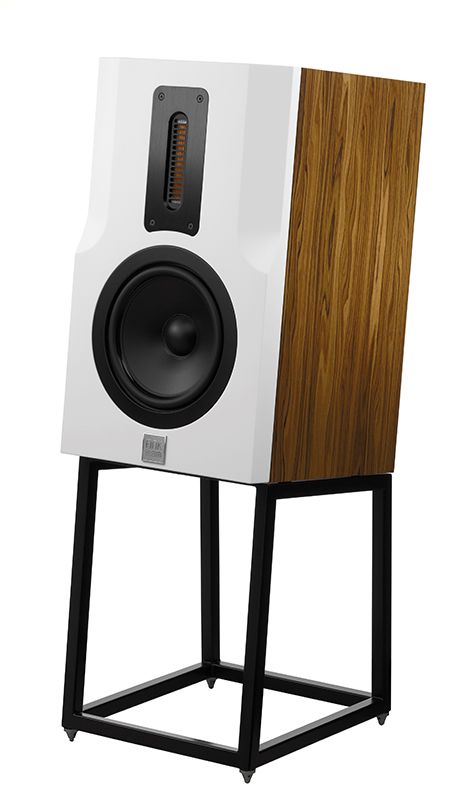
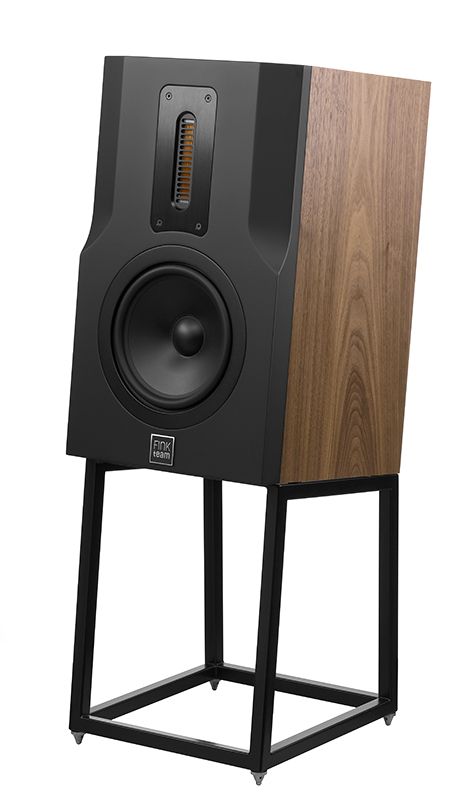
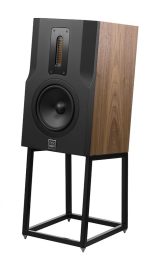
The Fink KIM is a compact passive loudspeaker for a stereo or home cinema system with amplifier channels designed for passive speakers. Its integrated stand removes the need for a separate stand. An 8-inch bass driver and 110 mm AMT driver are combined through a 2200 Hz crossover. Two three-position switches allow the high-frequency level and bass damping to be adjusted for the room.
The Fink KIM loudspeaker is a compact passive loudspeaker with an integrated stand. It is designed for stereo or home cinema systems equipped with amplifier channels intended to drive passive speakers. Its construction takes up less space than earlier Fink models, and there is no need to choose a separate loudspeaker stand.
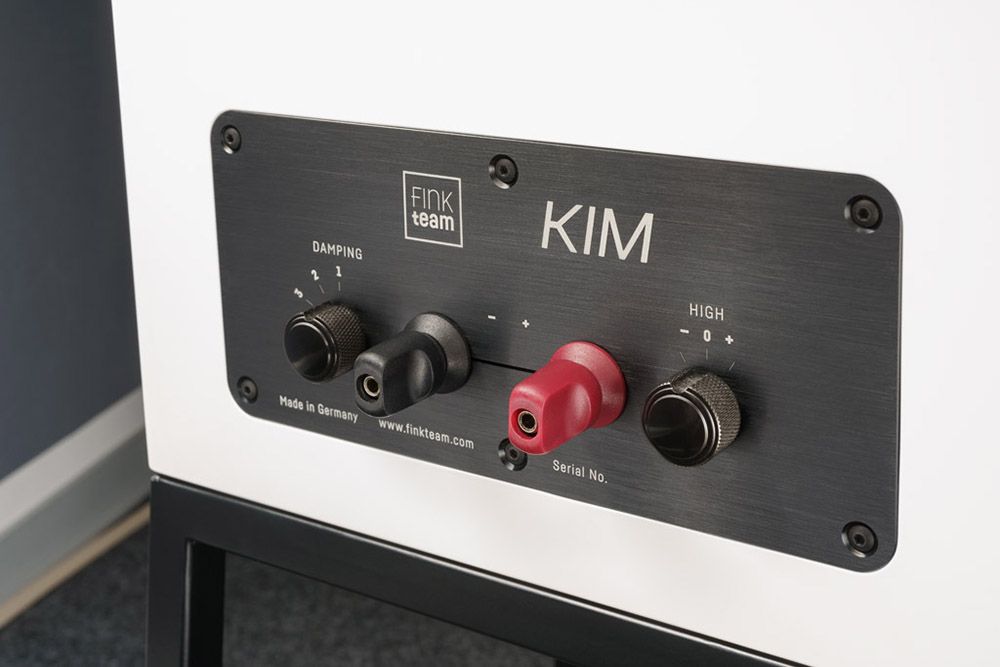
This model combines an 8-inch bass driver with a 110 mm AMT high-frequency driver. Two three-position switches allow you to adjust the treble level and bass damping. These controls help match the loudspeaker to the room and listening position.
Cabinet construction
The bass-reflex design supports the bass driver’s operation through the cabinet’s resonant system. When positioning the loudspeaker, consider its distance from both the rear wall and the side walls. Placing it closer to walls will generally make the bass more prominent.
The cabinet is made from damped, double-layer sandwich panels. These are complemented by a one-dimensional internal bracing system.
The cabinet also contains several Strunk absorbers and a CleanPort resonator. These are parts of the internal acoustic construction and do not require separate adjustment. They work together with the bass-reflex system and the cabinet’s internal damping.
Drivers and frequency distribution
Low frequencies are reproduced by a high-power 8-inch driver with a 38 mm voice coil. High frequencies are handled by a 110 mm AMT high-frequency driver, or Air Motion Transformer.
The 2200 Hz crossover frequency marks the transition between the operating ranges of the two drivers. The internal crossover system distributes the signal between the bass and high-frequency drivers, so the user does not need a separate active crossover.
Connecting the loudspeaker
The loudspeaker connects to an amplifier using speaker cable. It does not contain an integrated power amplifier, so a line-level RCA or digital output is not sufficient. A power-amplifier channel from an amplifier or AV receiver is required.
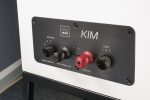
The pure-copper terminal is designed for high-current operation and single wiring. One speaker-cable run is used for each loudspeaker. This model does not support bi-wiring.
In a stereo system, the two loudspeakers are connected to the amplifier’s left and right channels. In a home cinema system, every loudspeaker in use also requires its own power-amplifier channel. The number of channels needed depends on the selected system configuration.
Choosing an amplifier
The average impedance is greater than 8 ohms, while the minimum value of 5.9 ohms occurs at 160 Hz. The amplifier should be able to control this load reliably as the music signal changes.
The 86 dB sensitivity is measured with a 2.83 V signal at a distance of one metre. Adequate amplifier power reserve is important when higher listening levels are required. The maximum permitted amplifier power is not specified and cannot be determined from the sensitivity figure.
The total harmonic distortion value of 0.2 percent is specified at 1 W. This is the result under a particular measurement condition; it does not define the loudspeaker’s maximum volume or power limit.
Adjustment switches
The high-frequency level switch has three positions. It allows the treble balance to be adjusted according to the room’s acoustics. A softly furnished space may suit a different setting from a room containing many hard surfaces.
The bass damping switch also offers three positions. It can be used to adapt bass behaviour to the loudspeaker’s placement and the amplifier being used. The final setting should be selected while listening from the normal listening position.
Begin with both switches in their middle positions. Change only one setting at a time and listen to the same recording after each adjustment. This makes it easier to identify the effect of each individual change.
Room placement
The loudspeaker measures 854 × 300 × 310 mm. The stated height includes the integrated stand. Overall depth with the stand is 412 mm, which should be taken into account when planning the required floor space.
Each loudspeaker weighs 25.1 kg. Choose a level, solid surface and plan for a secure grip and sufficient clearance around the cabinet before moving it.
Start by positioning the loudspeakers symmetrically in relation to the listening position. Then adjust their distance from the walls in small steps. After every change, assess both the evenness of the bass response and the centre of the stereo image.
Technical specifications
| Model | Fink KIM |
|---|---|
| Type | Passive loudspeaker with integrated stand |
| Cabinet type | Bass reflex |
| Bass driver | High-power, 8-inch |
| Voice-coil diameter | 38 mm |
| High-frequency driver | 110 mm AMT |
| Crossover frequency | 2200 Hz |
| Average impedance | Greater than 8 Ω |
| Minimum impedance | 5.9 Ω at 160 Hz |
| Sensitivity | 86 dB at 2.83 V / 1 m |
| Total harmonic distortion | 0.2% at 1 W |
| Terminal | High-current pure-copper terminal |
| Connection | Single wiring |
| High-frequency adjustment | Three-position switch |
| Bass damping | Three-position switch |
| Cabinet panels | Damped double-layer sandwich panels |
| Internal construction | One-dimensional bracing system |
| Acoustic elements | Several Strunk absorbers and a CleanPort resonator |
| Dimensions | 854 × 300 × 310 mm, height × width × depth |
| Depth with stand | 412 mm |
| Weight | 25.1 kg |
FAQ
Does the loudspeaker require a separate amplifier?
Yes. This is a passive model without an integrated power amplifier. Connect it to the speaker-level power output of an amplifier or AV receiver.
What type of cable should I use?
Use speaker cable between the amplifier’s power output and the loudspeaker terminals. RCA, HDMI and optical cables are not suitable for a direct connection.
Can I build a stereo system with these loudspeakers?
Yes. For a stereo system, use two loudspeakers connected to the left and right channels. Position both at a similar distance from the listening position.
Can this model be used in a home cinema system?
Yes, provided that the AV receiver has power-amplifier channels intended for passive loudspeakers and can handle the specified impedance. Each loudspeaker requires a separate channel.
How should I choose the switch positions?
Begin with both switches in their middle positions and play a recording you know well. Adjust the high frequencies first, then assess the bass damping setting.
Can the loudspeakers be placed close to a wall?
You can try different distances, but the bass-reflex design responds to the proximity of walls. Choose the final position according to the evenness of the bass at the listening position.
Are additional loudspeaker stands required?
No. The support is part of this model’s construction. When planning the installation, allow for the full 412 mm depth and leave enough space for the cable.