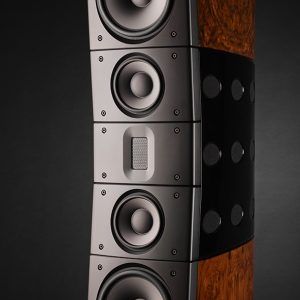
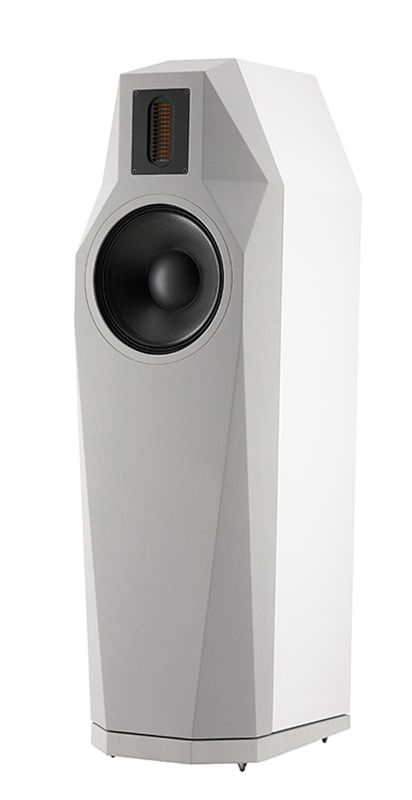
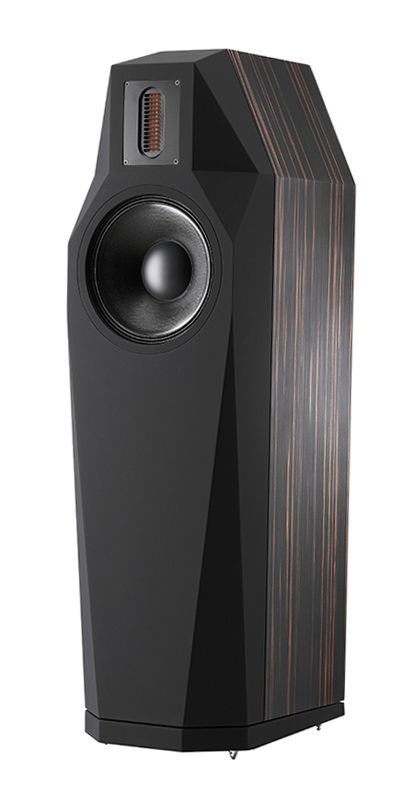
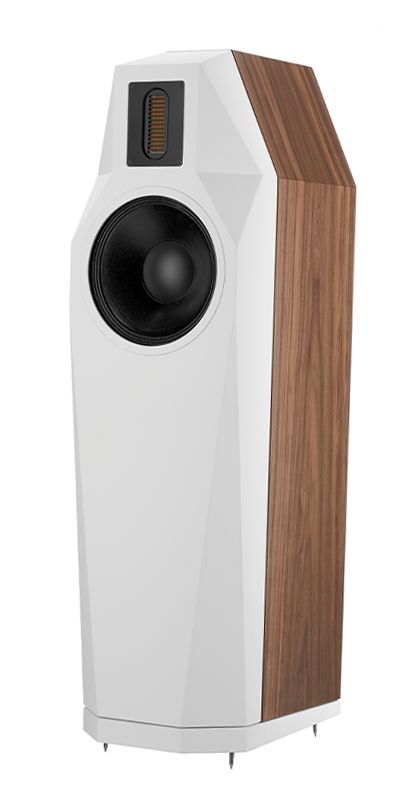
FinkTeam Borg Floorstanding Speaker
30 000,00 €
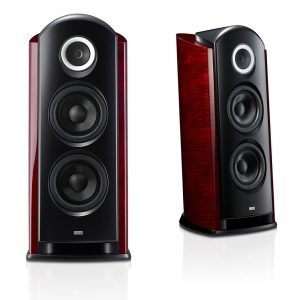
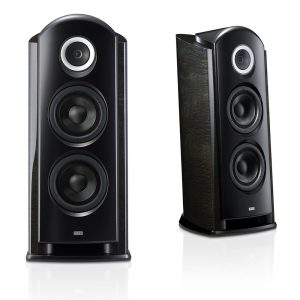
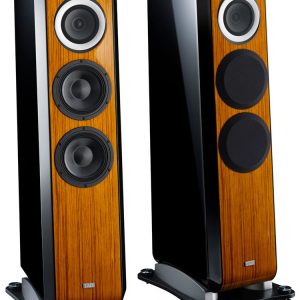
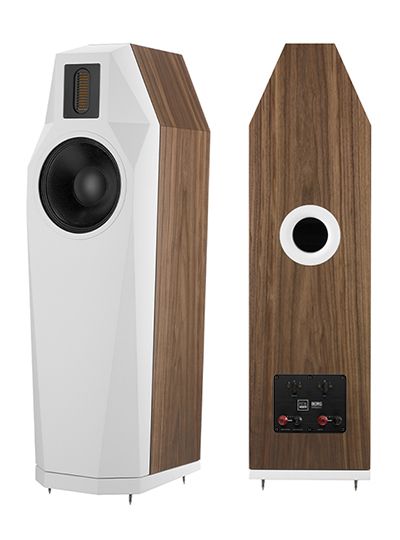
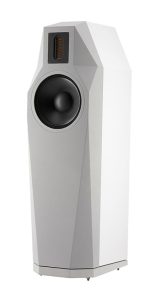
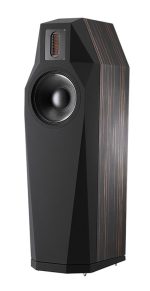
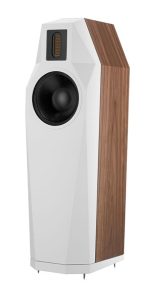
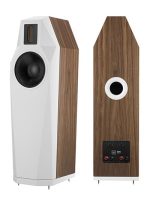
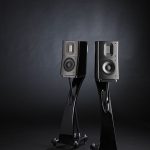
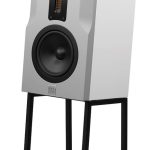
The FinkTeam Borg floorstanding speaker is designed for a demanding home stereo system. Its 10.25-inch mid/bass driver is paired with a Mundorf AMT tweeter to achieve a smooth transition between the two frequency bands. The bass tuning gives music weight while allowing more flexible placement in the room. Each speaker weighs 52 kg.
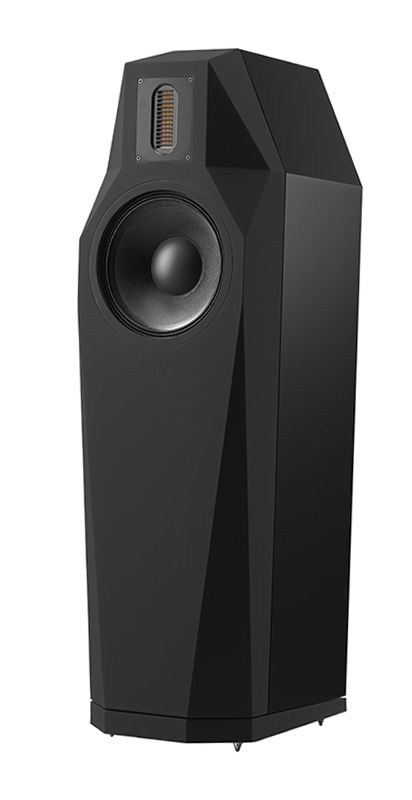
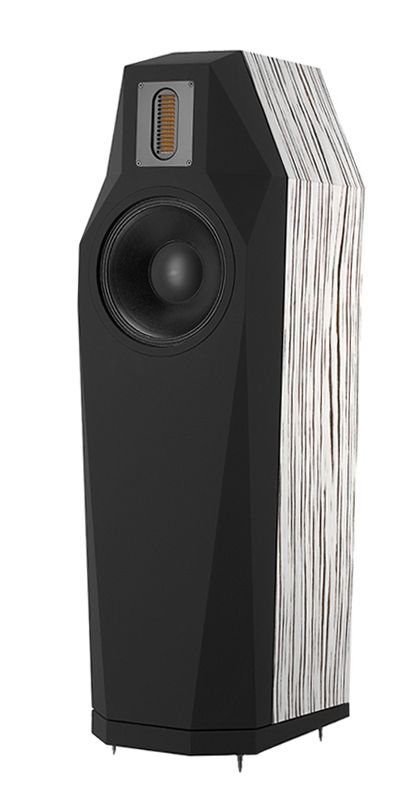
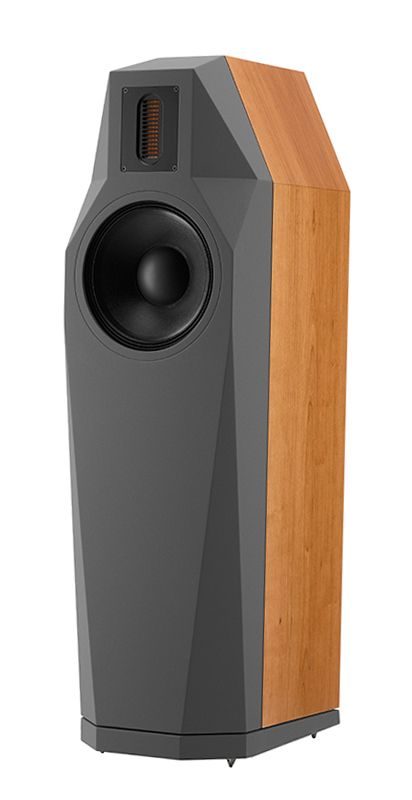
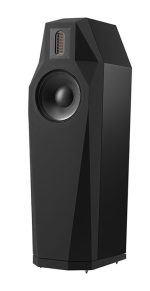
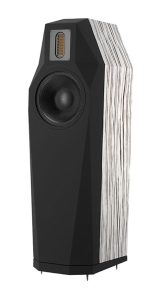
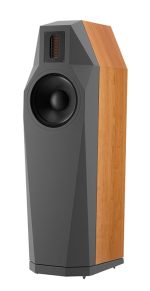
The FinkTeam Borg floorstanding speaker is a two-way model designed for a demanding home stereo system. It combines a 10.25-inch mid/bass driver with an Air Motion Transformer (AMT) tweeter. This configuration is intended to reproduce a wide frequency range from a single floorstanding enclosure.
The speaker was developed to be easier to accommodate in a home environment than the WM-4. Its bass tuning is designed to give music weight and drama while allowing greater flexibility when positioning the speaker in the room.
Two-way design
The large mid/bass driver uses a 3-inch voice coil. Its size helps it reproduce the lower part of the frequency range, but also makes a smooth transition to the tweeter more challenging. For this reason, the crossover frequency is set at 1600 Hz.
The Mundorf AMT tweeter handles the upper part of the reproduced range. The design is tuned to provide an even transition between the two drivers.
According to the store, the design aims to avoid a gap in the frequency response around the crossover region when listening away from the main axis.
Understanding the frequency ranges
The two stated frequency-response ranges use different attenuation limits. The 41 Hz-30 kHz range is specified at -6 dB, while the wider 32 Hz-35 kHz range is measured at -10 dB.
These figures should not be treated as conflicting results. At -10 dB, the frequencies at the outer limits are reproduced more quietly than the main part of the range. The -6 dB specification gives a clearer indication of the more strongly reproduced portion of the spectrum.
Connecting the speaker to an amplifier
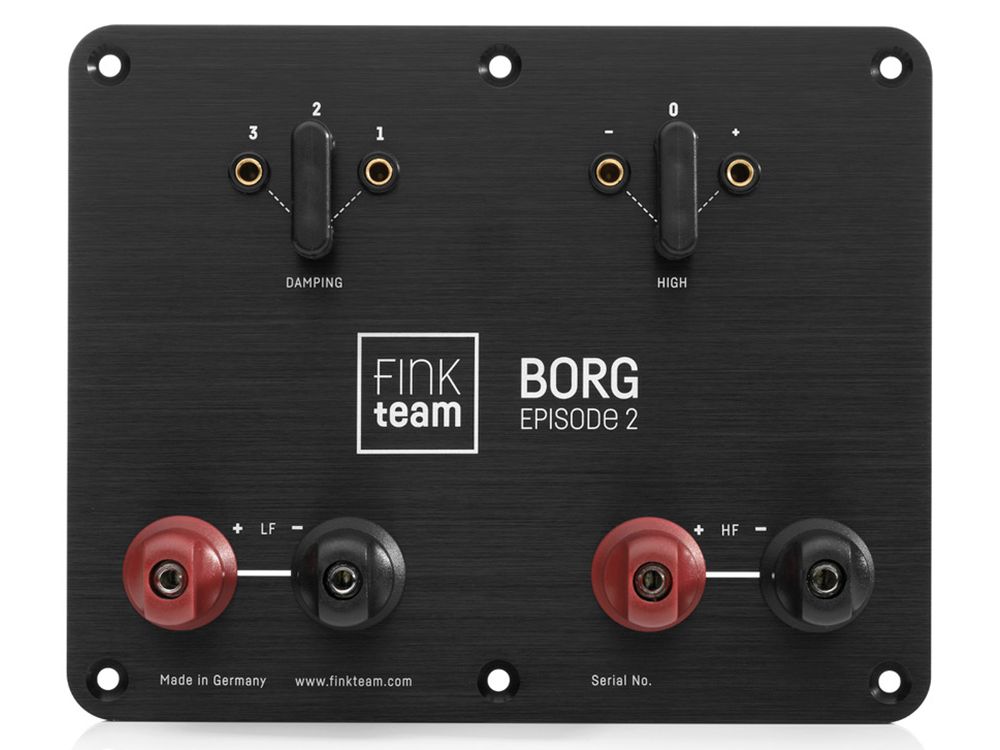
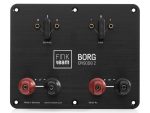
The high-current terminals accept 4 mm plugs or cable spades. Both options are intended for connecting speaker cable to an amplifier’s speaker outputs. They are not line-level audio connections.
4 mm plugs are convenient when a system needs to be disconnected or rearranged periodically. Spades are suitable for a long-term connection to compatible amplifier terminals. Whichever method is used, the cables should be secured firmly and the same polarity must be maintained for both channels.
The average impedance is 10 ohms, while the minimum value is 6.5 ohms at 20 kHz. This minimum occurs in the treble region and should not be mistaken for an indication of the load presented at bass frequencies.
Choosing an amplifier and source
The 87 dB sensitivity is measured at a distance of one metre using a 2.83 Vrms input signal. These conditions matter when comparing the Borg with other speakers. Sensitivity figures are not directly comparable unless the measurement conditions are the same.
An amplifier should be selected according to how it operates with the stated impedance, rather than solely by its highest quoted power figure. No speaker power-handling limit is provided, so a specific amplifier power rating cannot be assigned to this model. Higher-quality electronics may improve control and detail, but they are not essential simply to listen to music.
Total harmonic distortion is below 0.2 percent at 87 dB SPL. This result applies specifically at the stated sound-pressure level. It does not define distortion at other listening levels or indicate the maximum sound-pressure level the speaker can produce.
Positioning in the room
Each speaker enclosure measures 1050 × 300 × 400 mm. One speaker weighs 52 kg, so it is sensible to choose its location before final placement. Having two people available is practical for moving the speaker and making precise adjustments to its angle.
Begin with a symmetrical arrangement relative to the listening position. Then adjust the distance from the walls and the toe-in toward the listener in small steps. Listen for changes in bass evenness, the precision of the central image, and the balance of the treble.
The bass tuning makes it possible to adapt the speaker to the room with greater flexibility. Even so, the final result will be influenced by proximity to walls, room dimensions, and the listening position. Make matching adjustments to both stereo speakers so that the soundstage does not become distorted or unbalanced.
Use in a stereo system
In a stereo system, one speaker is used for the left channel and another is used for the right, with both positioned in the same way. The amplifier channels are connected using separate speaker cables. Keeping each speaker the same distance from the listening position helps create a more precise central image.
Technical specifications
| Type | Two-way floorstanding speaker |
|---|---|
| Mid/bass driver | One 10.25-inch high-power driver |
| Voice coil | 3 inches |
| Tweeter | Mundorf Air Motion Transformer |
| Crossover frequency | 1600 Hz |
| Frequency response | 41 Hz-30 kHz, -6 dB |
| Extended frequency response | 32 Hz-35 kHz, -10 dB |
| Average impedance | 10 ohms |
| Minimum impedance | 6.5 ohms at 20 kHz |
| Sensitivity | 87 dB SPL at 1 m with 2.83 Vrms |
| Total harmonic distortion | Below 0.2% at 87 dB SPL |
| Connections | High-current terminals for 4 mm plugs or spades |
| Dimensions | 1050 × 300 × 400 mm, height × width × depth |
| Weight | 52 kg per speaker |
FAQ
Which connection method should I choose?
Choose according to your amplifier terminals and how you use the system. Plugs are more convenient for frequent reconnection, while spades suit a secure, firmly clamped long-term connection.
Is a high-end amplifier essential?
No. The speaker can reveal the advantages of better electronics, but music can also be enjoyed with a more modest, appropriately selected system.
How should I begin adjusting the speaker positions?
Before unpacking or moving the 52 kg speakers, decide where they are likely to remain. Once they are in place, fine-tune both speakers symmetrically and make each adjustment in equal steps.
Is this model suitable for a stereo system?
Yes. Two equally oriented speakers are used for the left and right channels, with each connected to a separate channel of the stereo amplifier.
What is the difference between the two stated frequency ranges?
The 41 Hz-30 kHz range is specified at -6 dB, while the 32 Hz-35 kHz range is specified at -10 dB. When comparing models, it is important to use the corresponding attenuation limit.
What does the minimum impedance of 6.5 ohms mean?
This value is specified at 20 kHz, so it should not be treated as an indication of the bass-frequency load. Choose an amplifier with all the stated impedance conditions in mind.
Does the stated distortion figure indicate maximum volume?
No. It describes distortion only at a specific sound-pressure level. The speaker’s maximum sound-pressure level and power-handling limit are not provided.
What should be planned before positioning the speakers?
Consider the enclosure dimensions, the required floor space, and how the speakers can be moved safely. The substantial weight of each speaker makes later repositioning more difficult.