Yamaha NS-555 Floorstanding Speaker
Original price was: 700,00 €.570,00 €Current price is: 570,00 €.
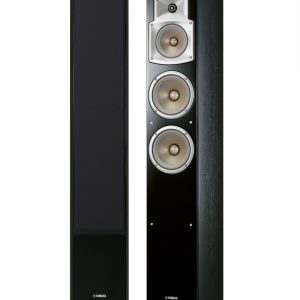
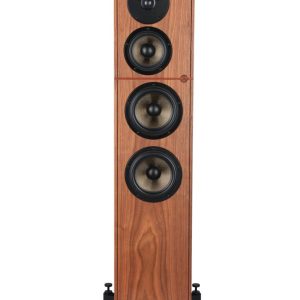
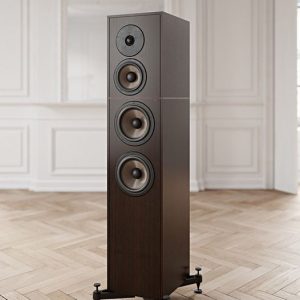
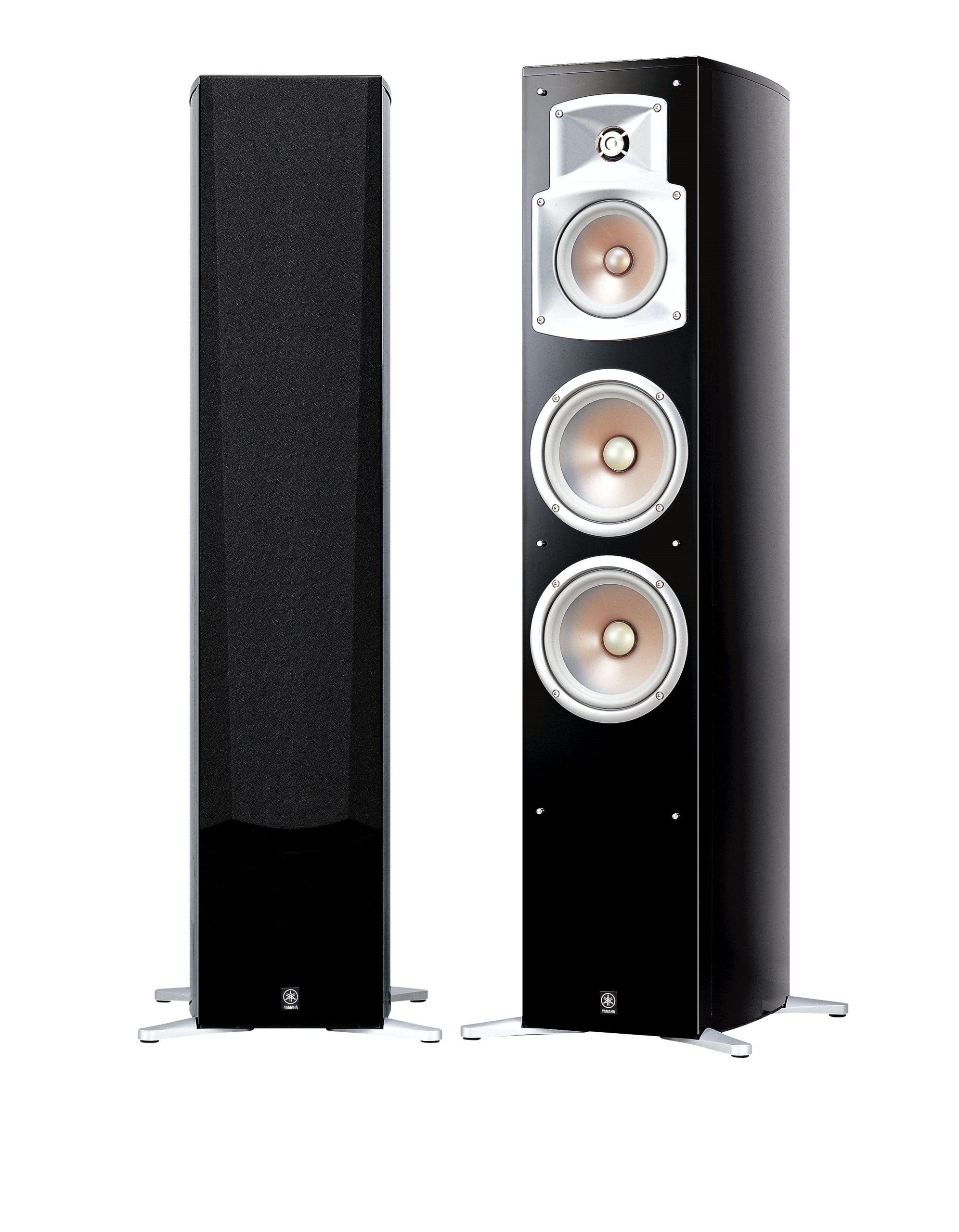
Yamaha NS-555 is a floorstanding speaker for home stereo and home cinema systems. Its three-way design divides the signal between four drivers, allowing each frequency range to be reproduced by dedicated drivers. The bass-reflex cabinet contains two 16 cm PMD woofers. Its 6-ohm impedance is an important consideration when choosing a suitable amplifier or AV receiver.
Yamaha NS-555 floorstanding speaker is a three-way, four-driver bass-reflex system designed for home stereo and home cinema systems. Two 16 cm woofers work alongside dedicated midrange and high-frequency drivers.
The floorstanding cabinet is suitable for a system where the speakers can be given a permanent position on the floor.
Three-way design
A three-way speaker system divides the signal into three frequency ranges. These ranges are handled by two woofers, one midrange driver and one tweeter. The signal is divided between them at crossover frequencies of 1 kHz and 4 kHz.
The two 16 cm woofers use PMD cones and share responsibility for reproducing the lower frequencies. The bass-reflex cabinet design is intended to supplement their low-frequency output.
The 13 cm midrange driver has a cone diaphragm and a waveguide horn. The 2.5 cm tweeter uses an aluminium dome and a waveguide horn. These waveguides help control the drivers’ sound dispersion towards the listening position.
Connecting the speaker to your system
The speaker connects to the speaker output of an amplifier or AV receiver using speaker cable. The appropriate preparation or termination of the cable ends depends on the terminals fitted to both the amplifier and the speaker.
The 6-ohm impedance is an important consideration when choosing an amplifier. Its speaker output must be suitable for this load. The power figure alone is not enough, because the amplifier must also operate reliably with the connected speakers.
The nominal input power is 100 W, while the maximum input power is 250 W. These figures describe different characteristics. The maximum rating does not represent a continuously recommended listening power.
The 88 dB sensitivity rating is measured with a 2.83 V signal at a distance of one metre. This stated condition provides a basis for comparing speaker sensitivity. The actual listening volume will also depend on the amplifier, the room and the distance from the speakers.
Use in stereo and home cinema systems
A stereo system uses two matching speakers positioned in a consistent arrangement. Both should be placed at approximately the same distance from the main listening position. This helps maintain similar conditions for the left and right channels and supports a balanced stereo presentation.
In a home cinema system, this model can serve as the front-left or front-right speaker. The AV receiver must support the specified speaker load. Levels and delays for the other channels should be configured using the calibration facilities available on the particular receiver.
The specified frequency range begins at 35 Hz. Whether an additional subwoofer is needed depends on the material being played and the desired level of the lowest frequencies. In a home cinema system, a subwoofer can also reproduce the separate low-frequency effects channel.
Positioning in the room
Each speaker measures 222 × 980 × 345 mm. Allow enough space not only for the cabinet but also for the speaker cable. The speaker should not obstruct a walkway or rest against furniture.
The low-frequency balance of a bass-reflex speaker can change when its cabinet is moved closer to a wall or corner. Begin by placing both speakers at the same distance from the rear wall. You can then adjust their positions while listening to a familiar recording and judging the bass balance.
Aim both speakers towards the main listening position at the same angle. Compare a straighter orientation with a slight inward turn. Keep the position in which centrally placed voices sound stable and the high frequencies remain balanced.
As each unit weighs 20 kg, moving the speaker is easier with two people. Choose the final position before laying out the cables. This reduces the need to move the cabinet after it has already been connected.
Initial system setup
Switch off the amplifier before connecting any cables. Connect the left and right channels with matching polarity. Reversed polarity on one speaker can weaken sounds located in the centre of the stereo image and reduce the overall bass response.
Begin the first listening test at a low volume. Check that both speakers play at the same level and that the left and right channels have not been reversed. Increase the volume to your normal listening level only after these checks are complete.
If you are using an AV receiver, configure the front channels in its speaker menu according to the layout of the complete system. Place the automatic calibration microphone at the main listening position. After calibration, listen to the result and assess the balance between the channels.
Technical specifications
| Model | Yamaha NS-555 |
|---|---|
| Type | Three-way, four-driver bass-reflex floorstanding speaker system |
| Woofers | 2 × 16 cm PMD cones |
| Midrange driver | 13 cm cone driver with waveguide horn |
| Tweeter | 2.5 cm aluminium dome with waveguide horn |
| Frequency range | 35 Hz-35 kHz |
| Nominal input power | 100 W |
| Maximum input power | 250 W |
| Sensitivity | 88 dB, measured with a 2.83 V signal at 1 m |
| Crossover frequencies | 1 kHz and 4 kHz |
| Impedance | 6 Ω |
| Dimensions | 222 × 980 × 345 mm |
| Weight | 20 kg per unit |
FAQ
Does this speaker require an amplifier?
Yes. It connects to the speaker outputs of a stereo amplifier or AV receiver. The amplifier must be suitable for the specified load.
Can it be used in a stereo system?
Yes. A stereo system requires two matching speakers connected to the amplifier’s left and right channels.
What role can it perform in a home cinema system?
It can be used as the front-left or front-right speaker. Channel levels are adjusted through the AV receiver.
Is the maximum input power suitable for continuous listening?
No. The 250 W figure is the maximum input power rating. The separately specified nominal rating is the relevant figure for continuous operation.
How should I begin finding the right position in the room?
Place both speakers symmetrically and at the same distance from the listening position. Adjust their distance from the walls according to the resulting bass balance.
Is an additional subwoofer essential?
Not necessarily. The decision depends on the desired level of the lowest frequencies. In a home cinema system, a subwoofer is useful for reproducing the separate effects channel.
What should I check after connecting the speakers?
Check the channels and make sure the cable polarity is consistent. Both speakers should play evenly, and centrally positioned sounds should remain in the centre.
Related products