
Yamaha NS-F350 Floorstanding Speaker
Original price was: 660,00 €.630,00 €Current price is: 630,00 €.
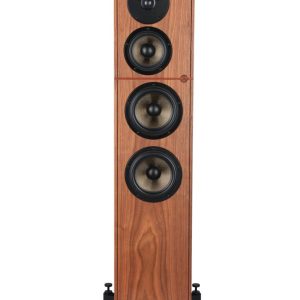
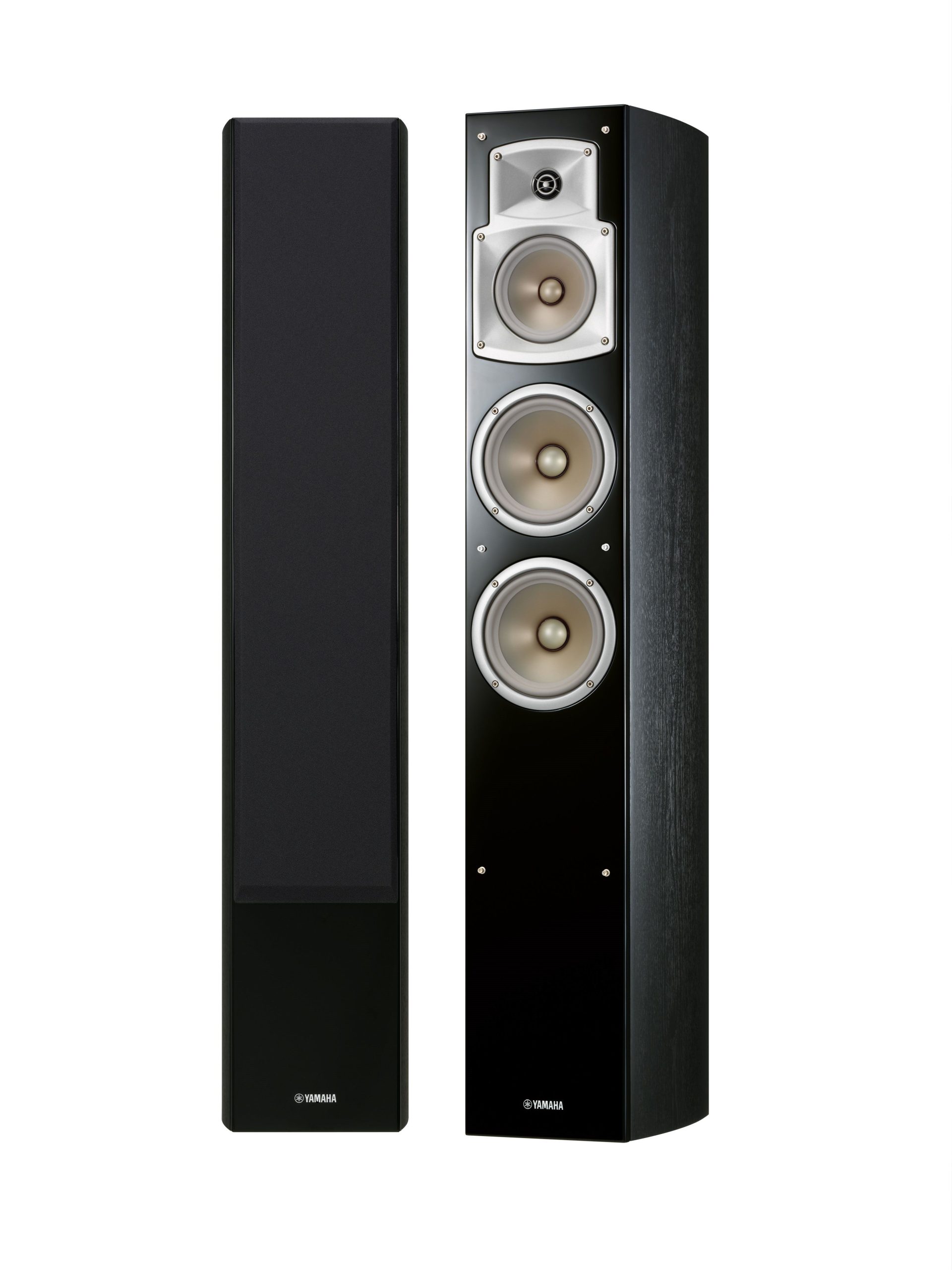
The Yamaha NS-F350 is a floorstanding speaker for listening to music at home with an amplifier. Its three-way bass-reflex design uses two woofers, one midrange driver and one tweeter, each assigned a different part of the sound. When choosing an amplifier, check its suitability for a 6-ohm load. When planning placement, allow for the cabinet’s 1,157 mm height and the 25.9 kg weight of each speaker.
The Yamaha NS-F350 is a three-way bass-reflex floorstanding speaker for listening to music at home. It stands on the floor and connects to an amplifier. Separate drivers reproduce the bass, midrange and treble, with each handling its own part of the sound. When choosing this model, allow space for its tall cabinet and check that your amplifier can drive a 6-ohm load.
Drivers and cabinet
Each speaker contains two 16 cm cone woofers. A separate 13 cm cone driver handles the midrange, while a 3 cm driver with an aluminum dome reproduces the treble. This three-way arrangement assigns the different frequency ranges to drivers designed for them. It is useful to understand that arrangement when comparing speakers, though the driver list alone cannot tell you how the NS-F350 will sound in your room.
The bass-reflex cabinet also matters when deciding where to place the speaker. Bass can change as you move the cabinet nearer to or farther from a wall, so leave yourself room to adjust its position after listening. The crossover frequencies are 1.4 and 3.8 kHz. These figures describe how frequencies are divided among the drivers; they are not settings you adjust during everyday listening.
Connecting an amplifier
Check that your amplifier’s speaker outputs are suitable for a 6-ohm load. Impedance helps you assess the amplifier connection; it does not state how loud the speaker will play. In a two-channel stereo system, keep the speaker cable polarity consistent on the left and right channels. If the positive and negative connections are reversed on one channel, bass may sound weaker at the listening position.
The 100 W nominal input rating and 200 W maximum input rating describe power supplied to the speaker. Neither figure is a required amplifier output rating. Increase the volume gradually when listening. If you hear distortion, turn it down. These ratings are useful when reading the specifications, but they do not describe the power used during ordinary listening.
Finding a place in the room
Before positioning the NS-F350, consider both the height and depth of its cabinet, and leave enough space to reach the speaker comfortably. One speaker weighs 25.9 kg, so it needs a stable floor surface. With a cabinet of this weight, it helps to decide roughly where it will go before moving it into place.
For stereo listening, start with the left and right speakers at similar distances from your usual listening position. Then make small changes to their placement and listen to where voices appear between the channels. If the bass becomes too prominent, try moving the speakers farther from the wall and listen again. The stated cabinet height can also help you judge where the tweeter will sit relative to your listening position. Listening in the room is the practical way to settle on a position.
Understanding the specifications
The stated sensitivity is 88 dB, measured at 2.83 V from a distance of 1 m. When comparing this figure with another speaker’s sensitivity, check the measurement conditions as well as the number. Sensitivity on its own cannot tell you what volume you will get in a particular room.
The specified 35 Hz-45 kHz frequency range gives the limits of the stated range. Without a tolerance, it does not show the output level at those limits. For placement decisions, listening and making small adjustments in your room will tell you more about how the bass-reflex design works in that space. Treat the figures as a way to understand the speaker, then use what you hear to guide its final position.
Technical specifications
| Model | Yamaha NS-F350 |
|---|---|
| Type | Three-way bass-reflex floorstanding speaker |
| Woofers | Two 16 cm cone drivers |
| Midrange driver | One 13 cm cone driver |
| Tweeter | One 3 cm aluminum dome driver |
| Frequency range | 35 Hz-45 kHz |
| Nominal input power | 100 W |
| Maximum input power | 200 W |
| Sensitivity | 88 dB at 2.83 V, 1 m |
| Crossover frequencies | 1.4 kHz and 3.8 kHz |
| Impedance | 6 ohms |
| Dimensions (width × height × depth) | 220 × 1,157 × 339 mm |
| Weight | 25.9 kg per speaker |
FAQ
What should I check when choosing an amplifier?
Check that its speaker outputs can operate with a 6-ohm load. Do not treat the nominal input power rating as a required amplifier output rating.
How do I use this speaker in a stereo system?
Stereo sound needs speakers for the left and right channels. Place them at similar distances from the listening position and keep the cable polarity consistent when connecting them.
Can I plan to use it for the front channels of a home theater system?
Each front channel needs its own speaker. The AV amplifier’s outputs must be suitable for the speakers’ 6-ohm load.
How should I start positioning it in a room?
Place the speaker on a stable floor surface, leaving space around the cabinet. Listen from your usual position, then change its distance from the wall in small steps.
Does 200 W mean the speaker runs at that power continuously?
No. That is its maximum input power rating; its nominal input power rating is 100 W. Neither figure describes the power used during everyday listening.
Why might the bass weaken after I connect two speakers?
One possible cause is reversed cable polarity on one stereo channel. Turn off the amplifier and check that the cables at both speakers and the amplifier outputs follow the positive (+) and negative (-) terminal markings.