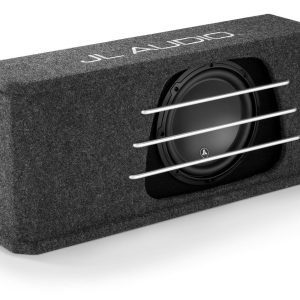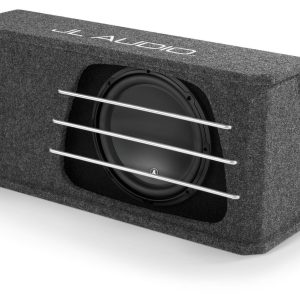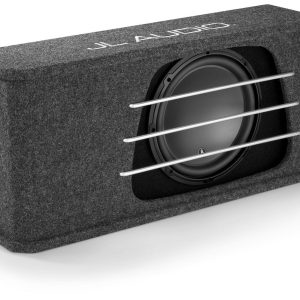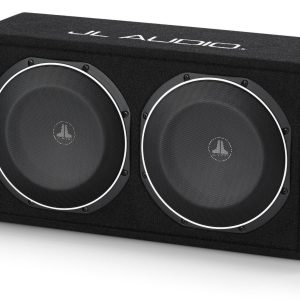
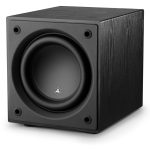
JL Audio Dominion d108-GLOSS Powered Subwoofer
990,00 €
JL Audio Dominion d108-GLOSS is a compact powered subwoofer for stereo and home cinema systems. RCA and speaker-level inputs allow connection to different amplifiers. Adjustable filtering, phase and polarity help integrate its bass with the main speakers. The sealed, internally braced MDF enclosure occupies little space and helps limit cabinet-panel vibration.
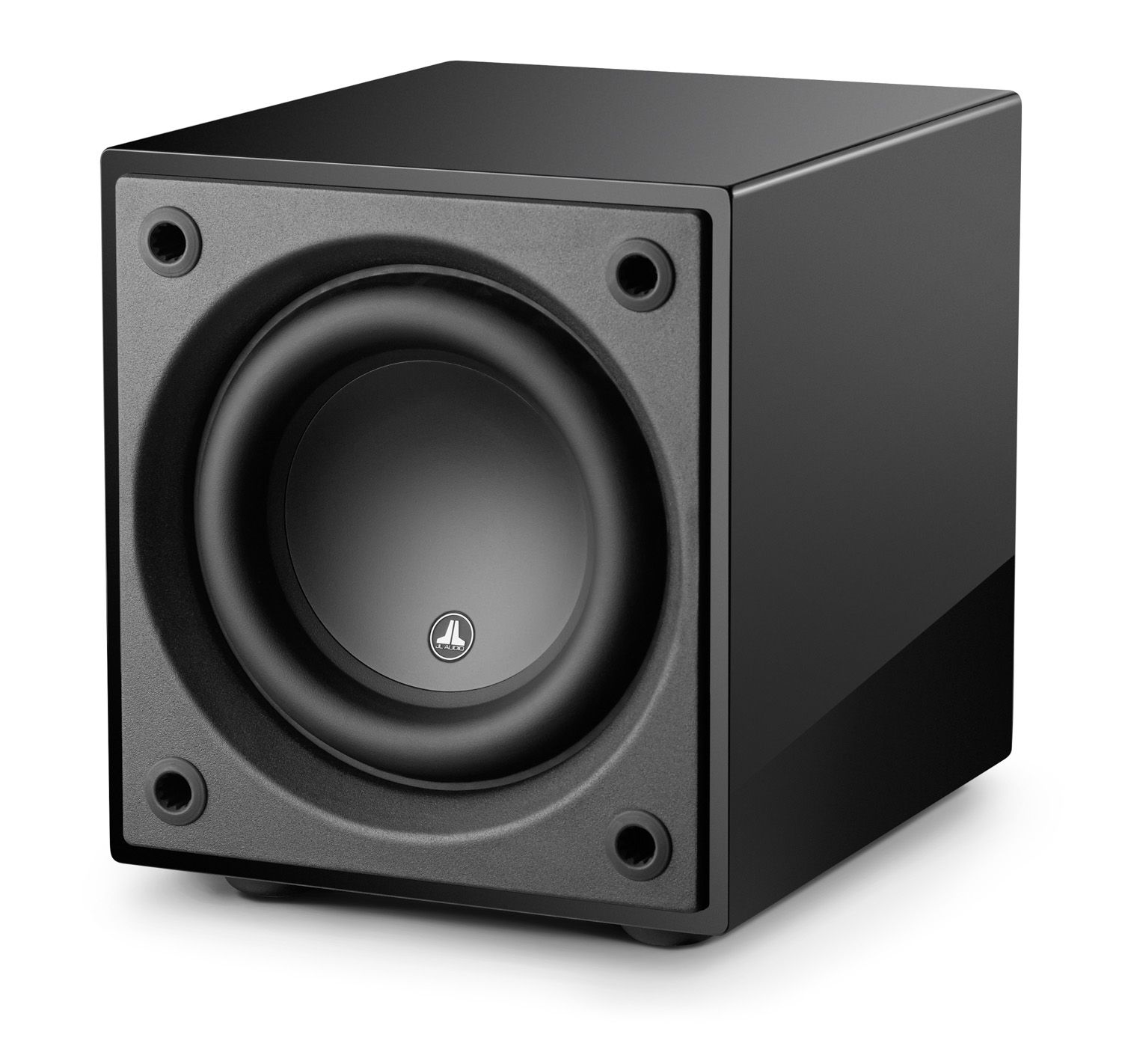
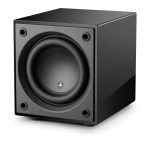
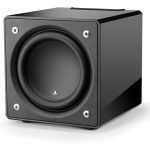
JL Audio Dominion d108-GLOSS is a compact powered subwoofer for stereo and home cinema systems. It combines an 8-inch bass driver with an integrated Class D amplifier. Its modest dimensions make it easier to accommodate where space is limited.
Design and intended use
This is the compact d108-GLOSS variant, not the larger d110 or the ASH-finish model. Its sealed enclosure has no bass-reflex port, so additional clearance for airflow from a port is unnecessary.
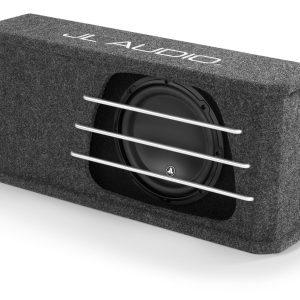
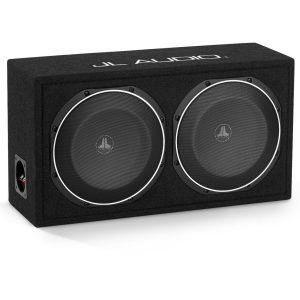
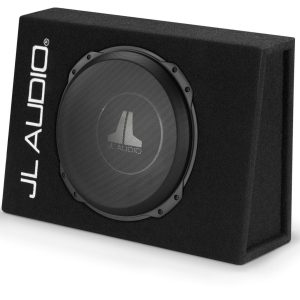
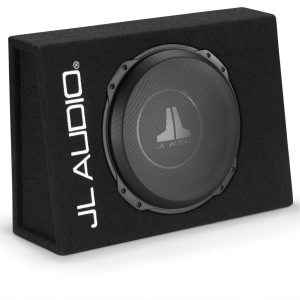
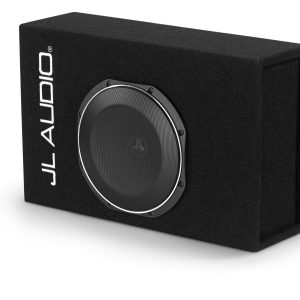
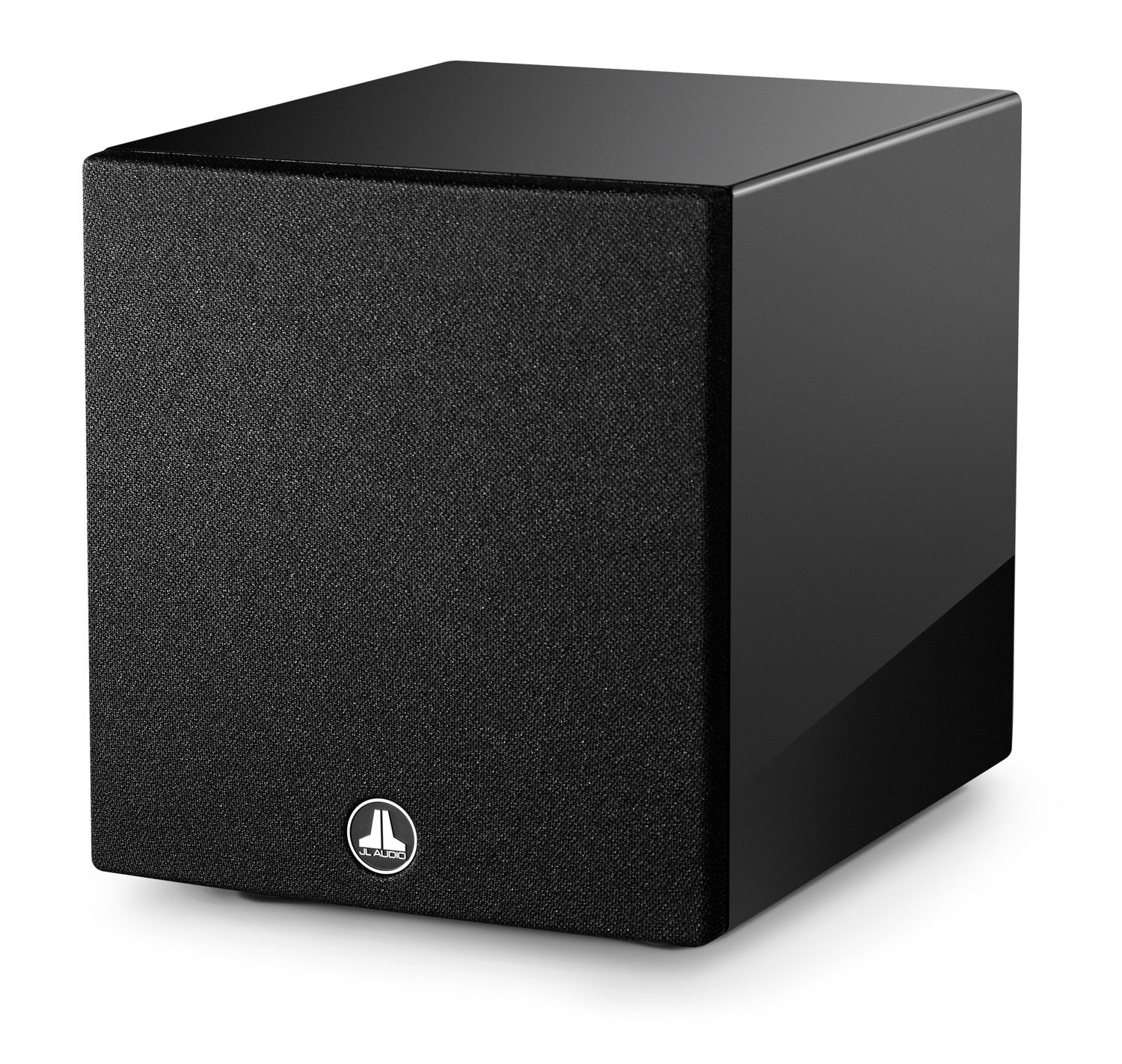
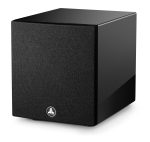
The cabinet is made from CNC-cut MDF panels and reinforced with internal bracing. This construction increases cabinet rigidity and helps limit panel vibration. The exterior has a gloss black finish, while the grille is finished in black fabric.
Connection options
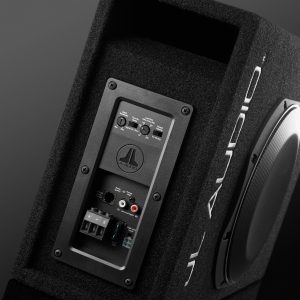
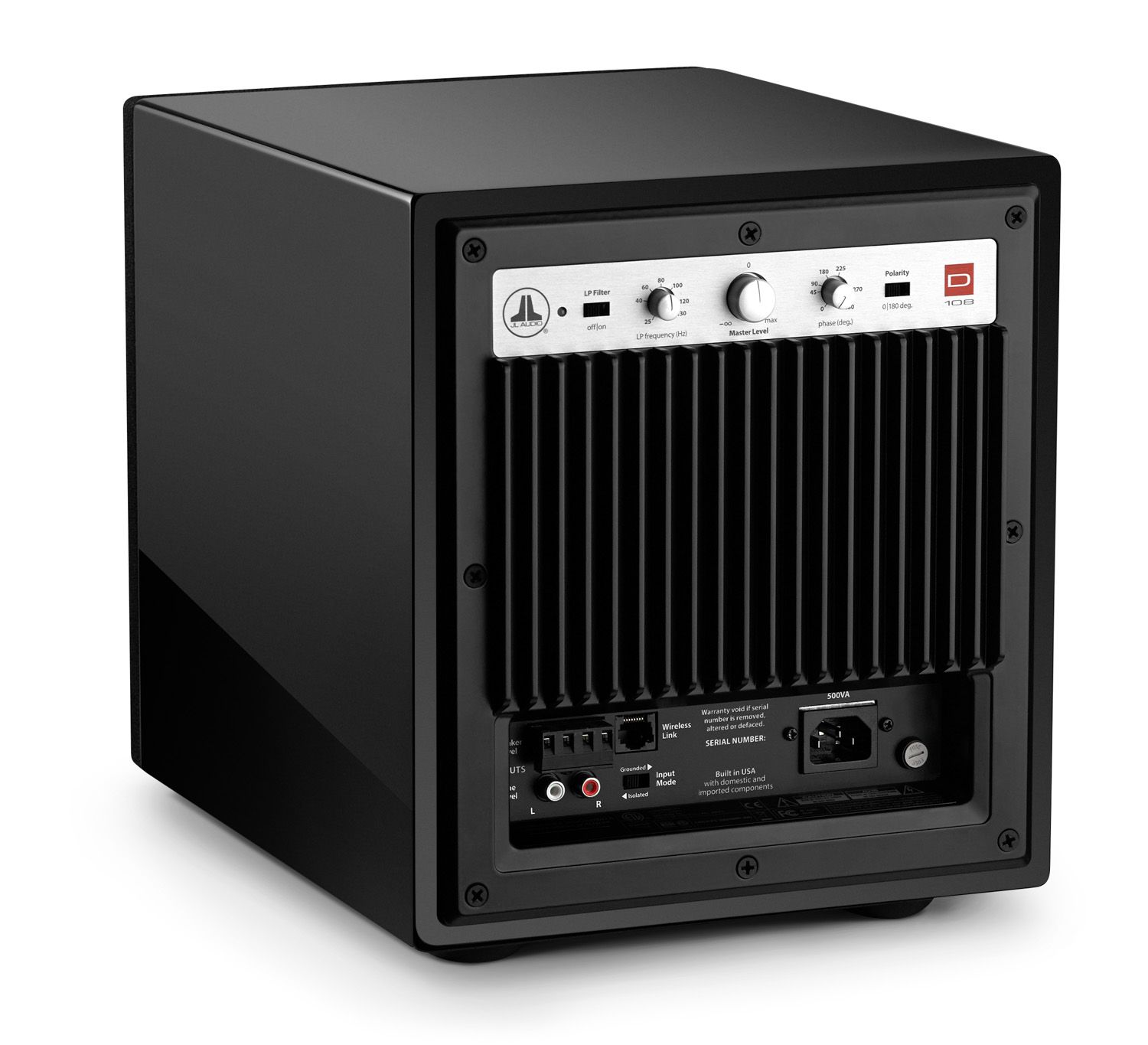
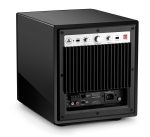
Two RCA line-level inputs accept either a stereo or mono signal. Use the stereo connection with a two-channel preamplifier output. A mono connection is suitable for a single subwoofer signal from an AV receiver or processor.
The speaker-level input accepts a stereo or mono signal through a removable plug. It is useful when an amplifier does not provide a suitable line-level output. Input grounding can be switched between isolated and grounded settings, allowing you to compare the two if background hum is audible in the system.
Balanced inputs, line-level outputs and a slave output are not provided. The integrated wireless port is intended for the separately sold JLINK TRX system, for which a range of up to 100 feet is specified. The JLINK transmitter and receiver are not included.
System integration
The level control extends from complete mute to 15 dB above reference gain. Begin with a lower setting and increase it while listening from your usual seating position. This makes it easier to achieve convincing bass without overwhelming the main speakers.
The adjustable low-pass filter determines how high into the frequency range the subwoofer operates. Its broad adjustment range and steep roll-off support integration with different main speakers. When an AV receiver manages the crossover, the internal filter can be bypassed. Otherwise, begin around the lower-frequency limit of the main speakers and refine the setting by listening.
Polarity can be switched between two positions, while the continuously adjustable phase control permits finer alignment with the main speakers. Compare settings from the primary listening position and use the same recording throughout so that changes are easier to judge.
Automatic signal sensing manages the power mode according to the incoming signal. There is no automatic calibration function, so level, filtering and phase must be adjusted manually.
Placement and understanding the measurements
The sealed enclosure can be positioned relatively close to a wall, although room boundaries may reinforce bass output. A corner will generally provide more reinforcement than a position farther from the walls. Compare several locations before making the final level and phase adjustments.
At 12 kg, the subwoofer requires a stable supporting surface. Its narrow cabinet also helps it fit into locations where there would not be enough room for a larger model.
The anechoic frequency response describes performance without the influence of room acoustics. The wider -3 dB and -10 dB points identify frequencies at which the output level has already fallen. The 500 W RMS rating applies to short-term power and should not be described as continuous output.
Technical specifications
| Model | JL Audio Dominion d108-GLOSS |
| Type | Powered subwoofer |
| Driver | 8-inch bass driver |
| Enclosure type | Sealed |
| Enclosure construction | CNC-cut MDF panels with internal bracing |
| Cabinet finish | Gloss black |
| Grille finish | Black fabric |
| Amplifier | Integrated Class D amplifier |
| Short-term RMS power | 500 W |
| Anechoic frequency response | 31-112 Hz, ±1.5 dB |
| -3 dB points | 29 Hz and 119 Hz |
| -10 dB points | 21 Hz and 143 Hz |
| Effective piston area | 32.18 sq. in. / 0.0208 m² |
| Effective displacement | 80 cu. in. / 1.3 l |
| Power mode | Automatic signal sensing |
| Lighting modes | Not specified |
| Unbalanced inputs | Stereo or mono, two RCA connectors |
| Balanced inputs | None |
| Speaker-level input | Stereo or mono, removable plug |
| Input grounding | Isolated or grounded |
| Separate input modes | Not provided |
| Level control | Complete mute to +15 dB above reference gain |
| Filter type | Low-pass filter |
| Filter slope | 24 dB per octave |
| Filter range | 25-130 Hz |
| Filter bypass | Yes |
| Polarity | 0 or 180° |
| Phase | Continuously adjustable from 0 to 280°, 80 Hz reference frequency |
| E.L.F. adjustment | None |
| Line outputs | None |
| Slave output | None |
| Calibration mode | None |
| Wireless connectivity | Port for the optional JLINK TRX system; system sold separately |
| Width | 254 mm |
| Height | 289 mm |
| Depth | 336 mm |
| Net weight | 12 kg |
FAQ
Which input should I use with a stereo amplifier or AV receiver?
Use the mono RCA connection for the subwoofer output of an AV receiver. Connect both RCA inputs to a stereo preamplifier output. The speaker-level input is intended for an amplifier without a suitable line-level output.
When should I bypass the internal crossover filter?
Bypass it when an AV receiver or audio processor is already managing the crossover. This prevents two filters from interacting with one another.
How should I adjust phase and polarity?
First compare both polarity settings. Then adjust the phase control gradually until the bass at the listening position blends most effectively with the main speakers.
Can the subwoofer be used wirelessly?
Yes, but the optional JLINK TRX system is required. It is sold separately, so the integrated wireless port alone is not sufficient.
Where is the best place to position this subwoofer?
Begin near the front wall, but not directly in a corner. Move the subwoofer and compare the result in several positions because room boundaries alter the perceived bass level.