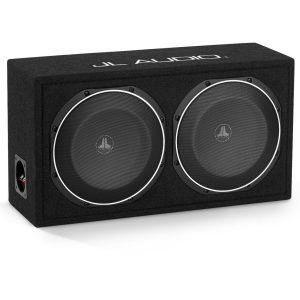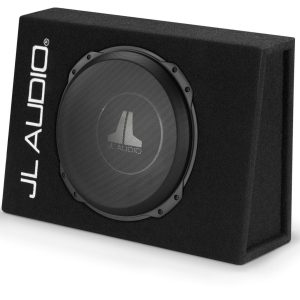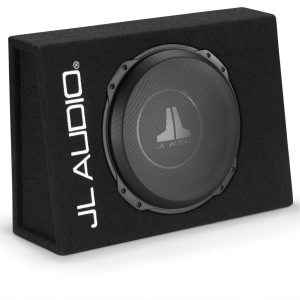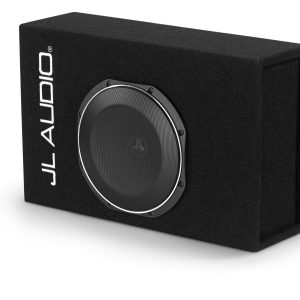
JL Audio Dominion d110-ASH Active Subwoofer
1 090,00 €
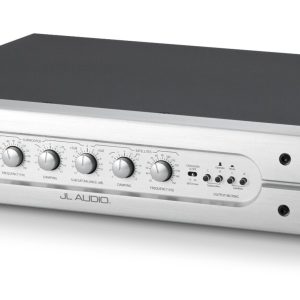
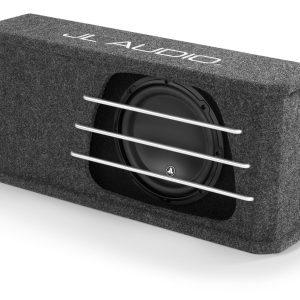
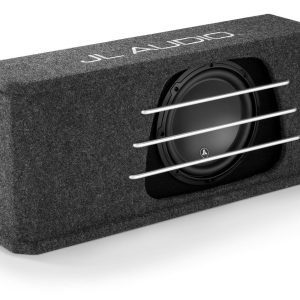
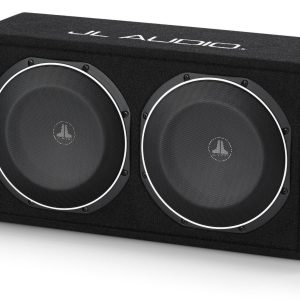
JL Audio Dominion d110-ASH is an active subwoofer for stereo and home cinema systems. Its sealed enclosure and 27-111 Hz anechoic frequency response within ±1.5 dB clearly define its operating range. Two RCA sockets and a high-level input allow connection to audio equipment with different output types. Adjustable filter and phase controls help integrate the subwoofer with the main speakers and the room.
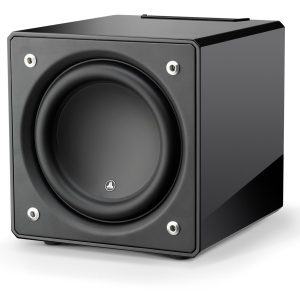
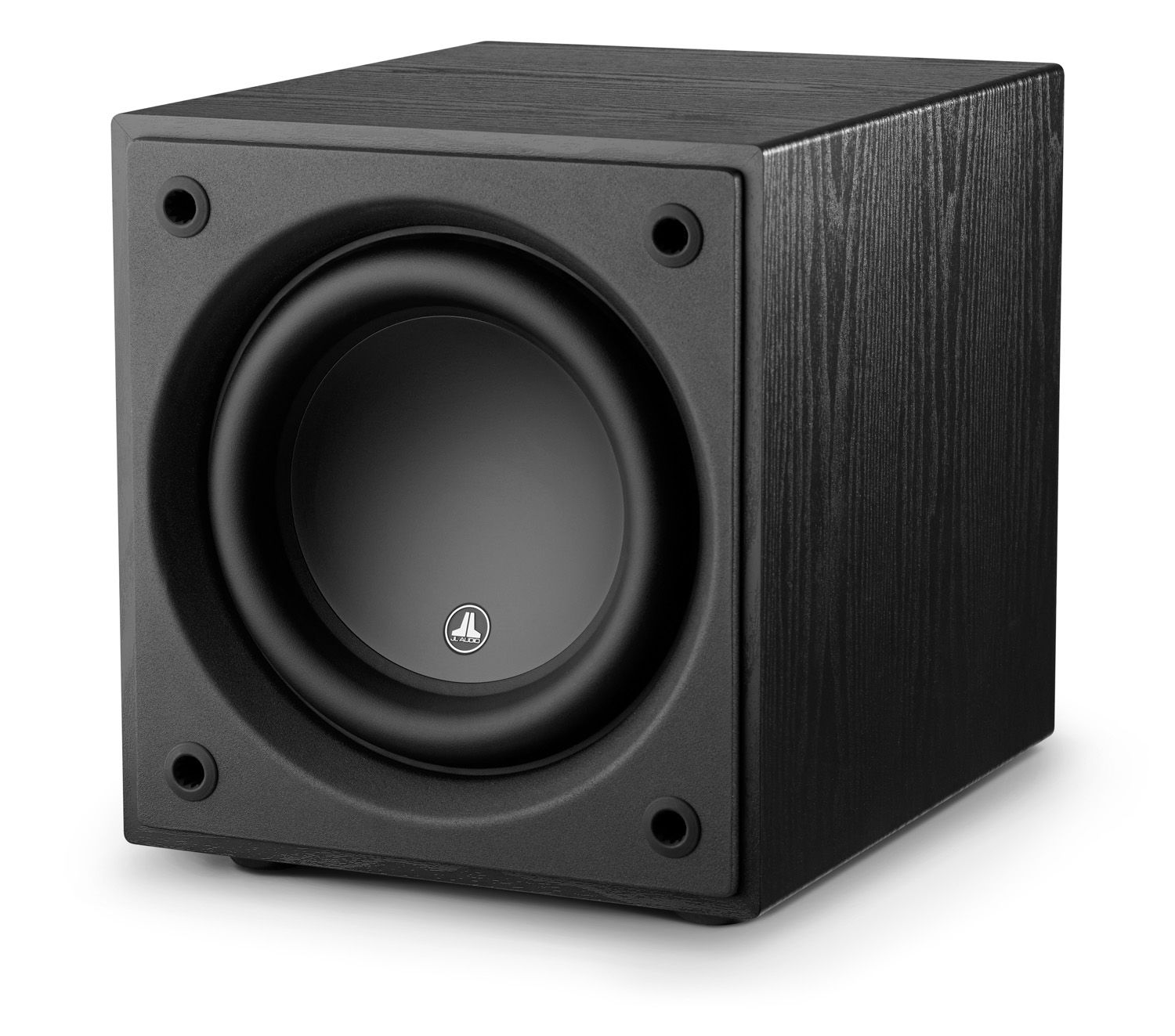
JL Audio Dominion d110-ASH is an active subwoofer designed for the low-frequency channel in stereo and home cinema systems. Its sealed enclosure and 305 mm width make it easier to plan its position in the room. The cabinet has a Black Ash finish. The integrated amplifier delivers up to 750 W RMS in short-term operation. This figure should not be interpreted as a continuous power rating.
Who is this subwoofer for?
This model is suitable for systems providing either a line-level or speaker-level low-frequency signal. An automatic signal-sensing power mode controls when the subwoofer switches on according to the incoming signal.
Its anechoic frequency response is 27-111 Hz within ±1.5 dB. This defines the frequency range maintained under the specified measurement conditions. The result heard in your room will also depend on placement, the main speakers and the selected settings.
Connection options
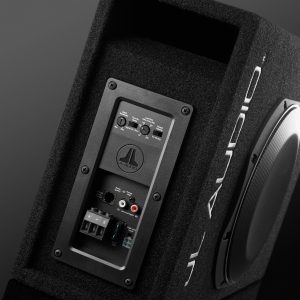
Two RCA sockets accept either a stereo or mono signal. A source with a single subwoofer output can be connected in mono mode, while the stereo RCA connection is intended for two line-level channels.
The high-level input also works in stereo or mono and uses a removable plug. Choose this connection when the amplifier does not provide a suitable line-level subwoofer output. It allows the subwoofer to receive a speaker-level signal.
Input grounding can be set to isolated or grounded. If you hear hum in the system, compare both settings and use the quieter option. There are no XLR inputs or line-level outputs.
Filter, level and phase adjustment
The level control ranges from full mute to +15 dB above reference gain. Begin with a lower setting and raise it while listening from your normal seating position. The bass should complement the main speakers rather than overwhelm their operating range.
The low-pass filter can be adjusted from 25 to 130 Hz and has a slope of 24 dB per octave. The filter can also be disabled, which is useful when crossover management is already handled by another component in the system.
Polarity can be switched between 0° and 180°. Phase is also continuously adjustable from 0° to 280°, using an 80 Hz reference frequency. Adjust the phase from the listening position and select the setting that produces the smoothest transition between the main speakers and the subwoofer.
Room placement
The 305 × 340 × 403 mm cabinet requires some additional clearance for connected cables. The subwoofer weighs 17.3 kg, so place it on a firm, level surface. Moving it closer to a wall or corner may change the bass level at the listening position.
A sealed enclosure does not require clearance for a bass-reflex port. However, low-frequency energy is distributed unevenly in different parts of a room. Try several positions, then readjust the level and phase after each move.
Understanding the frequency figures
The specified -3 dB points are 25 and 118 Hz, while the -10 dB points are 21 and 143 Hz. These figures indicate the response roll-off boundaries outside the main operating range. They should not be confused with the response achieved in a particular room.
The effective piston area is 0.0314 m², and the effective displacement is 2.08 litres. These measurements describe the driver’s working geometry. They do not represent a separate amplifier power rating.
Technical specifications
| Type | Active subwoofer |
| Enclosure type | Sealed |
| Finish | Black Ash |
| Frequency response | 27-111 Hz, anechoic, ±1.5 dB |
| -3 dB frequencies | 25 Hz and 118 Hz |
| -10 dB frequencies | 21 Hz and 143 Hz |
| Effective piston area | 0.0314 m² / 48.71 sq. in. |
| Effective displacement | 2.08 l / 127 cu. in. |
| Amplifier power | 750 W RMS, short-term |
| Power mode | Automatic, signal-sensing |
| Lighting modes | None |
| Unbalanced inputs | Stereo or mono, two RCA sockets |
| Balanced inputs | None |
| High-level input | Stereo or mono, removable plug |
| Input grounding | Isolated or grounded |
| Additional input modes | None |
| Level control | Full mute to +15 dB above reference gain |
| Filter type | Low-pass filter |
| Filter slope | 24 dB per octave |
| Filter frequency range | 25-130 Hz |
| Filter bypass | Yes |
| Polarity | 0° or 180° |
| Phase | Continuously adjustable from 0° to 280°, 80 Hz reference frequency |
| E.L.F. correction | None |
| Line-level outputs | None |
| Second subwoofer output | None |
| Calibration mode | None |
| Dimensions | 305 × 340 × 403 mm / 12 × 13.4 × 15.86 in. |
| Net weight | 17.3 kg / 38.2 lb |
FAQ
Which input should I use with a stereo amplifier or AV receiver?
Use the mono RCA connection for a single line-level subwoofer output. Connect two line-level channels in stereo mode. If no line-level output is available, you can use the high-level input.
When should I disable the internal low-pass filter?
Disable the filter when another component in the system manages the crossover. Otherwise, begin with a setting close to the lower frequency limit of the main speakers, then fine-tune it by listening.
How should I adjust polarity and phase?
First compare both polarity positions from your usual listening position. Then use the phase control to find the smoothest transition. Judge the consistency and integration of the bass rather than its volume alone.
Where is the best place to position the subwoofer?
Begin with a position near the main speakers and listen from several points in the room. A wall or corner may alter the perceived bass level. Whenever you move the subwoofer, check the level and phase again.
How can I plan a system with a second subwoofer?
A second subwoofer cannot be connected directly to this model because it has no dedicated output for one. The d110-ASH provides RCA and high-level inputs, so plan a multi-subwoofer system around the outputs available from the source equipment.