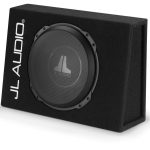
JL Audio ACP110LG-TW1 Powered Subwoofer Enclosure
680,00 €
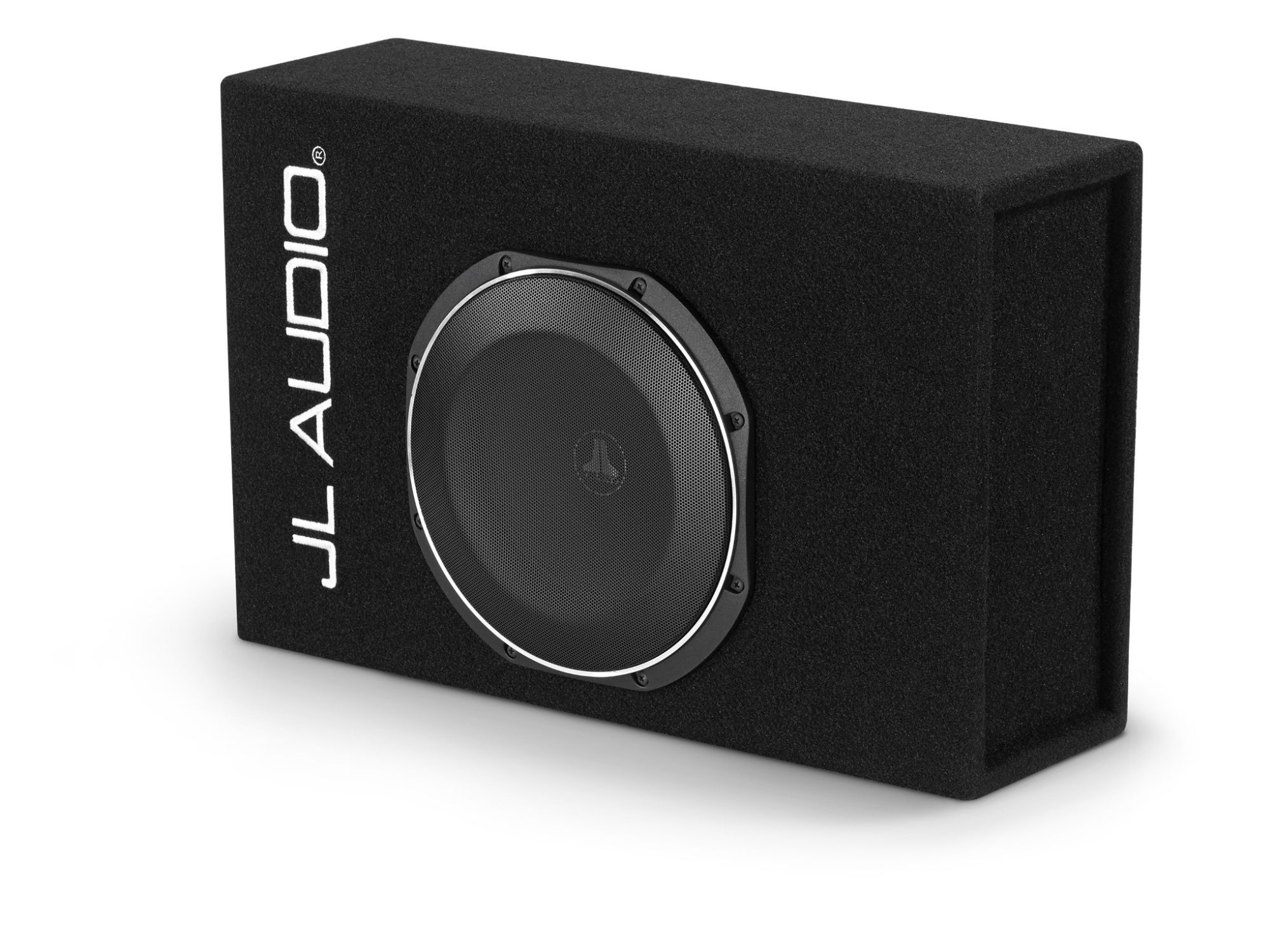
The JL Audio ACP110LG-TW1 is a powered subwoofer enclosure for a car audio system. Its amplifier is built into a low-profile enclosure, so a separate subwoofer power amplifier is unnecessary. RCA and high-level inputs provide two ways to connect the audio signal. An adjustable low-pass filter and polarity switch help blend its bass with the car’s main speakers. The enclosure has a black carpet finish, and a steel-mesh grille is included.
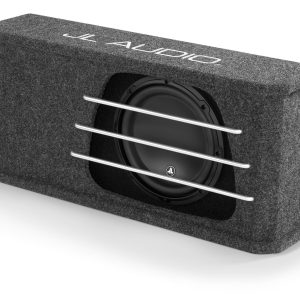
JL Audio ACP110LG-TW1 is a powered subwoofer enclosure for a car audio system. Its amplifier is built into a low-profile, slot-ported enclosure, so the system does not need a separate subwoofer power amplifier. The built-in amplifier delivers 400 W RMS continuous power at 0.25 Ω. Before choosing it for a particular vehicle, consider both how the enclosure will fit and how it will connect to the audio source already installed.
Check the width, height and depth of the intended space before settling on a position. The low profile can help where available height is limited, but height alone does not establish whether the enclosure will fit. Allow room for the slot-port opening as well as the enclosure itself. The opening needs to remain clear after luggage and other items are placed in the vehicle.
Enclosure and finish
The slot port is part of the enclosure’s design. When positioning the subwoofer, make sure vehicle trim or luggage will not obstruct its opening. Leave enough access to connect the wiring and reach the fuse if needed. It is sensible to decide on the enclosure’s position before arranging the wiring permanently, especially given its weight.
The enclosure has a black carpet finish. A black steel-mesh grille covering the speaker side is included. Consider which side will face items carried in the vehicle and which side will face usable luggage space. That choice can affect how easily you can keep the port clear and reach the connections once the enclosure is in place.
Connecting the audio signal
The ACP110LG-TW1 accepts a signal through either RCA inputs or high-level inputs. Use the RCA path when the car audio source has a line-level output. The high-level inputs are intended for a signal from speaker outputs. These two options let you choose a connection that matches the source already in the vehicle.
Check the source’s output level before selecting an input. The two input types accept different voltage ranges, so the choice should be based on the signal as well as the available connector. Their respective ranges are listed in the specifications below. Choosing the appropriate path at this stage makes the rest of the subwoofer setup easier to approach.
The stated 0.25 Ω nominal impedance describes the complete powered system. It should not be treated as the load of a separate passive subwoofer to connect to an external amplifier. The system also needs power and ground connections; the recommended copper wire sizes and specified fuse are shown in the table. Plan access to those connections and the fuse when deciding where the enclosure will sit.
Adjusting the bass
The built-in low-pass filter passes the low-frequency part of the signal. Its cutoff is adjustable, allowing you to set where the subwoofer’s contribution meets the sound of the car’s main speakers. A useful starting point is a cutoff near the point where those speakers still sound confident. Then listen and adjust it until the transition between the main speakers and the subwoofer sounds even. The available adjustment range and filter slope are listed below.
The output polarity switch lets you compare two settings without changing the wiring. After switching between them, listen from your usual seat and choose the setting that gives the fuller bass blend. The result depends on the enclosure’s position in the vehicle and on the sound of the other speakers, so make the comparison from the place where you normally listen.
For remote adjustment of the bass level, an optional RBC-1 controller can be used. It is not listed as an included accessory and must be selected separately. This option is useful if you want to change the bass level while listening without reaching the enclosure itself.
Technical specifications
| Type | Powered subwoofer enclosure |
|---|---|
| Enclosure | Low-profile, slot-ported |
| Built-in amplifier continuous power | 400 W RMS at 0.25 Ω |
| System nominal impedance | 0.25 Ω |
| RCA inputs | Accepted voltage: 70 mV-1.40 V RMS |
| High-level inputs | Accepted voltage: 280 mV-5.4 V RMS |
| Recommended power wire | 8 AWG copper |
| Recommended ground wire | 8 AWG copper |
| Fuse | 30 A, ATO or ATC type |
| Finish | Black carpet |
| Grille | Black steel-mesh grille included |
| Filter mode | Low-pass only |
| Filter slope | 12 dB per octave |
| Filter adjustment range | 50-200 Hz |
| Output polarity switch | Yes |
| Remote bass level controller | Optional RBC-1 |
| External dimensions | Width 533 mm, height 343 mm, depth 168 mm |
| Net weight | 11.34 kg |
FAQ
Does this subwoofer need a separate amplifier?
No. The amplifier is built into the enclosure. Its stated nominal impedance describes the powered system; it is not an instruction to connect a separate passive subwoofer to an external amplifier.
Which signal input should I use?
Use the RCA inputs if the car audio source has a line-level output. Use the high-level inputs for a signal from speaker outputs. Check the voltage range specified for the input you choose against the source’s output level.
How should I start adjusting the filter?
From your usual listening seat, play the same familiar passage of music and compare several cutoff settings in turn without changing the volume. This makes it easier to hear which setting produces the smoothest blend with the main speakers.
What is the polarity switch for?
It lets you compare which of two settings blends better with the vehicle’s other speakers. Make the choice while listening from your usual seat, since the enclosure’s position and the other speakers affect what you hear.
What should I check when choosing a location?
Check the enclosure’s width, height and depth against the intended space. Keep the slot-port opening unobstructed, and leave access to the wiring and fuse.
Is the remote level controller included?
No. The RBC-1 is an optional accessory. Select it separately if you want to adjust the bass level remotely.