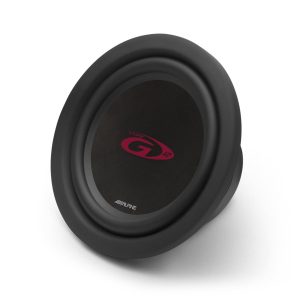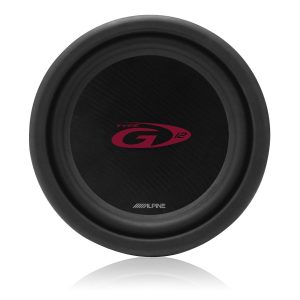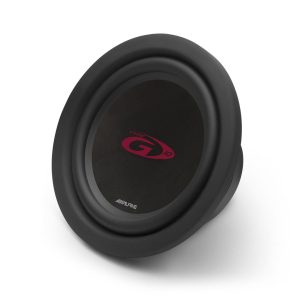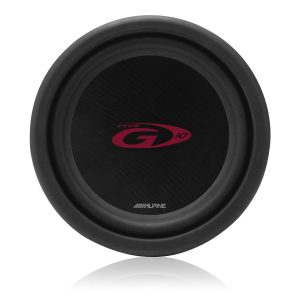


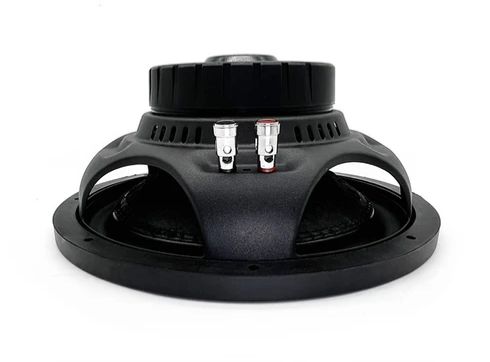



Harmony HB1.10S4 Subwoofer
125,00 €
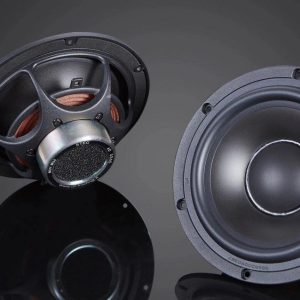
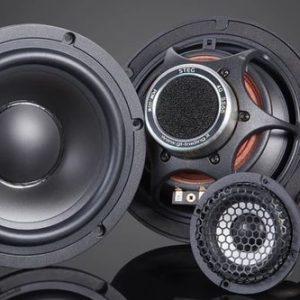
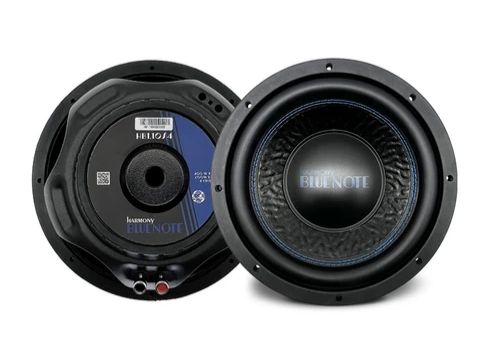
The Harmony HB1.10S4 is a 10-inch car audio subwoofer driver for a custom sound system. Its 200 W RMS rating helps with amplifier selection, while the single 4-ohm voice coil provides a clear nominal load. The treated or pressed paper cone works with a Y25 ferrite magnet. The driver can be installed in a sealed or bass-reflex enclosure. A volume of approximately 28 litres is recommended for a sealed installation.
The Harmony HB1.10S4 subwoofer is a 10-inch car audio driver designed for installation in a separate enclosure. Its nominal diameter is 250 mm, and its rated RMS power is 200 W.
A single 4-ohm voice coil provides a straightforward 4-ohm nominal load when one driver is connected. The subwoofer can be installed in either a sealed or bass-reflex enclosure. A volume of approximately 28 litres is recommended for a sealed installation.
Purpose and construction
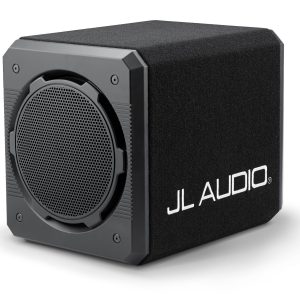
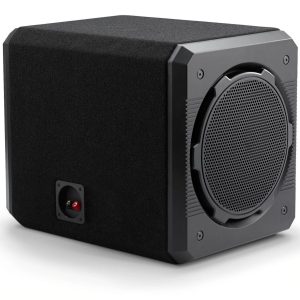
This is a separate car audio subwoofer driver, not a complete powered subwoofer with a built-in amplifier. Installation requires a suitable enclosure, a power amplifier channel and speaker cable.
The cone is made from treated or pressed paper. The driver’s motor system uses a Y25 ferrite magnet. Together, these components form the electromechanical assembly that converts the amplifier signal into cone movement.
The 250 mm measurement is the driver’s nominal diameter. It does not specify the required mounting cut-out or the overall basket diameter. When building a custom enclosure, these dimensions must be determined from the actual driver.
At our Kaunas store, we can discuss amplifier loading and the most suitable enclosure type. For a useful consultation, please bring the power and permitted impedance specifications of your existing amplifier.
Sealed or bass-reflex enclosure
A volume of approximately 28 litres is recommended for a sealed enclosure. This is a design guideline for the enclosure’s internal volume, not a set of external dimensions. The finished dimensions will depend on the chosen shape and the thickness of the board used.
A sealed design does not require a bass-reflex port to be tuned. The enclosure must be rigid and properly sealed because leaking joints will alter its intended operation. The area around the mounted driver must also form an airtight seal.
This model can also be installed in a bass-reflex enclosure. The required enclosure volume, port area and tuning frequency are not provided. The 28-litre guideline for a sealed enclosure therefore cannot be transferred automatically to a bass-reflex design.
A bass-reflex enclosure must be designed as a complete system. A randomly selected port does not guarantee correct matching with the driver. This option is better suited to a buyer who can calculate the enclosure accurately.
Connecting the amplifier
The single 4-ohm voice coil does not offer multiple coil-wiring configurations for one driver. A single subwoofer presents a nominal 4-ohm load to the amplifier, so the amplifier channel must be suitable for that impedance.
Choose the amplifier primarily according to the subwoofer’s 200 W RMS rating. The stated 400 W maximum power is not a continuous power rating and should not be used as the basis for selecting a 400 W RMS amplifier.
This passive driver has no RCA input, built-in filter or level control. It connects to the amplifier’s speaker output, with the positive and negative polarity markings observed correctly.
Crossover filtering, gain and phase must be controlled through the amplifier or an audio processor. As a starting point, the low-pass filter can be set at approximately 70-90 Hz. The crossover point can then be adjusted to suit the performance of the front speakers.
Begin with the amplifier gain set low. Increase it until the bass reaches a balanced level while avoiding audible distortion. The crossover-frequency control is not a volume control.
Positioning and integration in the vehicle
The enclosure’s position in the boot affects how bass is distributed throughout the cabin. Try several driver orientations and judge the result from the driver’s seat. A measurement taken only beside the enclosure does not represent the balance heard inside the cabin.
The subwoofer cone needs sufficient clearance to move freely. A bass-reflex enclosure also requires open space around its port. Do not press the port against interior trim or allow luggage and other objects to block it.
If the amplifier or processor provides phase adjustment, compare the available settings from the listening position. Keep the setting that integrates the bass more effectively with the front speakers.
The specified 43 Hz-1.5 kHz frequency range does not define a mandatory crossover setting. In the installed system, the selected filter determines the upper operating limit. It should be adjusted according to the frequency range covered by the vehicle’s other speakers.
Technical specifications
| Model | Harmony HB1.10S4 |
|---|---|
| Product type | Car audio subwoofer driver |
| Nominal diameter | 10 inches / 250 mm |
| RMS power | 200 W |
| Maximum power | 400 W |
| Sensitivity | 88 dB, measured at 2.83 V / 1 m |
| Frequency range | 43 Hz-1.5 kHz |
| Nominal impedance | 4 ohms |
| Voice coil | Single |
| Cone material | Treated or pressed paper |
| Magnet | Y25 ferrite |
| Suitable enclosure types | Sealed or bass-reflex enclosure |
| Recommended sealed-enclosure volume | Approximately 28 litres |
FAQ
Does this subwoofer require a separate amplifier?
Yes. This is a passive car audio driver without a built-in amplifier. It requires a separate power amplifier channel and a correctly configured low-pass filter.
Which power rating should I use when choosing an amplifier?
Match the amplifier using the 200 W RMS rating and the 4-ohm load. The 400 W figure is the maximum power rating, not the continuous rating.
Is the 28-litre volume suitable for a bass-reflex enclosure?
No. This recommendation applies to a sealed enclosure. A bass-reflex design requires separate calculations for enclosure volume, port dimensions and tuning frequency.
How do I connect one subwoofer?
Connect its single 4-ohm voice coil to an amplifier channel suitable for a 4-ohm load. Maintain consistent polarity throughout the audio system.
Can I use two of these subwoofers?
Yes, provided that the amplifier supports the resulting load. Two drivers connected in parallel will present 2 ohms, while a series connection will present 8 ohms.
Can it be connected directly to a home cinema amplifier?
Not to a line-level subwoofer output. This car audio driver is not a powered home cinema subwoofer and requires a separate power amplifier.
How should I choose the low-pass crossover point?
Start at approximately 70-90 Hz and listen from the driver’s seat. Adjust the crossover point until there is neither a gap nor excessive overlap between the subwoofer and the front speakers.