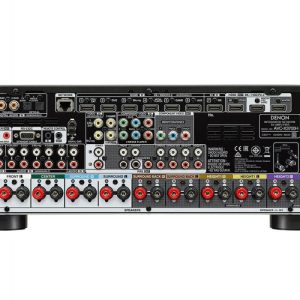


Denon AVC-X6500H Home Cinema Amplifier
2 699,00 €
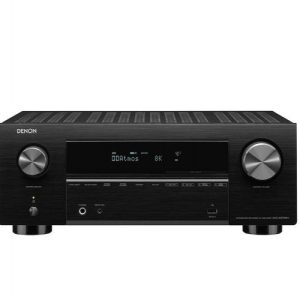
The Denon AVC-X6500H is an 11.2-channel home cinema amplifier designed for an expanded multichannel system. Eleven built-in amplification channels make immersive sound possible without a separate power amplifier for every speaker channel. Eight HDMI inputs accommodate multiple sources, while three outputs serve the main and second zones. Audyssey MultEQ XT32 helps tailor the sound to the room.
The Denon AVC-X6500H home cinema amplifier is an 11.2-channel model designed for a multichannel home cinema system. Its eleven built-in amplification channels make it easier to assemble an immersive speaker system without requiring a separate external power amplifier for every speaker channel.
The stated output is 140 W per channel. The measurement conditions are not provided, so this figure should not be compared directly with power ratings measured under different conditions. The design draws on solutions used in the EISA award-winning AVC-X8500H.
Surround sound system
The amplifier supports Dolby Atmos, DTS:X, DTS Virtual:X and Auro-3D. These formats allow playback to be selected according to the available speaker layout and the soundtrack being used.
IMAX Enhanced processing requires an update. Advanced AL32 Multichannel Processing is provided for multichannel digital audio processing.
HDMI connections and zones
Eight HDMI inputs allow several video and audio sources to remain connected at the same time. One input is located on the front, making it convenient for equipment that is connected only temporarily.
Of the three HDMI outputs, two are assigned to the main zone. They are useful when two display devices are used in the same room. The third output serves Zone 2 and supplies it with a separate HDMI signal.
ARC and eARC allow sound from a television to be returned through the HDMI connection. eARC is the more suitable option when both the television and the content support higher-bandwidth audio transmission.
Video signal support
The model processes a full-frame 4K/60 Hz video signal. It also supports HDR, Dolby Vision and HLG. The source, amplifier and display must be connected with HDMI cables suitable for the required signal.
Calibration and audio settings
Audyssey MultEQ XT32 provides automatic room correction. During calibration, the system evaluates speaker performance at the listening positions and adjusts the audio settings accordingly.
Sub EQ is used to tune the low-frequency channels. Audyssey LFC manages the effect of low frequencies on surrounding rooms. Dynamic EQ adjusts tonal balance, while Dynamic Volume reduces pronounced changes in volume.
The optional Audyssey MultEQ app can be used for additional adjustment. It is not presented as an accessory included with the amplifier.
Network features and music files
Wi-Fi, Bluetooth and built-in HEOS technology are provided for wireless music streaming. AirPlay 2 enables audio streaming from compatible Apple devices.
Smart remote-control capability is also provided. Amazon Alexa can be used to change the source and adjust the overall volume. Siri was intended for voice control of music playback and volume.
The availability and operation of voice and network features depend on the region, user accounts and continued support from third-party service providers. This should be considered carefully if voice control is a primary reason for choosing the amplifier.
For high-resolution audio playback, the supported file types include DSD at 2.8 and 5.6 MHz, FLAC, ALAC and WAV.
Installation
Place the amplifier on a stable surface and leave sufficient open space for heat to dissipate. Do not cover the ventilation openings or place other heat-producing equipment directly on top of the enclosure.
Before starting automatic calibration, put the speakers and subwoofers in their final positions. Select measurement points around the normal listening area so that room correction is applied to the seating area that will actually be used.
Technical specifications
| Model | Denon AVC-X6500H |
|---|---|
| Type | 11.2-channel home cinema amplifier |
| Amplification channels | 11 built-in channels |
| Stated power output | 140 W per channel; measurement conditions not provided |
| Surround sound formats | Dolby Atmos, DTS:X, DTS Virtual:X, Auro-3D |
| IMAX Enhanced | An update is required for processing |
| Audio processing | Denon Advanced AL32 Multichannel Processing |
| HDMI inputs | 8, including 1 on the front panel |
| Main-zone HDMI outputs | 2 |
| Zone 2 HDMI outputs | 1 |
| Video processing | Full-frame 4K/60 Hz signal |
| Video formats | HDR, Dolby Vision, HLG |
| HDMI audio return | ARC and eARC |
| Automatic calibration | Audyssey MultEQ XT32 |
| Audyssey features | LFC, Sub EQ, Dynamic Volume, Dynamic EQ |
| Additional adjustment | Optional Audyssey MultEQ app |
| Wireless connectivity | Wi-Fi and Bluetooth |
| Multiroom audio | Built-in HEOS technology |
| AirPlay | AirPlay 2 |
| Voice control | Amazon Alexa; Siri with AirPlay 2 |
| Alexa commands | Source selection and overall volume control |
| Audio files | DSD 2.8/5.6 MHz, FLAC, ALAC, WAV |
| Remote control | Smart remote-control capability |
FAQ
Who is this amplifier intended for?
It is intended for buyers planning a multichannel home cinema system with immersive surround sound formats. Eleven amplification channels reduce the need for additional power amplifiers.
Which HDMI output should I use for a television?
Connect the television to a main-zone output. To return the television’s sound through the same cable, use the connection marked ARC or eARC.
When is the front HDMI input useful?
It is convenient for a temporarily connected source when you do not want to reach the rear of the amplifier. Permanently installed sources are more practically connected to the rear inputs.
How should I prepare for Audyssey calibration?
First, place the speakers in their final positions and establish the usual listening position. Keep the room quiet during measurement and do not move the speakers.
Does IMAX Enhanced work without any additional action?
No. This processing feature requires an update, so it should not be regarded as an integral feature available from the outset.
Will voice control work with current services?
Operation depends on the region, account settings and support from the relevant service providers. The amplifier was designed to support control through Alexa and Siri.