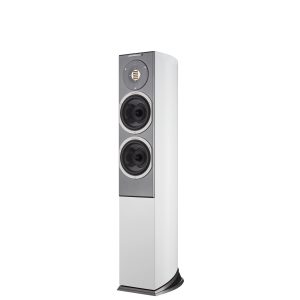


Audiovector R6 Avantgarde Floorstanding Speaker
Original price was: 21 400,00 €.14 980,00 €Current price is: 14 980,00 €.
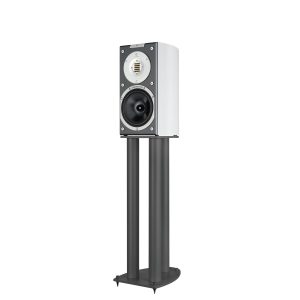
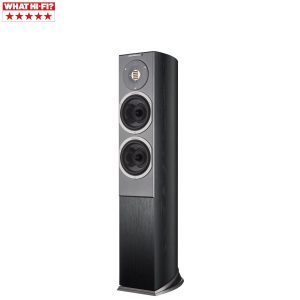
Audiovector R6 Avantgarde is a floorstanding speaker for home music systems and listeners who value considered construction. Its vacuum-formed HDF shells, teardrop profile and laminated rear panel are intended to reduce unwanted resonance and standing waves. Internal bracing and strategically positioned Nano Pore panels provide additional damping. According to Audiovector, the R6 series drive units are designed in-house and developed together with their crossovers.
Audiovector R6 Avantgarde is a floorstanding speaker designed for a home music system. Its enclosure combines vacuum-formed HDF shells, a teardrop profile and internal damping. These design choices are intended to reduce unwanted cabinet resonance and standing waves.
Who is this speaker for?
This model is suited to listeners who value carefully considered cabinet construction and the coordinated design of acoustic components. It is a floorstanding speaker rather than a bookshelf model, so it requires a permanent position on a level, solid surface.
The R6 family includes several different variants. When choosing an amplifier, refer specifically to the electrical parameters published for the Avantgarde version. Impedance, sensitivity or power-rating information from other R6 models must not be applied to this speaker.
Enclosure construction
The enclosure shells are vacuum formed from high-density fibreboard (HDF). This dense material provides a rigid foundation for the drive units and the other acoustic components housed within the speaker.
The teardrop-shaped enclosure is designed to reduce standing waves and unwanted resonance. Its curved profile also avoids the simple geometry created by conventional parallel internal walls.
The rear panel is laminated, dense and heavy. Internal bracing provides additional reinforcement, helping the enclosure retain its rigidity while limiting unwanted movement in its structural sections.
Nano Pore damping panels are strategically positioned inside the enclosure. They complement the mechanical bracing by damping energy generated within the cabinet. These panels are built into the construction and are not an external accessory.
Drive units and crossovers
According to Audiovector, the drive units used in the R6 series are designed in-house and manufactured by a Danish supplier. The company also states that these drive units are developed together with their dedicated crossovers, allowing the acoustic and filtering elements to be considered as part of the same design process.
Positioning in the listening room
Begin by placing both speakers at an equal distance from the main listening position. Leave a similar amount of space between each speaker and its nearest side wall. Avoid pushing one speaker into a corner while the other stands in a more open part of the room, as this creates an uneven acoustic environment.
Adjust the distance from the rear wall in small steps. After every change, listen for the stability of centrally placed vocals and the evenness of the bass response. The teardrop enclosure helps address internal acoustic behaviour, but it does not remove the influence of the listening room.
A slight inward angle toward the listening position may help focus the stereo image. Choose the final toe-in angle while listening from your usual seat, and make equivalent adjustments to both speakers so that the layout remains symmetrical.
Differences between Avantgarde and other R6 variants
Freedom Grounding technology and the rear-facing 3-inch midrange driver with its own crossover are exclusive to the R6 Arreté. These features therefore must not be attributed to the R6 Avantgarde.
Technical specifications
| Parameter | Details |
|---|---|
| Product type | Floorstanding speaker |
| Model variant | R6 Avantgarde |
| Enclosure material | High-density fibreboard (HDF) |
| Enclosure production | Vacuum-formed shells |
| Enclosure shape | Teardrop profile designed to reduce standing waves and unwanted resonance |
| Rear panel | Laminated, dense and heavy |
| Internal construction | Reinforced enclosure |
| Internal damping | Strategically positioned Nano Pore panels |
| Drive-unit design | Designed in-house, according to Audiovector |
| Drive-unit production | Made by a Danish supplier, according to Audiovector |
| Crossovers | Developed together with the R6 series drive units, according to Audiovector |
FAQ
Is this a floorstanding or bookshelf speaker?
It is a floorstanding speaker and should be placed directly on a stable surface. Shelves and furniture are not its intended installation locations.
How should I begin positioning the speakers in my room?
Place them symmetrically in relation to the listening position. You can then adjust their distance from the walls and their toe-in angle in small steps.
What should I consider when choosing an amplifier?
Use only the impedance, sensitivity and power-rating figures specified for the R6 Avantgarde. Figures published for other R6 variants are not a suitable basis for matching an amplifier to this model.
Should both speakers be positioned in the same way?
For a symmetrical arrangement, leave a similar distance to the side walls and angle both speakers equally. Avoid placing one speaker in a corner while leaving the other in an open area.
How can I assess the distance from the rear wall?
Change the distance in small increments. After each adjustment, listen to whether the vocal centre remains stable and the bass response stays even.
Why does the enclosure not have a conventional rectangular shape?
The teardrop profile is intended to reduce standing waves and unwanted cabinet resonance. It works alongside the internal reinforcement and Nano Pore damping.