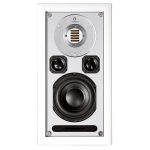
Audiovector Inwall Avantgarde Speaker
3 500,00 €
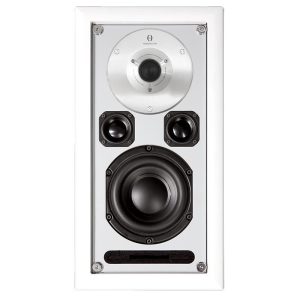
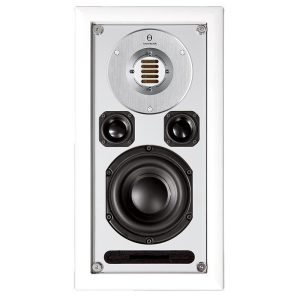
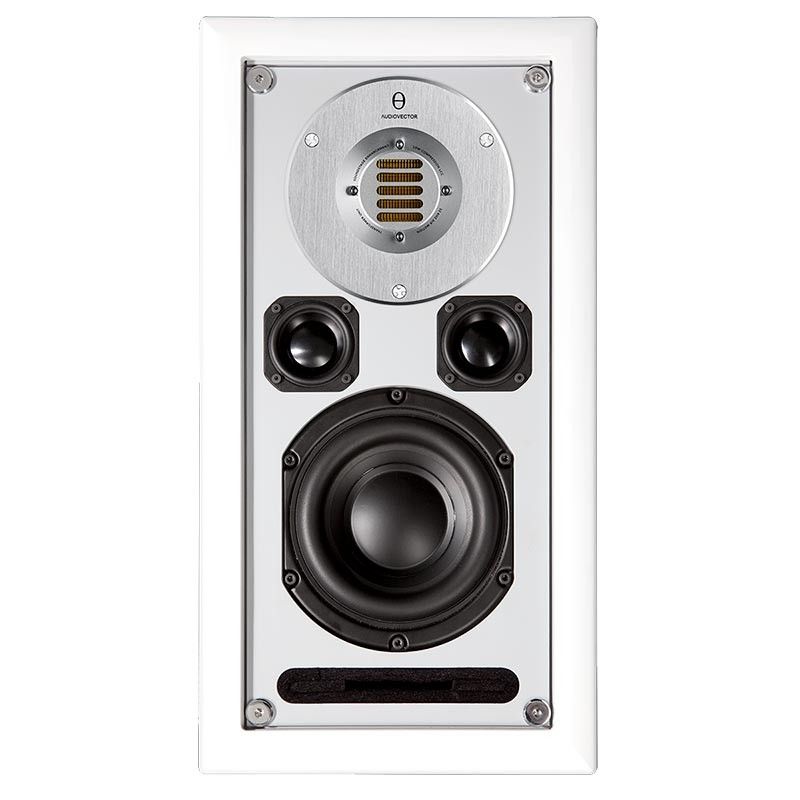
The Audiovector Inwall Avantgarde is an in-wall speaker for a permanent home audio system. Its front baffle is made from a single piece of aluminium. The DCS system reduces unwanted wall reflections and diffraction. The enclosure is 8.9 cm deep, while its nominal 5-ohm impedance is an important consideration when choosing an amplifier.
The Audiovector Inwall Avantgarde speaker is an in-wall model designed for a permanent home audio system. It is suitable for buyers who want to integrate their speakers into the architecture of the room. The enclosure is 8.9 cm deep.
Design and purpose
The front baffle is made from a single piece of aluminium.
The DCS damping system is designed to reduce unwanted reflections and diffraction caused by the wall. This technology is specifically adapted for in-wall installation, where the surface surrounding the speaker directly affects the way sound radiates into the room.
The enclosure uses non-parallel internal surfaces.
High frequencies are reproduced by an Avantgarde Air Motion Transformer tweeter. Its operation alongside the other frequency bands is coordinated by a second-generation DFF crossover.
Planning the installation
The speaker measures 43 × 23 × 8.9 cm. Before closing the wall structure, assess the cavity depth, the position of the framing, the cable route, the appropriate installation height for the main listening position, and the symmetry of the left and right stereo channels. You should also check that there are no pipes or electrical wiring zones in the chosen location. Leave enough cable length to make connection at the installation point convenient.
Choosing an amplifier and cables
The nominal impedance is 5 ohms. The amplifier must operate reliably with this load, particularly when several speakers are being used. Multiple units must not be connected in parallel without first assessing the combined impedance presented to the amplifier.
The specification gives a sensitivity of 88 dB with an 8-ohm reference, but the measurement method is not stated. This figure should therefore be compared with data for other models only after considering the conditions under which their specifications are presented. The final listening level will also depend on the amplifier, the room, and the listening distance.
The stated power figure is 180 W. This is not the only criterion for choosing an amplifier. The 5-ohm load, the required listening level, and the size of the room must also be considered. The specification does not state whether this is a continuous, programme, or maximum power rating.
Connect the speaker to the speaker outputs of an amplifier using speaker cable with a suitable conductor cross-section. It is advisable to route the cable through the wall before the final finish is applied. Leave sufficient cable at the installation point so that the speaker can be connected comfortably.
Internal frequency distribution
The second-generation DFF crossover distributes the signal between the operating bands of the internal drivers. The stated crossover values are 800 and 3000. These are parameters of the internal crossover rather than amplifier settings that can be changed by the user.
The specified frequency range is 54 Hz-52 kHz, measured at the -6 dB limit. The lower figure of 54 Hz indicates the speaker’s bass limit under these measurement conditions. It should not be compared directly with frequency ranges quoted without a deviation or tolerance.
Positioning in the listening room
The position of an in-wall speaker becomes fixed after installation. When selecting the location, consider the distances from the corners of the room. Different distances from nearby corners can alter the bass balance between the left and right channels.
In a stereo system, the speakers are normally positioned on either side of the main listening position. Placing them too close together narrows the soundstage, while excessive separation may weaken the centre image. The final position depends on the listening distance and the geometry of the room.
The DCS system reduces reflections created by the wall surface, but it does not replace proper acoustic planning of the room. Glass, bare walls, and hard floors can increase the overall amount of reflected sound in the space.
Using the speaker in an audio system
A stereo system requires two identically installed units and two amplifier channels. Each speaker must be connected to its own channel.
In a home cinema system, this model can be used as an individual passive channel. The AV amplifier must be suitable for a 5-ohm load. After installation, the channel levels and delay should be calibrated for the listening position.
In a multi-zone system, a suitable amplifier channel must be provided for each speaker or pair. When planning a system with several units, calculate the load on each individual channel rather than considering only the total number of speakers.
Technical specifications
| Model | Audiovector Inwall Avantgarde |
|---|---|
| Type | In-wall speaker |
| Front baffle | Single-piece aluminium |
| Reflection and diffraction damping | DCS system |
| Tweeter | Avantgarde Air Motion Transformer |
| Internal surfaces | Non-parallel |
| Crossover | Second-generation DFF |
| Frequency range | 54 Hz-52 kHz, -6 dB |
| Sensitivity | 88 dB, shown in the specification with an 8-ohm reference |
| Nominal impedance | 5 ohms |
| Crossover values | 800 and 3000 |
| Stated power figure | 180 W |
| Dimensions | 43 × 23 × 8.9 cm |
FAQ
What is this speaker designed for?
It is intended for a permanent home audio system where the speaker is to be integrated into a wall. This type of installation is best planned before the final wall finish is completed.
What kind of amplifier should I choose?
Choose an amplifier that can operate reliably with a nominal 5-ohm load. The power figure alone is not sufficient because the amplifier’s performance with a lower-impedance load is also important.
Do I need a 180 W amplifier?
No. The stated power figure is 180 W, but this is not a mandatory amplifier output rating. The appropriate choice also depends on the room, the desired listening volume, and the amplifier’s ability to handle a 5-ohm load.
Can it be used in a stereo system?
Yes. For a stereo system, plan for two identical units and a separate amplifier channel for each speaker.
How can it be incorporated into a home cinema system?
The speaker can serve as an individual passive channel. The receiver must be able to handle a 5-ohm load, and the channel level should be adjusted during system calibration.
Can the 800 and 3000 crossover values be changed?
These values relate to the internal DFF crossover. They are not user-adjustable controls and should not be confused with the frequency settings of an AV amplifier.
Are 43 × 23 × 8.9 cm the wall cut-out dimensions?
No. These are the external dimensions of the speaker, so they must not automatically be treated as the required wall cut-out dimensions.