Audiovector Onwall Signature On-Wall Speaker
2 600,00 €
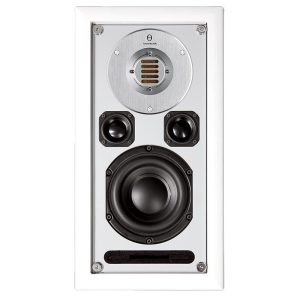
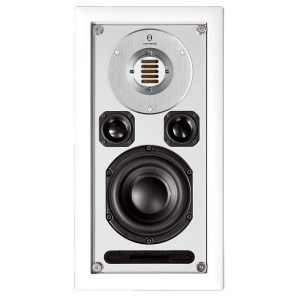
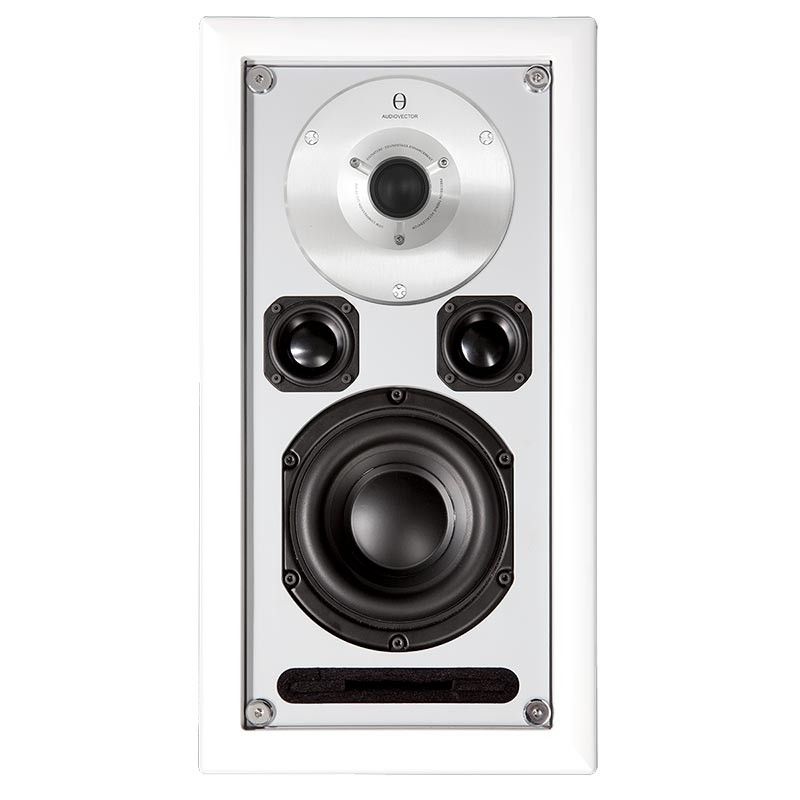
The Audiovector Onwall Signature is a passive wall-mounted speaker for stereo or home cinema systems. Its shallow 8.9 cm cabinet is designed for installation on a wall. A rigid aluminium front baffle helps control vibrations, while the DCS system reduces unwanted wall reflections and diffraction. Bass is reproduced by a 5-inch long-throw driver supported by a compact bass-reflex system.
The Audiovector Onwall Signature speaker is a passive, wall-mounted model designed for stereo or home cinema systems. Its shallow 8.9 cm cabinet projects less into the room than a conventional floorstanding speaker. An external amplifier is required.
The design combines a rigid aluminium front baffle, a 5-inch bass driver and Audiovector’s third-generation Evotech tweeter. The DCS system is designed to reduce unwanted wall reflections and diffraction.
Cabinet and vibration control
The rigid aluminium front baffle is designed to help control structural vibrations.
The cabinet surfaces are non-parallel.
The DCS damping system works together with this cabinet construction. It reduces the unwanted effects of wall reflections and diffraction, directly relating the speaker’s design to its intended wall-mounted position.
Bass and treble reproduction
The 5-inch long-throw bass driver is designed for use in the compact cabinet. Its construction is described as offering extremely low distortion. A compact bass-reflex system supports the driver’s low-frequency output.
Distributed Port Technology is used in the compact bass-reflex system. The stated lower limit of 54 Hz is measured at -6 dB, so it should not be interpreted as the limit of completely flat reproduction.
High frequencies are reproduced by the Audiovector Signature third-generation Evotech tweeter. This component handles the upper part of the reproduced frequency range. The design also employs a second-generation DFF crossover.
Crossover and electrical information
The specified crossover points are 800 Hz and 3000 Hz. These figures describe the operation of the crossover, but they do not, by themselves, define the number of frequency bands or individual drivers used by the speaker.
Sensitivity is specified as 88 dB under an 8 Ω measurement condition. This test condition is not the speaker’s nominal impedance. The nominal impedance is stated separately as 5 Ω.
Choose an amplifier according to the speaker loads it is designed to support. It must operate reliably with the stated nominal impedance. Sensitivity alone does not describe every amplifier power or current requirement that may apply in a particular system.
The 150 W power-handling figure is provided without an RMS, programme or peak-power designation. It should therefore not be treated as a direct statement of the amplifier power that must be used. Increase the listening level gradually and avoid operation that produces audible distortion.
Connecting the speaker to an audio system
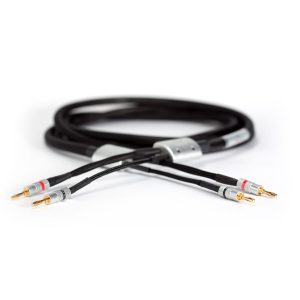
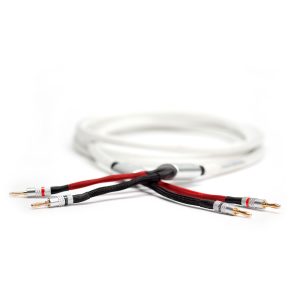
This is a passive speaker, so it must receive its signal from an amplifier’s speaker output. A line-level output cannot power the speaker on its own. Connection requires speaker cable selected to suit the system layout and the necessary cable length.
A stereo system will normally use two matching speakers, one for each channel. Mount them at a similar height and, where possible, at comparable distances from the listening position. Before purchasing, check how many individual units are being sold.
In a home cinema installation, this model can be assigned to a wall-mounted channel. The relevant channels of the AV amplifier must be suitable for the load presented by the passive speakers. The number and purpose of the channels should be determined by the specific system plan.
Installation and room placement
The cabinet is 43 cm high and 23 cm wide, so sufficient clear wall area must be reserved for installation. Its shallow depth helps preserve more open walking space and keeps the speaker from extending far into the room.
The left and right speakers in a stereo system should ideally be mounted at the same height. A symmetrical arrangement helps maintain a more even stereo soundstage. Select the final positions according to the listening location, furniture arrangement and geometry of the room.
Plan the speaker-cable route before fixing the unit to the wall. The cable should not be sharply bent or compressed behind the shallow cabinet. The wall structure and the chosen fixings must be suitable for the intended installation conditions.
Technical specifications
| Model | Audiovector Onwall Signature |
|---|---|
| Type | Passive, wall-mounted speaker |
| Front baffle | Rigid aluminium construction designed to control vibrations |
| Damping system | DCS, designed to reduce wall reflections and diffraction |
| Bass system | Compact bass-reflex system with Distributed Port Technology |
| Bass driver | 5-inch long-throw, extremely low-distortion design |
| Tweeter | Signature third-generation Evotech |
| Cabinet surfaces | Non-parallel |
| Crossover | Second-generation DFF |
| Frequency range | 54 Hz-26 kHz at -6 dB |
| Sensitivity | 88 dB under an 8 Ω measurement condition |
| Nominal impedance | 5 Ω |
| Crossover points | 800 Hz and 3000 Hz |
| Power handling | 150 W, power-rating method unspecified |
| Dimensions | 43 × 23 × 8.9 cm, height × width × depth |
FAQ
Does the speaker require a separate amplifier?
Yes. This is a passive model and must be connected to an amplifier’s speaker output. A line-level audio output is not suitable for powering it.
How should I choose a suitable amplifier?
The amplifier’s supported speaker-load range must include this model’s nominal impedance. The speaker’s power-handling figure is not a direct requirement for amplifier output power.
Can this model be used in a stereo system?
Yes. Two matching speakers can serve as the left and right channels. Mounting them at the same height helps maintain a balanced stereo image.
Is the speaker suitable for a home cinema system?
It can be used as a passive wall-mounted channel. The AV receiver or amplifier must support the relevant load and the chosen channel configuration.
What does the sensitivity measurement condition mean?
It indicates the condition under which the sensitivity figure was obtained. It should not be confused with the speaker’s nominal impedance, which is used when assessing amplifier suitability.
How should I choose a position on the wall?
Begin by planning the listening position and the symmetry of the stereo channels. Also allow enough space for the cabinet and for safe routing of the speaker cable.
Does the start of the frequency range indicate completely flat reproduction?
No. The lower limit is specified at -6 dB, which means that the sound level has already fallen at that point.