Audiovector Onwall Super Speaker
1 700,00 €
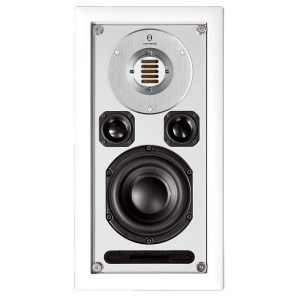
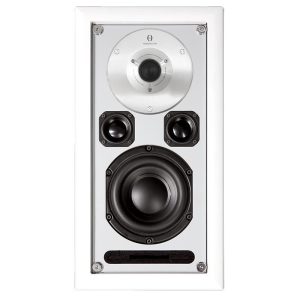
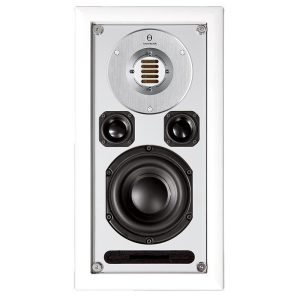
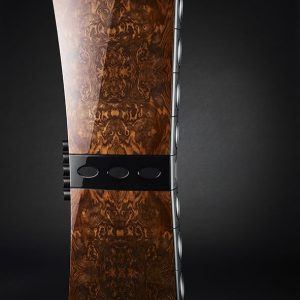
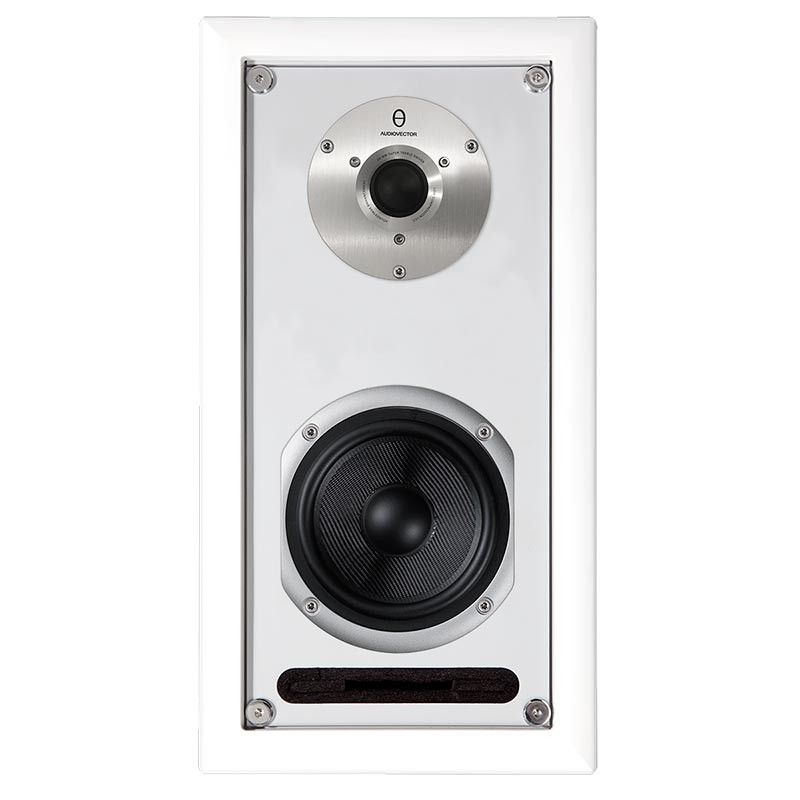
The Audiovector Onwall Super speaker is designed for audio systems in which the speakers are mounted on the wall. Its cabinet is only 8.9 cm deep, helping preserve floor and shelf space. A single-piece HDF front baffle controls vibration, while non-parallel surfaces help manage internal resonances. The 25 mm silk-dome tweeter is paired with a 5-inch bass driver. When choosing an amplifier, the 4-ohm nominal impedance must be taken into account.
Audiovector Onwall Super is a wall-mounted speaker designed for systems where preserving floor and shelf space matters. Its cabinet measures 43 cm high, 23 cm wide and just 8.9 cm deep.
The slim cabinet allows the speaker to be installed close to the wall. Its position should be planned with the listening height, room corners and the placement of the other channels in mind.
Cabinet Construction and Vibration Control
The front of the cabinet uses a single-piece HDF baffle. Its rigidity helps control vibration around the driver mounting area. This is particularly important when the cabinet is attached to a vertical surface.
Non-parallel cabinet surfaces help disperse standing waves that form inside the enclosure. In a cabinet with parallel surfaces, these waves would develop more regularly. This construction does not correct the acoustics of the room, but it helps manage resonances within the speaker cabinet itself.
Drivers and Frequency Distribution
High frequencies are reproduced by a 25 mm silk-dome tweeter. This is the third-generation Audiovector 2011T model. The silk dome works alongside a 5-inch high-efficiency bass driver.
The bass driver is matched with a Distributed Port bass-reflex system. It extends low-frequency reproduction from the shallow cabinet. The stated lower limit is 58 Hz at the -6 dB level. A separate subwoofer can be added to the system when deeper and more powerful bass is required.
The second-generation DFF crossover distributes the signal between the two drivers. Its stated value is 3000, but no unit of measurement is provided. This figure should therefore not automatically be interpreted as a crossover frequency in hertz.
Installation and Room Placement
Install the speakers so that the tweeters are close to the ear height of a seated listener. The left and right channels should be mounted at the same height. Keeping both speakers at a similar distance from the listening position helps maintain a coherent stereo image.
Do not obstruct the front of the cabinet with furniture, curtains or the edge of a screen. A room corner can reinforce low frequencies. If the bass becomes too prominent, move the mounting position farther away from the corner.
In a home cinema system, coordinate the mounting heights of multiple speakers according to the purpose of each channel. For the main channels, their relationship with the screen is important. Position surround channels according to the seating arrangement and the calibration of the AV receiver.
Connections and Amplifier Selection
The nominal impedance is 4 ohms. The amplifier or AV receiver must be able to operate reliably with this speaker load. This is more important than simply choosing an amplifier with a large power figure in its specifications.
Connect the speaker to the speaker output of an amplifier or AV receiver. Maintain the same polarity for both stereo channels. Reversing the polarity of one channel can weaken the central stereo image and reduce bass output.
The stated power handling is 120 W, but it is not identified as a continuous, programme or maximum rating. Do not treat this figure as the required amplifier power. During listening, it is important to avoid audible distortion from the amplifier.
System Planning
A stereo system uses two identical speakers: one for the left channel and one for the right. Using the same model on both sides maintains consistent frequency balance and dispersion.
In a home cinema installation, this model can be used for wall-mounted channels. The AV receiver must be suitable for the stated load. Using several identical speakers also makes it easier to maintain a closely matched tonal character between channels.
When adding a subwoofer, choose an initial crossover point slightly above the lower limit of the main speakers. Make the final adjustment from the listening position. The goal is a smooth transition between the speakers and subwoofer, rather than bass that draws attention to the separate subwoofer.
Technical Specifications
| Model | Onwall Super |
|---|---|
| Type | Wall-mounted speaker |
| Installation | Wall mounting |
| Front baffle | Single-piece HDF baffle |
| Cabinet shape | Non-parallel surfaces |
| Tweeter | 25 mm third-generation Audiovector 2011T silk-dome tweeter |
| Bass driver | 5-inch high-efficiency driver |
| Bass-reflex system | Distributed Port |
| Crossover | Second-generation DFF |
| Crossover value | 3000, with no unit of measurement provided |
| Frequency range | 58 Hz-22 kHz at -6 dB |
| Sensitivity | 87 dB under the stated 8-ohm condition |
| Nominal impedance | 4 Ω |
| Power handling | 120 W, with no continuous, programme or maximum rating specified |
| Dimensions | 43 × 23 × 8.9 cm, height × width × depth |
FAQ
How do I connect the speaker to a stereo amplifier?
Connect it to the amplifier’s speaker output and maintain the same polarity for both channels. The amplifier must support the load stated in the specifications.
Is one speaker enough for a stereo system?
Stereo reproduction requires separate left and right channels. A stereo system therefore uses two identical speakers.
Can it be used with an AV receiver?
Yes, provided that the AV receiver can operate reliably with the stated nominal impedance. Assign the channels and set their levels through the receiver’s setup controls.
What should I consider when choosing the mounting position?
Mount the tweeters close to the ear height of a seated listener and keep both channels at the same height. Do not obstruct the front of the speakers, and consider their distance from room corners because corner placement can reinforce the bass.
Does the system require a subwoofer?
A subwoofer is not essential for every system. A separate subwoofer is useful when reproduction below the main speakers’ lower frequency limit is wanted.
How should I interpret the power-handling figure?
It does not indicate the amplifier power that must be used, and it is not identified as a continuous rating. Select the amplifier according to its ability to support the speaker load and the required listening volume.
Can the sensitivity figure be compared directly with other speakers?
Compare only figures stated under the same measurement conditions. The sensitivity figure for this model is associated with a specific 8-ohm condition.