

Audiovector Inwall Super In-Wall Speaker
1 560,00 €
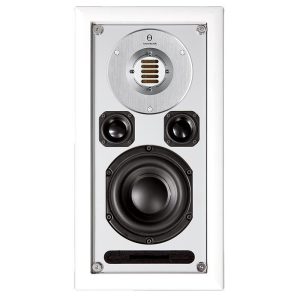
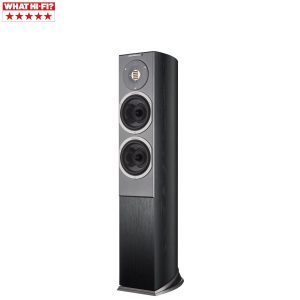
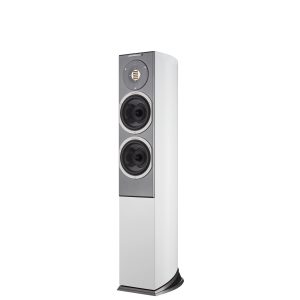
Audiovector Inwall Super is an in-wall speaker for a permanently installed stereo or multichannel home audio system. Its HDF front baffle helps control structural vibration. A 25 mm silk-dome tweeter works with a 5-inch bass driver and Distributed Port bass-reflex system. The nominal 4 Ω impedance is an important consideration when selecting an amplifier.
Audiovector Inwall Super speaker is an in-wall loudspeaker designed for a home audio system. It is suitable for installations where the speaker needs to blend into the interior without taking up floor or shelf space. Its construction combines an HDF front baffle, a silk-dome tweeter and a 5-inch bass driver.
This model is intended to be installed inside a wall cavity. Speaker positions, cable routes and amplifier channel allocation should therefore be planned before installation begins. The stated product dimensions must not be treated as the dimensions of the required wall cut-out.
Construction and vibration control
The HDF front baffle provides a rigid mounting surface for the drivers and helps control structural vibration. This is particularly important for an in-wall speaker because its performance can also be influenced by the rigidity of the wall itself.
The enclosure incorporates non-parallel surfaces. These change the geometry of internal sound reflections compared with a basic cavity formed by parallel walls. During installation, make sure that the enclosure is supported securely and is not compressed or distorted by an uneven opening.
Drivers and frequency distribution
High frequencies are reproduced by a 25 mm silk-dome tweeter. This is the third-generation Audiovector 2011T model. A 5-inch high-efficiency driver handles the bass frequencies.
The speaker uses a Distributed Port bass-reflex system.
A second-generation DFF crossover distributes the signal between the two drivers. The stated 3000 Hz crossover frequency indicates the transition between their operating ranges. It is not a user-adjustable setting.
Connecting the speaker to an amplifier
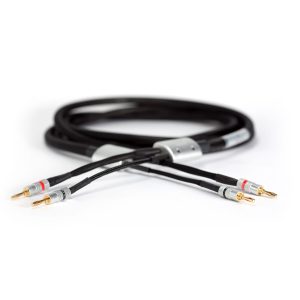
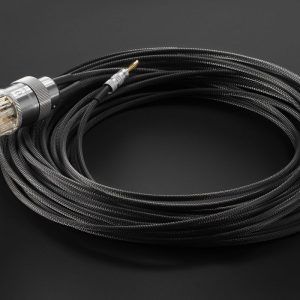
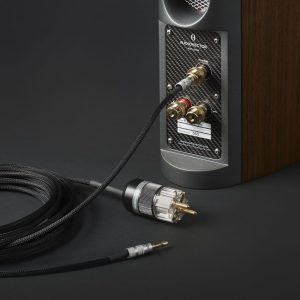
The speaker connects to an amplifier using speaker cable. Each installed speaker requires a separate amplifier channel. The same polarity must be maintained across every channel so that all speakers operate in phase.
The nominal 4 Ω impedance is the most important specification to consider when selecting an amplifier. The amplifier or AV receiver must be capable of operating reliably with a 4-ohm load. Connecting multiple speakers to a single channel can reduce the combined load even further.
The stated 120 W power handling is not an amplifier power requirement. This figure is not classified as continuous, programme or peak power. Choose an amplifier according to its ability to drive 4-ohm speakers and the intended listening volume.
Installation and room placement
In a stereo system, the left and right speakers should ideally be installed at the same height. Keeping them at similar distances from the listening position helps maintain a symmetrical soundstage. As a practical guideline, position the tweeters at approximately the seated listener’s ear level.
Before cutting into the wall, assess the available cavity depth and check for cables, studs and any other structures or services inside the wall. The product’s 8.9 cm depth does not by itself define the required installation depth or the correct cut-out size.
Bass reproduction is affected by the wall cavity and by the rigidity of the installation. Try to provide the left and right speakers with conditions that are as similar as possible. This helps reduce differences between the two channels caused by variations in wall construction.
Use within an audio system
A stereo system requires two units, with one connected to the dedicated left channel and the other to the dedicated right channel. In a home cinema system, the model can be assigned to a specific AV receiver channel. Channel levels and delay can then be configured using the receiver’s calibration functions.
The 58 Hz-22 kHz frequency range is specified at the -6 dB points. This means that the 58 Hz figure does not promise reproduction at the same level as frequencies in the middle of the range. If the system needs deeper bass reproduction, those lowest frequencies can be handled by a separate subwoofer.
The seller’s data lists sensitivity as 87 dB (8 Ω), but no measurement method is provided. This notation should not be confused with the speaker’s nominal impedance, which is 4 Ω. When comparing this model with other speakers, take account of the measurement conditions stated for each product.
Technical specifications
| Product type | In-wall loudspeaker |
|---|---|
| Front baffle | Rigid HDF baffle designed to help control vibration |
| Tweeter | 25 mm silk dome |
| Tweeter model | Audiovector 2011T |
| Tweeter generation | Third generation |
| Bass driver | 5-inch, high-efficiency |
| Bass system | Distributed Port bass-reflex system |
| Surfaces | Non-parallel |
| Crossover | Second-generation DFF |
| Frequency range | 58 Hz-22 kHz at -6 dB |
| Sensitivity | Listed in the seller’s data as 87 dB (8 Ω), but the measurement method is not provided |
| Nominal impedance | 4 Ω |
| Crossover frequency | 3000 Hz |
| Power handling | 120 W |
| Dimensions | 43 × 23 × 8.9 cm |
| Dimension order | Height × width × depth |
FAQ
What amplifier should I choose for this speaker?
Choose an amplifier that can drive a 4 Ω load reliably. The 120 W figure should not be interpreted directly as the recommended amplifier output.
How do I connect it to a stereo amplifier?
Connect each speaker with speaker cable to a separate left or right amplifier channel. Maintain the same polarity on both channels.
Is this model suitable for a home cinema system?
It can be used for an individual AV receiver channel, provided that the receiver supports a 4-ohm load. Configure the channel levels and delay through the receiver.
Is one speaker enough for a stereo system?
Standard two-channel stereo reproduction requires a left speaker and a right speaker. Each speaker must have its own amplifier channel.
Are 43 × 23 × 8.9 cm the wall cut-out dimensions?
No. These are the product’s height, width and depth. Before cutting the wall, consult the official installation drawing or template and confirm that the wall cavity meets both the cut-out and required installation-depth specifications.
What does the 58 Hz limit at -6 dB mean?
At 58 Hz, the reproduction level has already fallen by 6 dB. The figure does not indicate equal output across the entire stated frequency range.
Where should the tweeter be positioned?
For a stereo system, a practical position is approximately at the seated listener’s ear level. The two speakers should be arranged as symmetrically as possible.