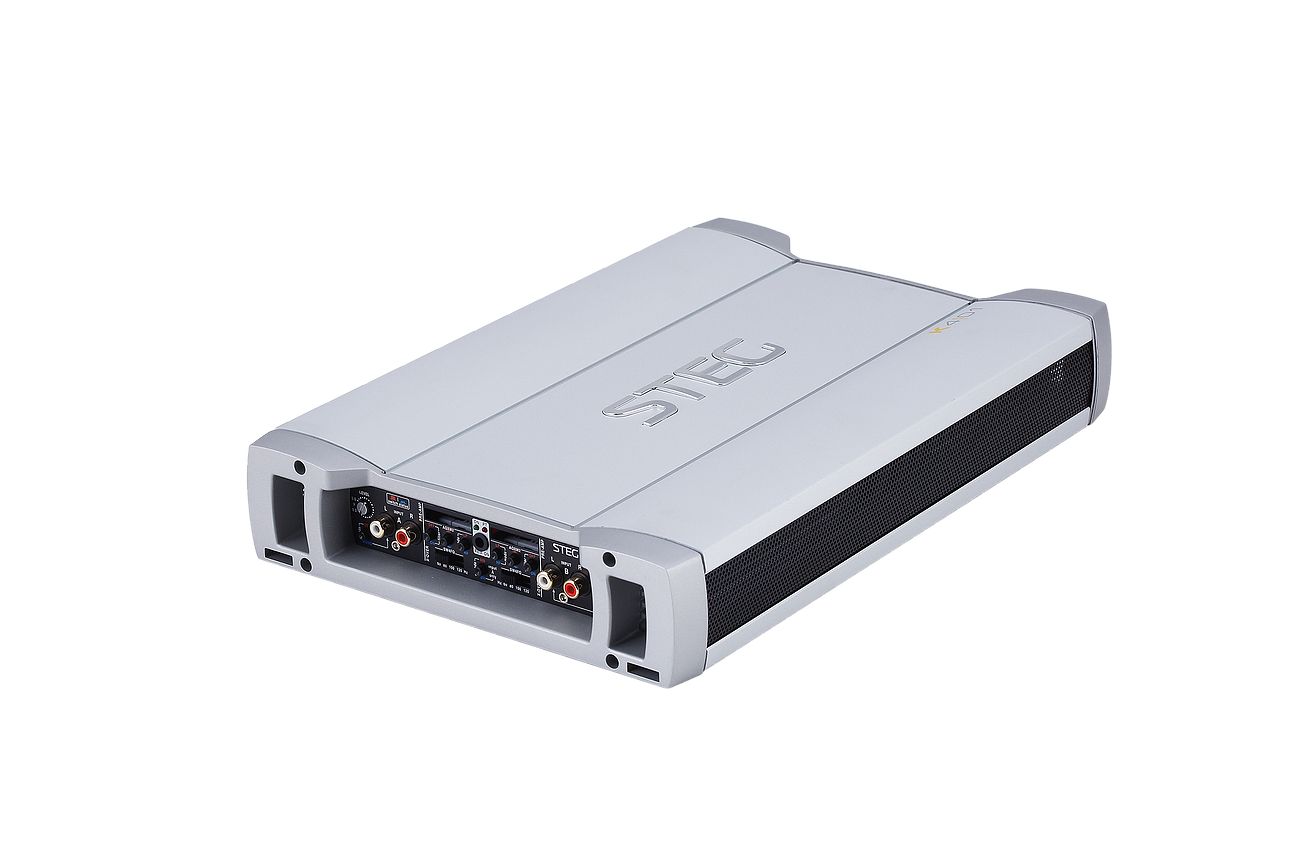
Steg K4.01 Car Audio Power Amplifier
420,00 €
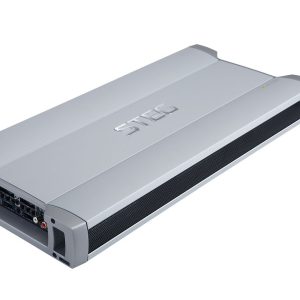
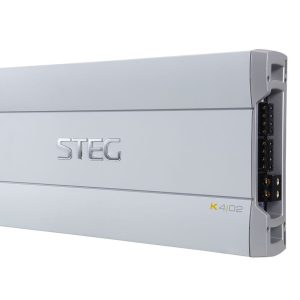
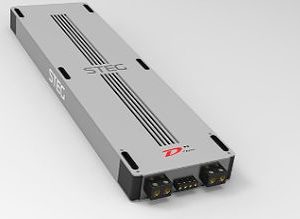
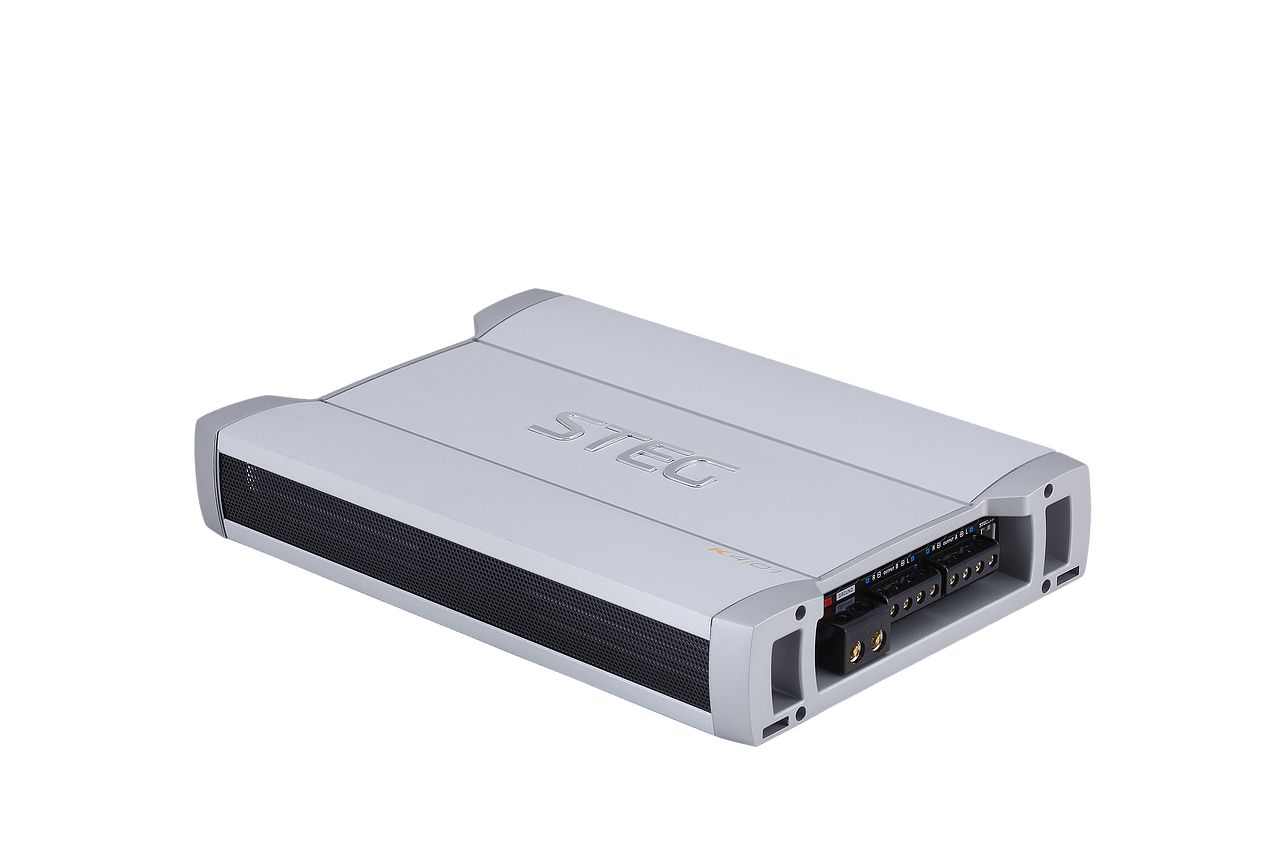
The Steg K4.01 is a four-channel car audio power amplifier for multi-speaker sound systems. It delivers 4 × 95 W RMS at 4 ohms or 4 × 155 W RMS at 2 ohms with an 11-14.4 V supply. Bridged operation provides two higher-output channels. Dual frequency adjustment, settings memory and password protection support precise system configuration and help preserve the saved setup.
The Steg K4.01 amplifier is a four-channel car audio power amplifier designed for multi-speaker in-car sound systems. Its four channels can operate independently or be combined in pairs in bridged mode. Output power depends on the connected load and a supply voltage of 11-14.4 V.
With a 4-ohm load, the amplifier delivers 4 × 95 W RMS. Reducing the load to 2 ohms increases the stated output to 4 × 155 W RMS. In 2-ohm bridged mode, the specified output is 2 × 310 W RMS.
This model is designed with audiophile sound reproduction in mind. The result achieved in an installed system will depend on correct load matching, input-sensitivity adjustment, crossover settings and the operating frequency range of the connected speakers.
Choosing the Power and Load Configuration
Four-channel operation is suitable for a system in which each speaker, or each group of speakers assigned to a channel, is powered separately. The 4-ohm mode provides the basic power configuration, while a 2-ohm load allows each channel to deliver a higher specified output.
When two more powerful channels are required, the channel pairs can be connected in bridged mode. In this configuration, the required 2-ohm bridged load must be observed. The impedance of the speakers and the way they are wired must always correspond to the selected operating mode.
The PILOT designation is associated with a 1-ohm stereo load and a 2-ohm bridged load. No separate RMS output figure is provided for 1-ohm operation. Its output therefore cannot be calculated or inferred from the published 2-ohm figures.
Signal Connection and Level Matching
The input sensitivity can be adjusted from 0.2 to 5 V RMS. This range is intended for matching the amplifier to the line-output level of the source unit. The sensitivity control is not intended to serve as an everyday volume control.
Begin the setup with a lower gain setting. Select a clean, undistorted output level on the source unit, then increase the amplifier setting gradually. This approach makes effective use of the source signal without driving the amplifier input with an unnecessarily high level.
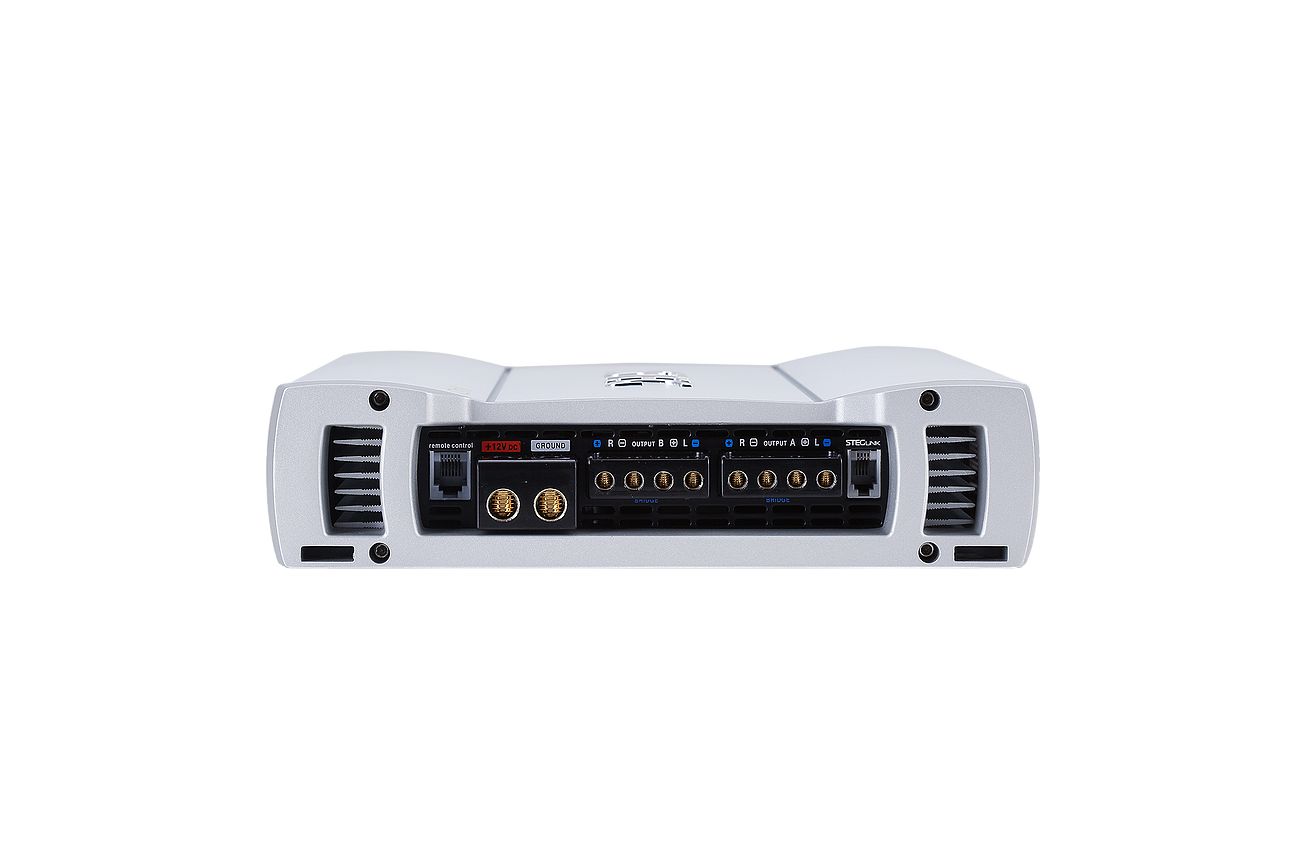
The STEG LINK connection is intended for communication with a personal computer. It requires the appropriate cable and STEG software. Current compatibility between the software, cable and modern operating systems has not been confirmed.
Serial Power and S.P.L. are also listed as available functions. However, their connection methods and operating parameters are not defined. These names should not be used on their own to select cables or calculate the power of the system.
Crossover and System Settings
The built-in crossover provides dual frequency adjustment. It allows the amplifier channels to be adapted to different frequency bands within the audio system. The specific crossover points must be selected according to the operating range of the connected speakers.
Start with filtering limits that are suitable for the speakers. Then listen to the system and make small, gradual adjustments. Adjacent frequency bands should blend smoothly, without creating an audible gap or an excessive overlap.
SMMS stands for STEG Multi-band Modular System. This feature is associated with configuring a system that uses several frequency bands. The exact channel topology will depend on the chosen wiring arrangement and crossover settings.
User and installation data can be saved in the amplifier’s memory. Password protection helps restrict changes to the stored settings. This is particularly useful when the system has been tuned by an installer and the final configuration should remain protected from unintended adjustment.
A digital serial number provides the unit with an electronic identifier. This identifier is separate from the audio-system settings and channel configuration.
Power Supply, Cooling and Installation Location
The stabilised power supply is designed to operate from a battery voltage starting at 11 V. The stated output measurements apply across the 11-14.4 V range. Protection functions are controlled by a microprocessor.
The dual forced Intellispeed system is a seller-listed feature whose precise operation is not defined. Regardless of this feature, the installation must leave sufficient free space for airflow. The amplifier should not be covered by trim panels or other parts that could trap heat around its housing.
The 340 × 56 × 232 mm enclosure requires a firm, level mounting surface. Additional clearance must be allowed for the connectors and the bending radius of the cables. With a weight of 4.5 kg, the amplifier also requires mounting points capable of holding it securely while the vehicle is moving.
The amplifier is made in Italy. Customers planning a complete system in Kaunas can discuss channel allocation and the intended load configuration at the store at Algirdo St. 54.
Technical Specifications
| Model | Steg K4.01 |
|---|---|
| Device type | Four-channel car audio power amplifier |
| Power at 4 ohms | 4 × 95 W RMS, stereo mode, at 11-14.4 V |
| Power at 2 ohms | 4 × 155 W RMS, stereo mode, at 11-14.4 V |
| Bridged power at 2 ohms | 2 × 310 W RMS, at 11-14.4 V |
| PILOT load designation | 1 ohm in stereo mode / 2 ohms in bridged mode |
| Input sensitivity | 0.2-5 V RMS |
| Crossover | Dual frequency adjustment |
| Modular system | SMMS – STEG Multi-band Modular System |
| Computer connection | STEG LINK |
| Settings memory | Storage of user and installation data |
| Data protection | Password protection |
| Identification | Digital serial number |
| Power-supply system | Stabilised power supply from 11 V |
| Protection control | Microprocessor-controlled |
| Intellispeed | Seller-listed dual forced system; operation not defined |
| Serial Power | Listed connection feature; purpose not defined |
| S.P.L. | Listed feature; operating parameters not defined |
| Sound concept | Designed with audiophile sound reproduction in mind |
| Dimensions | 340 × 56 × 232 mm |
| Weight | 4.5 kg |
| Country of manufacture | Italy |
FAQ
What type of car audio system is this amplifier intended for?
It is intended for a system that requires four independently controlled power channels. The channel pairs can also be used in bridged mode.
When should I use stereo mode, and when should I use bridged mode?
Stereo mode is suitable when four separate channels are required. Choose bridged mode when two pairs of channels need to power two higher-output loads.
Can I plan a system with a 1-ohm load?
A 1-ohm stereo load is included in the PILOT designation, but its RMS output is not specified. The system’s power balance therefore cannot be calculated for this mode from the available figures.
How should I set the input sensitivity?
Begin with a lower gain setting and use a clean signal from the source unit. Increase the level gradually until the required volume is reached without audible distortion.
Will STEG LINK work with a current computer?
The connection requires the appropriate software and cable. Support for current operating systems has not been confirmed, so a purchasing decision should not be based on this function alone.
How should I begin adjusting the crossover?
Start with the operating range of the connected speakers. Then adjust the crossover points by listening carefully, aiming for a smooth transition between adjacent frequency bands.
Is this model suitable for a home stereo or cinema system?
Not for direct use. This is a car amplifier designed for an 11-14.4 V vehicle electrical system, not for connection to a domestic mains supply.
What must be considered when choosing an installation location?
Before purchasing, check that there is enough space not only for the 340 × 56 × 232 mm enclosure, but also for the connectors, cable bends and adequate airflow.