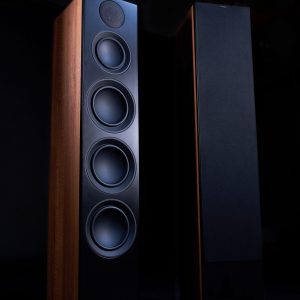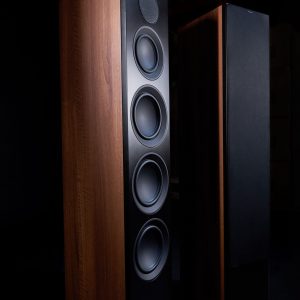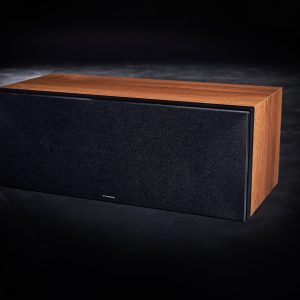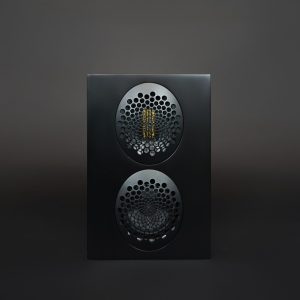


Scansonic L7 Bookshelf Speaker
690,00 €
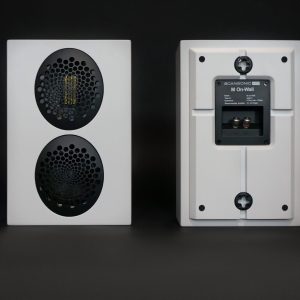
The Scansonic L7 is a two-way passive bookshelf speaker for a home stereo system with an external amplifier. Its 6.5-inch bass driver uses a paper sandwich cone and works with a 1-inch silk-dome tweeter. The reinforced cabinet has thicker walls to help control resonances. Rear bass-reflex ports mean that space should be left between the speaker and the wall. Nominal impedance is 8 ohms, with a minimum impedance of 4 ohms.
The Scansonic L7 speaker is a two-way passive stand-mount speaker designed for a home stereo system. It combines a 6.5-inch bass driver with a 1-inch tweeter. Its nominal 8-ohm impedance and 4-ohm minimum impedance are important considerations when choosing an external amplifier.
Cabinet and Driver Design
This is a bass-reflex speaker with ports located on the rear of the cabinet. A reinforced enclosure with thicker walls helps control unwanted resonances. The rear-ported design also affects placement, as sufficient space must be left behind the speaker for airflow.
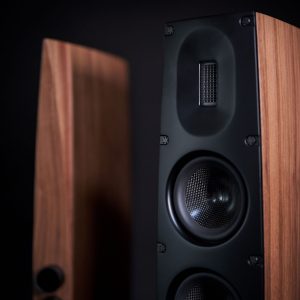
The bass driver uses a paper sandwich cone. High frequencies are reproduced by a silk-dome tweeter with a neodymium magnet. A second-order crossover at 2.2 kHz distributes the signal between the two drivers.
Connection and Amplifier Selection
The Scansonic L7 does not have a built-in amplifier, so it must be connected by speaker cable to a separate amplifier channel. The chosen amplifier should be capable of operating reliably with a 4-ohm load, which is the speaker’s stated minimum impedance.
Switch off the amplifier before making connections and maintain the same polarity for both channels. This helps prevent the speakers from operating out of phase, which can weaken the central stereo image and reduce perceived bass output.
Placement in the Listening Room
Place the speakers on sturdy stands, with the tweeters positioned approximately at ear height. Each stand must safely support the 7.8 kg weight of one speaker. Its top plate should also provide stable support for the speaker’s 210 × 295 mm footprint.
Begin with some space between each speaker and the rear wall, then adjust the distance while listening from your usual seating position. Move the speakers farther into the room if the bass becomes too prominent. If the bass sounds insufficient, bring them gradually closer to the wall. Try to provide similar surroundings on both sides and keep the two speakers equally distant from the listening position.
Understanding the Specifications
The stated 45 Hz-20 kHz frequency range is provided without a tolerance or measurement conditions. It should not be compared directly with specifications that include a defined tolerance. Different limits, such as a stated ±3 dB range, can produce different published results.
No reference level or measurement conditions are given for the stated 89 dB sensitivity. Treat this figure as a general guide rather than as a precise basis for comparing the achievable volume of different speakers.
Technical Specifications
| Model | Scansonic L7 |
|---|---|
| Type | Two-way passive stand-mount speaker |
| Operating principle | Bass-reflex |
| Cabinet | Reinforced, with thicker walls |
| Bass-reflex ports | Rear-mounted |
| Bass driver | 1 × 6.5-inch paper sandwich cone |
| Tweeter | 1 × 1-inch silk dome with neodymium magnet |
| Frequency range | 45 Hz-20 kHz; tolerance and measurement conditions not specified |
| Nominal impedance | 8 ohms |
| Minimum impedance | 4 ohms |
| Crossover frequency | 2.2 kHz |
| Crossover | Second-order |
| Sensitivity | 89 dB; reference level and measurement conditions not specified |
| Recommended amplifier | 30-150 W; power-rating conditions not specified |
| Dimensions | 210 × 360 × 295 mm (width × height × depth) |
| Weight | 7.8 kg per speaker |
| Finishes | Black, white or walnut |
FAQ
Will the speaker work without an external amplifier?
No. This is a passive model without a built-in amplifier. It requires a separate stereo amplifier or a suitable power-amplifier channel from an AV receiver.
What amplifier should I choose?
A 30-150 W amplifier capable of operating reliably with a 4-ohm load is recommended. This range is not a confirmed continuous or short-term power-handling limit.
How should I connect both speakers?
Connect the left and right speakers to the corresponding amplifier channels. Match the positive and negative terminals consistently on both channels.
Can the speakers be placed directly against a wall?
The rear bass-reflex ports need free space. Adjust the distance from the wall in small steps while listening to the bass balance from your normal listening position.
Related products and categories
Related products


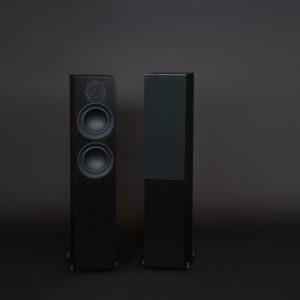
Scansonic L14 Floorstanding Speakers
Original price was: 1 690,00 €.900,00 €Current price is: 900,00 €.