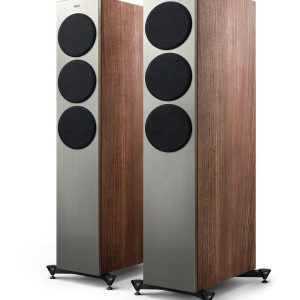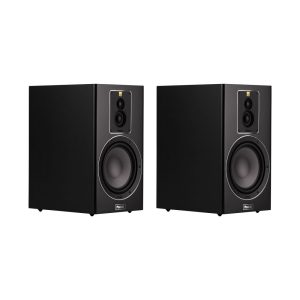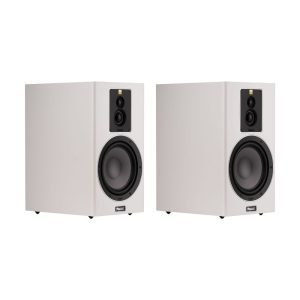


Magnat Signature 909 Floorstanding Speaker
3 400,00 €
Magnat Signature 909 is a four-way floorstanding speaker for a wired stereo system and a more spacious listening area. Two nominal 8-inch bass drivers reproduce the lower frequency band, while a separate super tweeter extends the upper range. Its 93 dB sensitivity helps make efficient use of amplifier power. Single-wiring, bi-wiring and bi-amping are supported.
Magnat Signature 909 is a four-way floorstanding loudspeaker for a wired stereo system. Two nominal 8-inch bass drivers are designed to cover a broad frequency range. Weighing 37 kg and standing 1225 mm high with its base and spikes fitted, each speaker requires adequate space.
Four-way speaker system
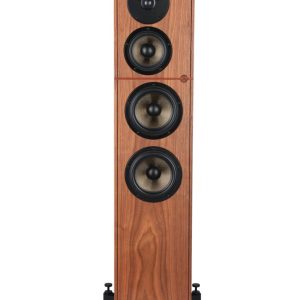
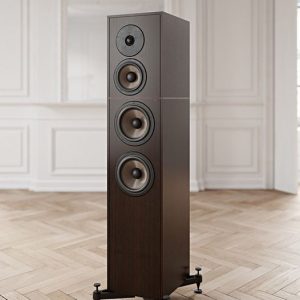
The bass-reflex design uses five drivers assigned to different frequency bands. Two nominal 8-inch drivers reproduce the lowest frequencies, while a nominal 6.5-inch driver handles the midrange.
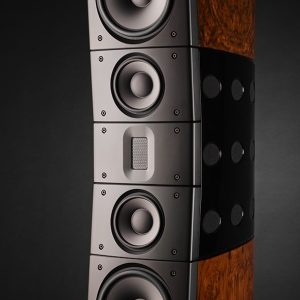
A 1.2-inch dome tweeter works alongside an approximately 19-20 mm super tweeter. The crossover frequencies are 380, 2400 and 17,500 Hz, assigning an appropriate part of the reproduced spectrum to each driver.
Connection options
For a standard connection, one speaker cable per channel is sufficient. The supplied terminal links remain in place, connecting the bass and upper-frequency sections.
Bi-wiring uses separate cable pairs from the same amplifier for these sections. Bi-amping requires separate amplification channels. The terminal links must be removed before either type of split connection is made.
Volume and frequency adjustments are controlled by the connected amplifier. Switch the amplifier off before connecting the system for the first time, and maintain matching polarity for both channels.
Choosing an amplifier
The 93 dB sensitivity, measured at 2.8 V from one metre, indicates comparatively high efficiency. Amplifier power above 30 W is recommended. The stated 4-8 ohm impedance means the amplifier must support a 4-ohm load.
The 280 W RMS power handling figure describes continuous loading, while 500 W is the maximum rating. These figures are not a recommendation to listen continuously at maximum volume.
Understanding the frequency range
The specified 22-55,000 Hz frequency range is given without a measurement tolerance. The 22 Hz limit therefore does not mean that output remains equally strong throughout the range. In a free-field measurement, useful bass extension reached approximately 35 Hz.
Output gradually decreased below 60 Hz, while measured high-frequency reproduction extended beyond 50 kHz. The room and the distance between the speakers and surrounding walls will affect the final bass balance.
Room placement
Allow at least 335 × 420 mm of floor space for the cabinet when the base and spikes are installed. Each speaker weighs 37 kg, so it is safer for two people to move it. Check that the floor is strong and level before positioning the speaker.
As a starting point, place both speakers at a similar distance from the listening position. Avoid placing them directly against walls. Moving a bass-reflex speaker closer to a wall will generally increase bass output in the room. Fine-tune the final position in small steps while listening from your usual seat.
Technical specifications
| Type | Four-way floorstanding bass-reflex loudspeaker |
|---|---|
| Bass drivers | 2 × nominal 8-inch |
| Midrange driver | 1 × nominal 6.5-inch |
| Tweeter | 1 × 1.2-inch dome |
| Super tweeter | 1 × approximately 19-20 mm |
| Power handling | 280 W RMS, 500 W maximum |
| Sensitivity | 93 dB, 2.8 V / 1 m |
| Impedance | 4-8 ohms |
| Frequency range | 22-55,000 Hz, tolerance not specified |
| Crossover frequencies | 380 Hz, 2400 Hz and 17,500 Hz |
| Recommended amplifier power | More than 30 W |
| Connection | Single-wired, bi-wired or bi-amped |
| Cabinet dimensions | 260 × 1175 × 402 mm |
| Dimensions with base and spikes | 335 × 1225 × 420 mm |
| Weight | 37 kg per speaker |
FAQ
What amplifier does this speaker need?
Choose an amplifier rated above 30 W that can drive a 4-ohm load. Additional power reserve helps prevent amplifier overload during louder musical passages.
How do I connect the speaker with one cable?
Leave the terminal links in place and connect one cable pair. Maintain the same positive and negative polarity on both channels.
When should I use bi-wiring?
Use it when the amplifier and cable set allow the two terminal sections to be connected separately. Bi-wiring is not the same as bi-amping.
How should I choose the initial position in the room?
Begin with a symmetrical arrangement and leave space between the speakers and the walls. Then adjust the distance in small steps while assessing the evenness of the bass.
What does the 22 Hz lower limit mean in practice?
It marks the beginning of the stated frequency range but does not specify the output-level deviation. The amount of deepest bass will therefore also depend on the room acoustics.