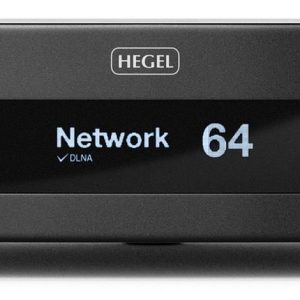


Hegel H30A Power Amplifier
18 000,00 €
Hegel H30A power amplifier is designed for systems with a separate preamplifier and demanding speaker loads. It can operate in mono or stereo mode. In mono mode, output exceeds 1100 W into 8 ohms at 1 kHz and 1% THD. The measurement applies with a 100, 120, or 230 V AC supply. XLR, RCA, and 12 V trigger connections simplify system integration.
Hegel H30A power amplifier is Hegel’s reference model for systems built around a separate preamplifier. It is designed primarily for mono operation, although a single chassis can also operate in stereo. Its “Orchestra” nickname reflects its position within Hegel’s amplifier range.
In mono mode, output exceeds 1100 W into 8 ohms at 1 kHz and 1% THD. This measurement applies with a 100, 120, or 230 V AC supply. The stated output must not be applied to other impedances or to stereo operation.
Choosing a mono or stereo system
A monoblock system requires one amplifier for each channel. This arrangement gives every stereo channel its own power-supply and amplification chassis. Alternatively, one H30A can be configured for stereo operation when a single-unit installation is preferred. No stereo-channel power rating is specified.
Power-supply and amplification architecture
The 2000 VA dual-mono power supply uses two separate 1000 VA toroidal transformers. Total capacitor storage is 270,000 µF.
The output stage contains 56 high-speed bipolar transistors with ultra-low distortion. Each transistor is rated at 15 A and 200 W. The input stage uses one carefully hand-matched pair of FET transistors. According to the manufacturer, this pair is selected to reduce higher-order harmonic distortion.
Patented SoundEngine technology monitors signal distortion during amplification. It uses a feed-forward error-correction principle to correct detected changes in the signal.
Analogue and speaker connections
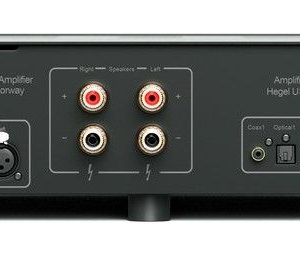
Choose the balanced XLR input when using a preamplifier or processor with a balanced output. Its input impedance is 20 kilohms. The unbalanced RCA input accepts an unbalanced analogue output and has an impedance of 10 kilohms.
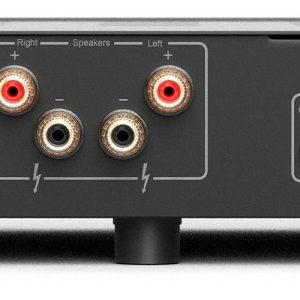
A speaker connects to one pair of heavy-duty, gold-plated binding posts. The minimum rated load is 1 ohm. This figure describes the amplifier’s load limit, not a published output rating into 1 ohm.
Operating mode and power control
Select mono or stereo mode according to the intended system layout. Listening volume is controlled by the preamplifier, processor, or another source equipped with a variable analogue output.
A 12 V trigger input allows the amplifier’s power state to follow a controller with a compatible trigger output. This is useful in systems where several audio components need to switch on together.
Placement and ventilation
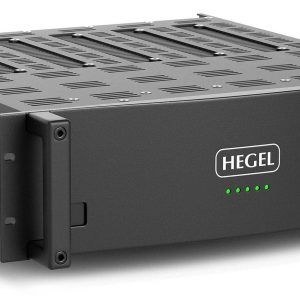
The 47.4 kg chassis requires a shelf or equipment rack designed to support its weight. Its 57.5 cm depth also calls for additional room behind the amplifier for connectors and cable bends.
The amplifier consumes 120 W with no signal, so adequate space must be left around the chassis for air circulation. Plan both the dimensions and final location before moving the unit into position.
Technical specifications
| Product type | Reference power amplifier |
|---|---|
| Operating modes | Mono or stereo |
| Mono output power | More than 1100 W into 8 ohms at 1 kHz and 1% THD, using a 100, 120, or 230 V AC supply |
| Minimum rated load | 1 ohm |
| Analogue inputs | Balanced XLR and unbalanced RCA |
| Trigger input | 12 V |
| Speaker output | One pair of heavy-duty, gold-plated binding posts |
| XLR input impedance | 20 kilohms |
| RCA input impedance | 10 kilohms |
| Signal-to-noise ratio | Greater than 100 dB |
| Crosstalk | Less than -100 dB |
| Distortion | Less than 0.003% at 100 W into 8 ohms |
| Intermodulation distortion | Less than 0.01% in a 19 kHz + 20 kHz test |
| Damping factor | Greater than 500 in mono mode |
| Power supply | 2000 VA dual-mono design, 270,000 µF |
| Transformers | Two separate 1000 VA toroidal transformers |
| Output stage | 56 high-speed bipolar transistors, each rated at 15 A and 200 W |
| Input stage | One carefully hand-matched pair of FET transistors |
| Distortion correction | Patented SoundEngine technology |
| Power consumption with no signal | 120 W |
| Finish | Black |
| Dimensions | 24 × 43 × 57.5 cm (H × W × D) |
| Dimensions in inches | 9.4 × 17 × 22.6 in (H × W × D) |
| Weight | 47.4 kg / 104.5 lb |
FAQ
Can the amplifier be connected directly to a DAC or network player?
Yes, provided that the source has a variable analogue output and reliable volume control. A fixed-level output requires a separate preamplifier.
How does input impedance differ from speaker load?
The 20 and 10 kilohm figures describe the load presented to the preamplifier’s output. The 1-ohm figure applies to the speaker connected to the amplifier’s output.
What does a damping factor greater than 500 mean?
This mono-mode figure describes the amplifier’s ability to control the electrical damping of the speaker driver’s movement. The final result also depends on the speaker and cable.
Does 1-ohm stability mean 1100 W into 1 ohm?
No. The output of more than 1100 W is specified only into an 8-ohm load under the stated measurement conditions. One ohm is the minimum rated load figure.
How should I prepare a location for this amplifier?
Use a support rated for the amplifier’s weight and leave sufficient space for air circulation. Allow room behind the chassis for signal, speaker, and power cables.
Related products and categories
Related products