Focal TBM Car Tweeters
1 300,00 €
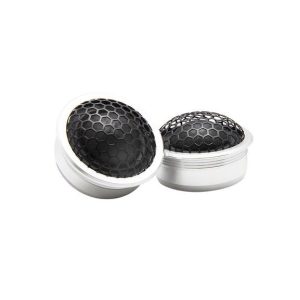
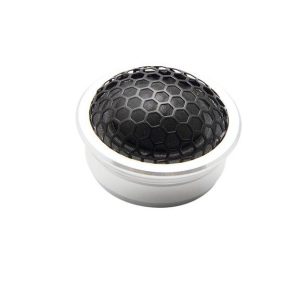
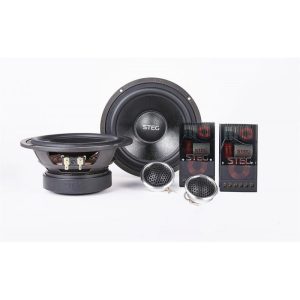
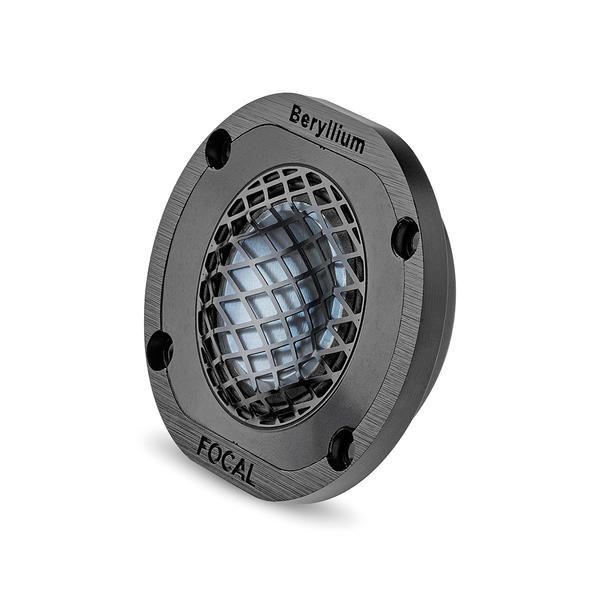
Focal TBM is a pair of car audio tweeters intended for separate left and right system channels. The M-shaped beryllium diaphragm works with a rubber TMD suspension. Nominal impedance is 4 Ω, while the 95 dB sensitivity rating was measured at 2.83 V / 1 m. The set contains two speakers.
Focal TBM tweeters are a pair of car audio high-frequency speakers designed to reproduce the upper frequencies in an in-car sound system. The set contains two speakers, allowing one to be assigned to the left channel and the other to the right channel.
Who is this set for?
These tweeters are intended for a car audio system in which the high frequencies are reproduced by separate components. They can complement a suitably designed multi-component system. Frequency-band distribution must be handled by a passive crossover, an active crossover, or a sound processor.
The pair is useful when creating a symmetrical front soundstage. One speaker is used for the left channel and the other for the right channel. Each channel requires its own correctly filtered signal.
Diaphragm and suspension
The M-shaped beryllium diaphragm is the principal construction feature of this model. The M shape describes the geometry of the diaphragm, while beryllium identifies its material. This information is useful when comparing car tweeters with different construction designs.
The rubber TMD suspension connects the diaphragm to the speaker structure. It is a built-in construction feature rather than a separate setting that can be adjusted by the user.
Voice-coil construction
The voice-coil diameter is 1 inch, or 25 mm. The coil has two layers and uses aluminium wire. Its former is made from Kapton.
These details describe the speaker’s internal construction. They do not replace the need for correct electrical matching. When connecting the tweeters, the key considerations remain nominal impedance, signal filtering, and the selected amplifier channel.
Connecting the tweeters to a car audio system
The nominal impedance is 4 Ω. The amplifier channel must be suitable for this nominal load. DC resistance is also specified as 4 Ω, but this does not represent an additional connection mode.
A tweeter should not be supplied with a full-range signal. A high-pass filter must operate before the speaker in the signal path. The precise crossover point depends on the other components in the complete system and on how they are matched.
Understanding the sensitivity rating
The 95 dB sensitivity rating was measured at 2.83 V from a distance of one metre. This measurement condition is essential when comparing the figure with ratings for other speakers. The result is not directly equivalent to a sensitivity figure specified at 1 W.
A higher numerical sensitivity rating does not, by itself, determine the correct channel level. The final balance also depends on the installation position, speaker orientation, and the sensitivity of the other speakers in the system. Set the level while listening to both channels from the main seating position.
Installation angle and system tuning
Tweeter orientation has a noticeable effect on high-frequency reproduction. Before fixing the speakers permanently, compare several symmetrical aiming positions. The angles used on the two sides should be as similar as possible.
Begin by setting equal levels for the left and right channels. Then adjust their balance for the listening position. If the sound is too bright or lacks brightness, address the level and orientation first rather than applying more power.
The two tweeters should not be connected in parallel to a single channel unless the resulting load has been calculated. A parallel connection would change the impedance presented to the amplifier. In a conventional stereo installation, each tweeter is assigned to its own channel.
How to interpret the power ratings
The 20 W nominal power rating and 200 W maximum power rating describe different load conditions. The maximum figure should not be treated as a target for continuous amplifier output. Correct filtering and a suitable gain setting must protect the tweeter from low frequencies and overload.
When setting amplifier sensitivity, begin with a lower level. Increase the volume only after the filter and the other system channels have been matched. Audible distortion is not an appropriate method of determining the permissible continuous power level.
Technical specifications
| Model | Focal TBM |
|---|---|
| Type | Car audio tweeters |
| Nominal power | 20 W |
| Maximum power | 200 W |
| Sensitivity | 95 dB at 2.83 V / 1 m |
| Nominal impedance | 4 Ω |
| DC resistance | 4 Ω |
| Diaphragm | M-shaped, beryllium |
| Suspension | Rubber, TMD |
| Voice-coil diameter | 1 inch (25 mm) |
| Voice-coil former | Kapton |
| Voice-coil layers | 2 |
| Voice-coil wire | Aluminium |
| Stated package quantity | 2 pcs. |
| Net weight | 0.12 kg |
FAQ
Can these tweeters be connected directly to an amplifier?
They require a filtered high-frequency signal. Filtering can be provided by a passive crossover, an active amplifier filter, or a sound processor.
What amplifier load are they designed for?
The nominal impedance is 4 Ω. The amplifier channel being used must operate reliably with this load.
Which power rating should guide system setup?
Use the 20 W nominal power rating, suitable filtering, and a conservative gain setting as your guides. The 200 W maximum power rating is not a target for continuous operation.
How should both speakers in the set be used?
Assign one to the left channel and the other to the right channel of the stereo system. Apply the same initial filtering to both channels.
How should I choose the installation angle?
Before securing the tweeters, compare several symmetrical angles while listening from the driver’s seat. Choose the orientation that provides the most even balance between the left and right sides.
Can the sensitivity be compared directly with 1 W / 1 m figures?
Not always. This model’s 95 dB rating was measured at 2.83 V / 1 m. Different measurement conditions affect the meaning of the comparison.
Is this model intended for a home audio system?
This is a car audio tweeter. Its electrical connections and installation arrangements must be matched to the components of a car audio system.