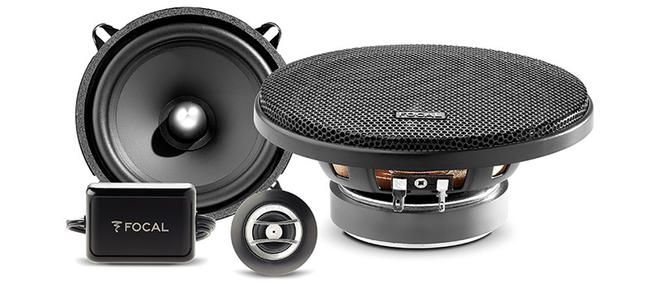
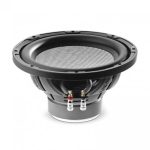
Focal RSE-130 Component Speaker System
89,90 €
Focal RSE-130 is a component speaker system designed for in-car audio installations. According to the supplied specifications, its rated power is 50 W RMS and its nominal impedance is 4 Ω; these figures help you select suitable amplification. The polypropylene cone and butyl surround form the moving part of the speaker. Its 65 Hz-21 kHz range covers most of the musical spectrum, but a separate subwoofer is worth considering for the deepest bass frequencies.
Focal RSE-130 speakers form a component system designed for in-car audio installations. According to the supplied specifications, the system has a rated power of 50 W RMS and a nominal impedance of 4 Ω. These are the most important figures to consider when choosing an amplifier or car stereo.
The system is intended for buyers who want to install the elements responsible for different frequency ranges separately. This installation approach provides more control over the direction of the soundstage. It also requires the position of each element inside the vehicle to be planned carefully.
Construction and materials
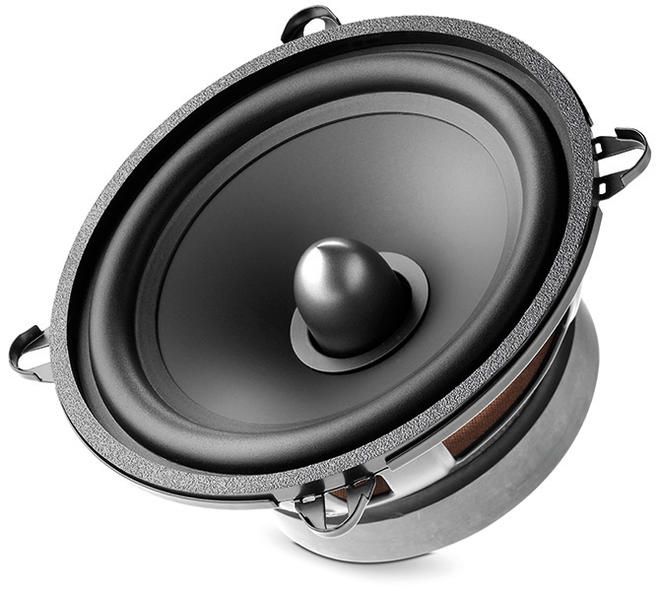
According to the supplied specifications, the polypropylene cone is the main moving surface that transfers sound into the vehicle cabin. It is surrounded by a butyl surround. The surround allows the cone to move forwards and backwards while helping it maintain the correct direction of travel.
The supplied specifications state that the voice coil diameter is 25 mm. The voice coil converts the electrical audio signal into mechanical cone movement. This measurement describes part of the speaker’s internal construction and should not be confused with the mounting-hole diameter or the dimensions of the outer frame.
Power and sensitivity
The 50 W RMS figure is the continuous power reference that should guide amplifier selection. A maximum power rating of 100 W is also specified, but this does not represent continuous operation. The choice of amplifier should therefore not be based solely on the maximum power figure.
According to the supplied specifications, the 90 dB sensitivity rating was measured at 2.83 V from a distance of one metre. This measurement condition matters when comparing different speakers. The result should not be treated as directly equivalent to a sensitivity rating measured using 1 W of power.
Sensitivity helps indicate how much sound pressure the system can produce when it receives a defined signal. It does not describe the character of the sound or the quality of the installation. Speaker placement, amplification and system tuning will also affect the final result.
Frequency range and bass reproduction
According to the supplied specifications, the 65 Hz-21 kHz frequency range covers most of the musical spectrum. The lower limit of 65 Hz indicates that the system is not intended to reproduce the deepest bass range on its own. A separate car subwoofer can be used when a stronger foundation in the lowest frequencies is required.
If a subwoofer is included in the system, adjust the crossover while listening from the driver’s seat. An initial crossover point can be selected slightly above 65 Hz. It can then be refined according to the smoothness of the transition and the load placed on the speakers.
The volume inside the car doors, the rigidity of the trim and the quality of the seal can change the perceived bass balance. A firm mounting base helps reduce unwanted movement of the surrounding trim. The speaker cone must not touch the grille, even when its excursion increases.
Connecting the system in a vehicle
The 4 Ω nominal impedance is the main figure used to determine compatibility with an amplifier. Every amplifier channel used with the system must be suitable for a 4 Ω load. The same rule applies when using the internal amplifier of a car stereo.
The specifications also list a DC resistance of 3.3 Ω, which is an electrical measurement of the coil. It can naturally be lower than the nominal impedance. Select the amplifier according to the 4 Ω nominal load rather than the 3.3 Ω reading.
Consistent polarity must be maintained across all channels during installation. If one channel is connected with reversed polarity, the system’s combined bass output may be weakened. Check polarity using the terminal markings on the speakers and amplifier.
Installation and tuning guidelines
Before installation, measure the mounting-hole diameter, mounting depth and clearance to the protective grille. You should also check the area through which the window mechanism moves inside the door. The voice coil diameter is not a substitute for any of these installation measurements.
The positions of the individual component-system elements influence the perceived soundstage. Elements reproducing higher frequencies are generally directed towards the listening area. Choose the final direction after comparing several positions from both the driver’s seat and the front passenger seat.
If the car stereo or amplifier has a high-pass filter, begin with a moderate setting. The filter can reduce the load created by the lowest frequencies. Raise the setting if distortion or excessive cone movement becomes audible at higher volume levels.
The amplifier gain control is not a volume control. Begin with a low setting and increase it until the system reaches a clean, balanced level. Reduce the setting if you hear harshness or compressed dynamics.
Technical specifications
| Model | Focal RSE-130 |
|---|---|
| Product type | Component car speaker system |
| Rated power | 50 W RMS |
| Maximum power | 100 W |
| Sensitivity | 90 dB at 2.83 V / 1 m |
| Frequency range | 65 Hz-21 kHz |
| Cone material | Polypropylene |
| Surround material | Butyl |
| Nominal impedance | 4 Ω |
| DC resistance | 3.3 Ω |
| Voice coil diameter | 25 mm |
FAQ
Can this system be connected to a car stereo?
Yes, provided that the stereo’s amplifier channels are designed for a 4 Ω load. Use the 50 W RMS rating when assessing suitable output power.
Which power rating should I use when choosing an external amplifier?
Use the rated power of 50 W RMS as your reference. The 100 W figure indicates maximum power and is not suitable for planning continuous operation.
Can this system reproduce the deepest bass frequencies?
Its specified range begins at 65 Hz. A separate car subwoofer designed for the deepest frequency range can be used to complement the system.
How should I choose the crossover point when using a subwoofer?
Begin slightly above the system’s lower limit of 65 Hz. Adjust the setting to achieve a smooth transition when listening from the driver’s seat.
Why are two different impedance values specified?
The 4 Ω figure is the nominal load presented to the amplifier. The 3.3 Ω figure describes the voice coil’s resistance to direct current.
How can I check whether the system will fit my vehicle?
Measure the mounting-hole diameter, mounting depth, clearance to the grille and the area required for the window mechanism to move.
Is the system suitable for home cinema equipment?
It is designed for in-car audio systems and amplification suitable for a 4 Ω load. It should not automatically be assumed to be suitable for a home cinema amplifier.