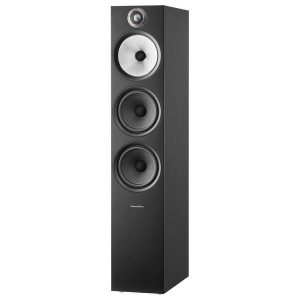
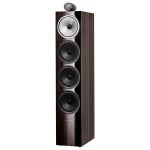
Bowers & Wilkins Prestige Nautilus Floorstanding Speaker
68 000,00 €
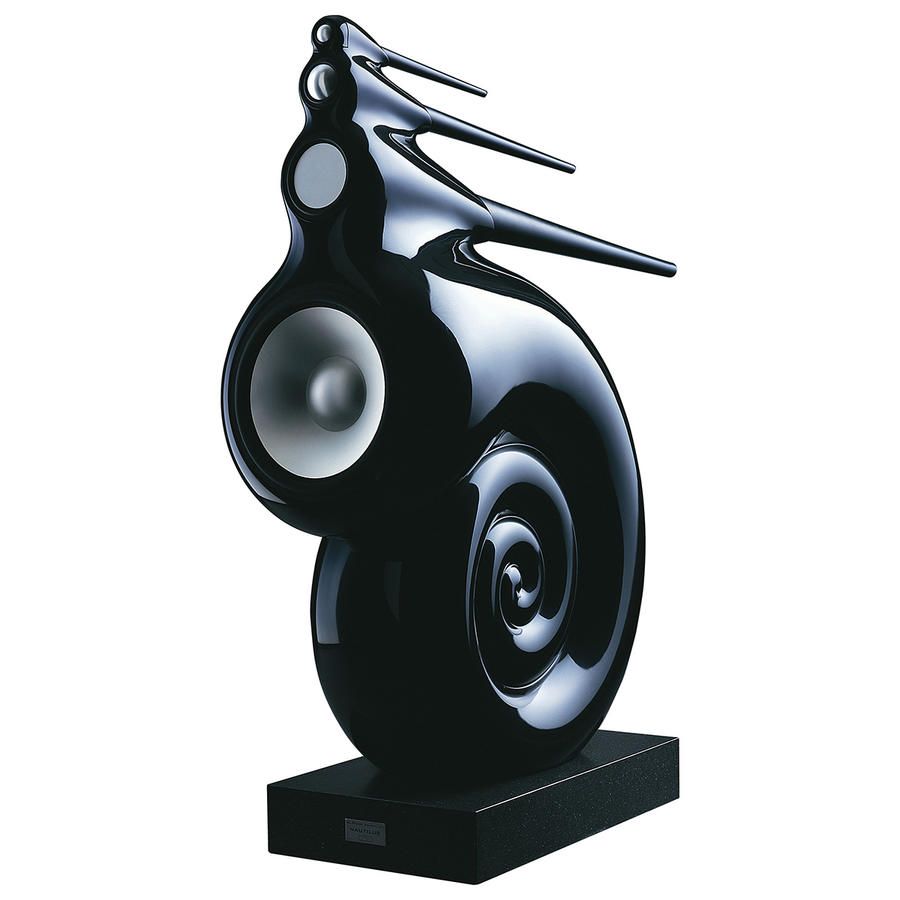
Bowers & Wilkins Prestige Nautilus is a four-way floorstanding speaker designed for an actively filtered stereo system. Its tapered Nautilus Tube™ tubes absorb energy radiating from the rear of the drive units and reduce resonances. Each speaker requires four matched power-amplifier channels. A stereo pair needs eight channels with identical gain and phase.
Bowers & Wilkins Prestige Nautilus is a four-way floorstanding speaker designed for an actively filtered stereo system. Its spiral enclosure houses tapered Nautilus Tube™ tubes. These absorb acoustic energy radiating from the rear of the drive units and reduce resonances. This architecture requires separate amplification for each frequency band.
Who this speaker system is for
This model is intended for buyers planning a multichannel power-amplifier system. A conventional two-channel stereo amplifier is not sufficient. Each speaker requires four power-amplifier channels, meaning that a stereo pair needs eight channels.
Amplifier gain and phase must be identical across every channel. This allows the four frequency bands to maintain their intended balance. The minimum order quantity is two speakers.
Four-way acoustic design
Bass is reproduced by a 300 mm aluminium-cone driver. A 100 mm aluminium/polymer sandwich-cone driver handles the lower-midrange frequencies.
The upper-midrange is reproduced by a 50 mm aluminium-dome driver, while a 25 mm aluminium-dome driver covers the high-frequency band. The crossover frequencies are 220 Hz, 880 Hz and 3.5 kHz.
Active crossover and amplification
The active crossover divides the signal into four frequency bands before power amplification. Each band is then sent to its own amplifier channel. Planning the system therefore involves more than choosing the speakers: the entire amplification chain must be correctly matched.
The specified continuous power for each channel is 100-300 W into 8 Ω when reproducing programme material without clipping. This is the requirement for one amplifier channel, not the total power rating for the complete speaker.
Frequency range and dispersion
The frequency limits are specified at -6 dB, extending from 10 Hz to 25 kHz. This tolerance is important when assessing the outer limits of the range. It does not indicate an equal sound level across the entire stated frequency span.
Horizontal dispersion covers an arc of more than 60°, while vertical dispersion covers an arc of more than 10°. The wider horizontal listening area helps when planning seating for several listeners. The narrower vertical dispersion makes careful selection of the seated listening height more important.
Placement planning
The spiral enclosure requires its floor space to be planned in advance. The stated dimensions are 430 × 1210 × 1105 mm, but the order of the dimensions is not identified. All three enclosure directions should therefore be considered before choosing the final position.
Each speaker weighs 44.50 kg and requires a level, stable supporting surface. Because of this weight, it is sensible to plan how the speaker will be moved and given its final orientation before connecting the amplifier channels.
Match the vertical positioning to the seated listening height.
Technical specifications
| Type | Four-way floorstanding speaker system with acoustic tube loading |
| Acoustic technology | Nautilus Tube™ tapered tubes |
| Crossover | Active |
| Bass driver | 1 × 300 mm aluminium cone |
| Lower-midrange driver | 1 × 100 mm aluminium/polymer sandwich cone |
| Upper-midrange driver | 1 × 50 mm aluminium dome |
| High-frequency driver | 1 × 25 mm aluminium dome |
| Frequency range | -6 dB at 10 Hz and 25 kHz |
| Dispersion deviation | Within 2 dB of the response on the reference axis |
| Horizontal dispersion | More than 60° arc |
| Vertical dispersion | More than 10° arc |
| Crossover frequencies | 220 Hz, 880 Hz and 3.5 kHz |
| Amplifier channels | 4 channels per speaker |
| Recommended power per channel | 100-300 W continuous into 8 Ω, without clipping |
| Channel matching | Identical gain and phase across all channels |
| Dimensions | 430 × 1210 × 1105 mm; dimension order not identified |
| Net weight | 44.50 kg per speaker |
| Minimum order quantity | 2 speakers |
FAQ
Can these speakers be connected to a conventional stereo amplifier?
No, not if the amplifier provides only one channel for each speaker. In this system, every frequency band must be amplified separately.
Where is the active crossover used in the signal chain?
The crossover is placed before the power amplifiers. It divides the signal into four bands, which are then sent to separate amplification channels.
Can different power amplifiers be used?
They can be used only if identical gain and phase are maintained across all channels. Different characteristics would alter the balance between the individual frequency bands.
How should I choose the speaker position in the room?
Consider all three stated dimensions and the space required by the spiral form. Place each speaker on a stable surface and take the seated listening height into account.
What does a frequency range measured at -6 dB mean?
The 10 Hz and 25 kHz figures indicate the limits at which the level has fallen by 6 dB. They are not a promise of a flat response throughout the entire range.