Acoustic Energy AE120 Floorstanding Speaker
949,00 €
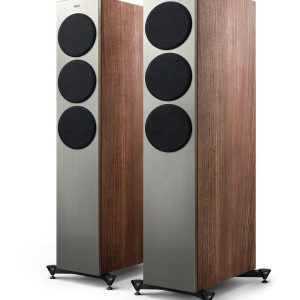
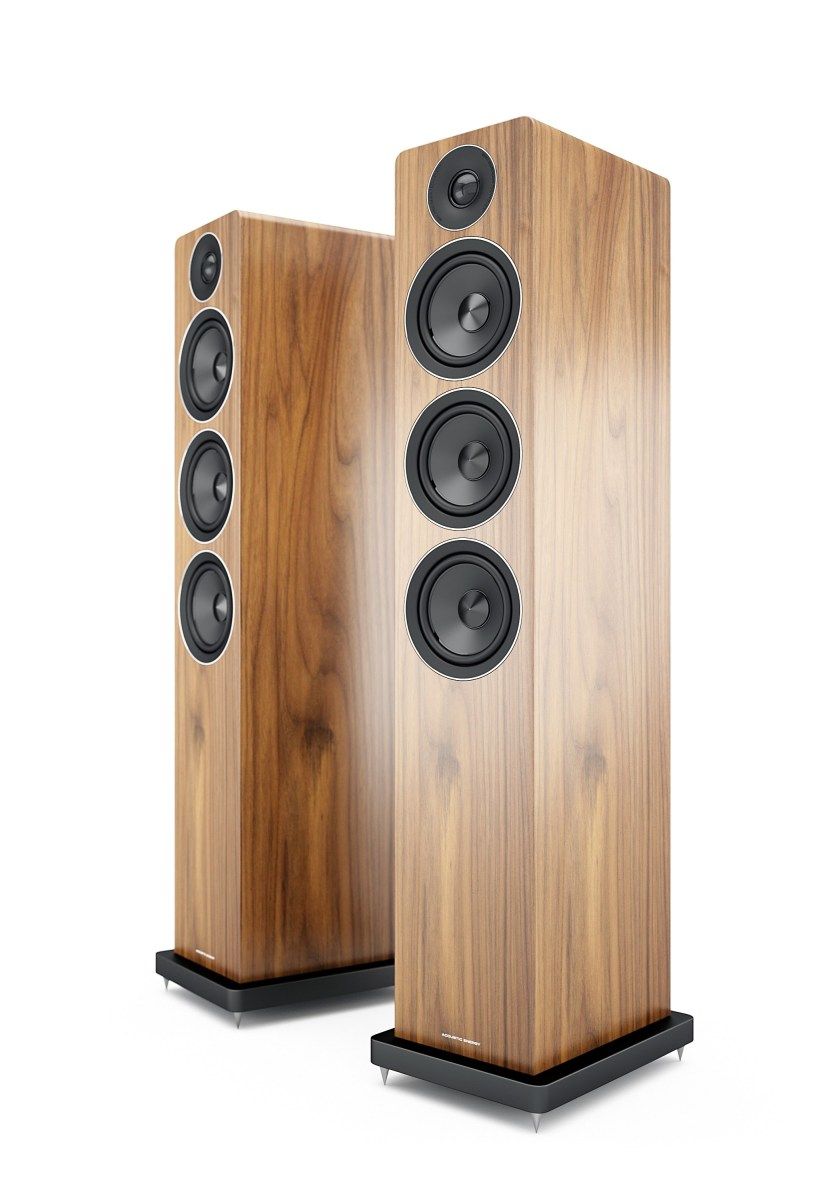
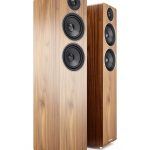
The Acoustic Energy AE120 is a three-way floorstanding speaker for a home audio system. Two bass drivers are combined with an independently isolated midrange driver and a 25 mm soft-dome tweeter. Its 18 mm MDF cabinet, additional mass loading and internal bracing are designed to reduce vibrations and resonances.
The Acoustic Energy AE120 speaker is a three-way floorstanding model designed for a home audio system. It is the flagship and largest model in the 100 Series. Its slim cabinet houses two bass drivers, an independently isolated midrange driver and a 25 mm tweeter.
Who this model is for
This model is intended for buyers looking for a floorstanding design with a true three-way configuration. Separate drivers handle the bass, midrange and treble, allowing each part of the frequency range to be reproduced by a dedicated driver.
The AE120 uses a slim floorstanding cabinet. Its two bass drivers provide a larger combined cone area for the lower frequencies.
Three-way driver system
The midrange driver is installed in its own internal chamber. This chamber is designed to reduce the effect of reflections coming from the rear of the cone. It also acoustically isolates the midrange driver from the operation of the bass drivers.
The 25 mm tweeter uses a soft dome and is integrated into a Wide Dispersion Technology (WDT) waveguide. The dome and waveguide work together as a single high-frequency assembly.
Crossover and driver integration
The three-way crossover includes impedance compensation. Attention was also given to phase and time alignment during the crossover design process.
The internal crossover divides the amplifier signal between the three frequency bands. Under normal connection conditions, the speaker does not require a separate active crossover.
Cabinet resonance control
The cabinet is made from 18 mm MDF and is mass-loaded at the factory. This additional mass is intended to damp cabinet vibrations. Internal bracing is tuned to reduce cabinet resonances and unwanted coloration in the midrange.
A discreet satin-black plinth is fitted beneath the speaker to improve the stability of the structure. Place the plinth on a firm, level surface.
Placement and initial setup
When setting up a stereo pair, begin by placing both speakers at equal distances from the rear and side walls. Leave enough room to move the cabinets forwards or backwards while fine-tuning their position. Although the cabinet is slim, room boundaries can still affect bass response.
If the bass sounds too prominent at the listening position, gradually increase the distance between the speakers and the rear wall. Move both speakers by equal amounts to preserve a symmetrical stereo setup. Adjust toe-in towards the listening position in small increments, using the position of voices in the centre of the soundstage as a reference.
Technical specifications
| Product type | Floorstanding speaker |
|---|---|
| Series | Flagship of the Acoustic Energy 100 Series |
| Design | True three-way system with a slim cabinet |
| Bass drivers | 2 |
| Midrange driver | 1, installed in a separate internal chamber |
| Tweeter | 25 mm soft-dome design |
| High-frequency design | WDT waveguide |
| Crossover | Three-way design with impedance compensation |
| Driver integration | Designed with attention to phase and time alignment |
| Cabinet material | 18 mm MDF |
| Vibration damping | Factory mass-loaded cabinet |
| Internal construction | Tuned bracing for reduced resonance |
| Plinth | Satin black, designed to improve stability |
FAQ
Who is this floorstanding speaker suitable for?
It is suitable for a home audio system where a three-way design in a slim floorstanding cabinet is preferred. The AE120 occupies the highest position in the 100 Series.
Do the two bass drivers make it a four-way speaker?
No. Both drivers operate within the bass range. Separate dedicated drivers reproduce the midrange and treble.
Is an external active crossover required?
No. The speaker has an internal three-way crossover that distributes the signal between the installed drivers.
Does the separate midrange chamber require adjustment?
No. It is an internal part of the speaker’s construction and does not need to be adjusted or connected separately by the user.
How can I adjust the amount of bass in the room?
Change the distance from the rear wall in small increments. Evaluate the result from your normal listening position and move both speakers symmetrically.