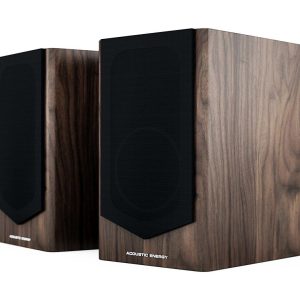


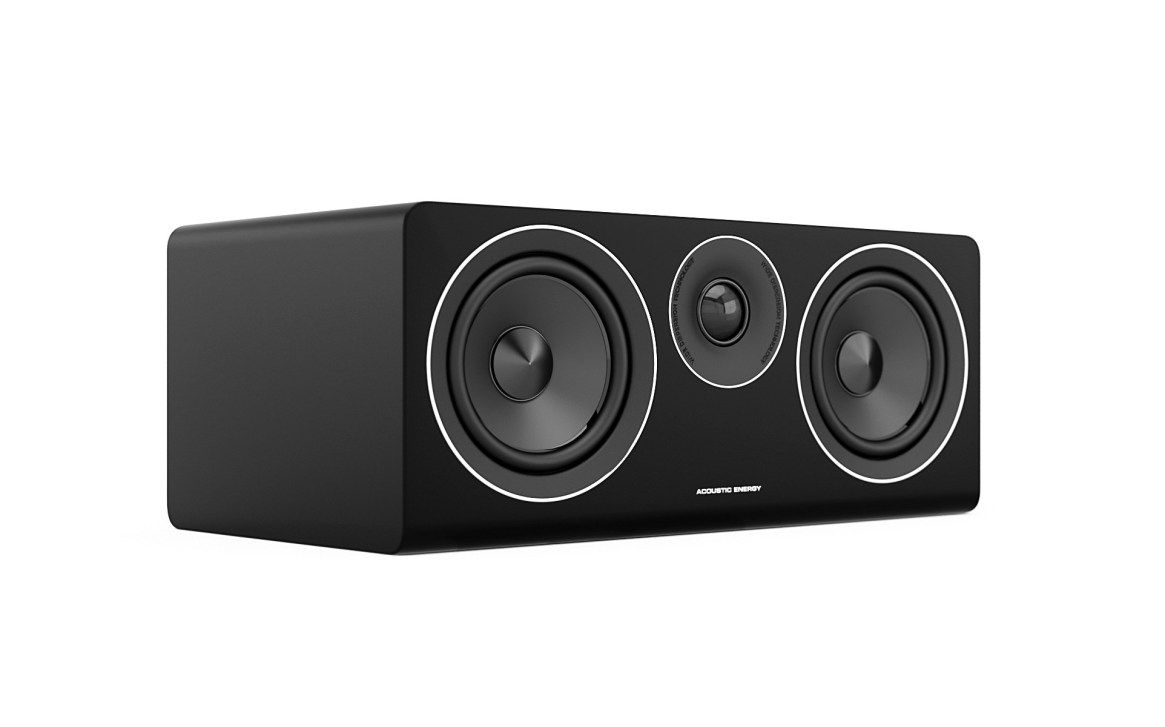
Acoustic Energy AE107 Centre Speaker
210,00 €
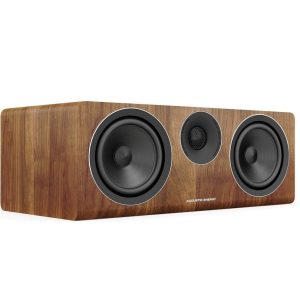
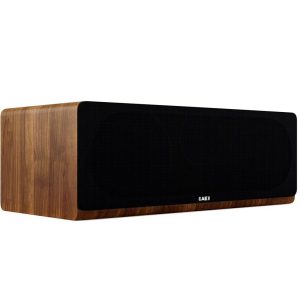
Acoustic Energy AE107 is a compact centre-channel speaker for home cinema and multichannel music systems. Its horizontal two-way design suits placement near a screen and is intended to reproduce vocals clearly. Its 4-ohm nominal impedance must be considered when choosing an AV receiver. The rear slot-shaped bass-reflex port supports low-frequency performance, so open space must be left behind the speaker.
Acoustic Energy AE107 is a two-way bass-reflex centre-channel speaker for home cinema and multichannel music systems. It is designed for horizontal placement near the screen. Its 150 W rated power handling and 90 dB sensitivity make it suitable for use with an appropriately selected AV receiver.
The speaker reproduces the centre channel, which usually carries film dialogue and lead vocals. Its design is intended to deliver voices clearly and in detail, while the rear slot-shaped bass-reflex port supports low-frequency performance.
Role in a home cinema system
A centre speaker should be chosen with the amplifier and the placement of the other speakers in mind. The AE107 has a nominal impedance of 4 ohms, so the AV receiver or multichannel amplifier must operate reliably with this load.
It is suitable for film dialogue, television programmes and multichannel music recordings. The horizontal cabinet can be positioned below or above a screen. Its 420 mm width should be checked beforehand, particularly when space on a shelf is limited.
Connection and amplifier selection
Connect the speaker to the amplified centre-channel output of an AV receiver or multichannel amplifier using speaker cable. It is not a line-level device and must not be connected to a SUB/LFE line output intended for an active subwoofer.
The 150 W rated power handling is not a recommendation to operate the amplifier continuously at maximum volume. Practical listening levels depend on the listening distance, the room and the levels of the other channels. Audible distortion is a sign that the volume should be reduced.
System setup
After connection, enable the centre channel in the AV receiver menu. Enter its distance from the listening position and balance its level with the front speakers. Dialogue should appear to come from the screen without overpowering the left and right channels.
If the receiver offers automatic calibration, place its measurement microphone at the main listening position. After calibration, listen to a familiar dialogue scene. The centre-channel level can then be adjusted more precisely in the receiver settings if necessary.
Match the crossover setting to the subwoofer used in the system. Start with the receiver’s calibration result, then listen for natural-sounding voices and check that bass does not seem concentrated around the screen.
Placement and installation
The compact cabinet can be placed on a shelf, inside a media unit or mounted on a wall. Keep the front of the speaker as close as possible to the front edge of the furniture so that surrounding surfaces have less effect on dialogue clarity.
Leave open space behind the speaker for the rear bass-reflex port. Do not press the port against a wall or block it with the back of a cabinet. If the bass sounds excessive, first increase the distance from the surface behind the speaker.
When installing the AE107 above or below the screen, aim it towards the main listening position. For wall installation, use secure fittings suitable for the speaker’s dimensions and weight.
Technical specifications
| Type | Two-way bass-reflex centre-channel speaker |
|---|---|
| Application | Home cinema and multichannel music systems |
| Orientation | Horizontal |
| Bass-reflex port | Rear, slot-shaped |
| Sensitivity | 90 dB at 2.83 V/1 m |
| Nominal impedance | 4 ohms |
| Rated power handling | 150 W |
| Dimensions | 420 × 165 × 240 mm (width × height × depth) |
| Installation options | Shelf, cabinet or wall mounting |
FAQ
Is this speaker suitable for a stereo amplifier?
It is designed for a centre-channel output. A conventional two-channel stereo amplifier does not normally provide a separate centre channel. An AV receiver or multichannel amplifier is required for full use.
What should I consider when choosing an AV receiver?
Check that the receiver is designed to work with 4-ohm speakers. It must also have an amplified centre-channel output.
Can the speaker be placed inside an enclosed cabinet?
Yes, but an air gap must remain behind it. Blocking the rear port changes its low-frequency performance. The front of the speaker should not be recessed deeply into the furniture.
Where should it be positioned in relation to the screen?
Place it as close as possible to the centre of the screen, either below or above it. Aiming the speaker towards the listening position helps connect dialogue more closely with the picture.
Does 150 W indicate the required amplifier power?
No. It is the speaker’s rated power-handling figure, not a mandatory amplifier output. Support for a 4-ohm load is also important when choosing the amplifier.