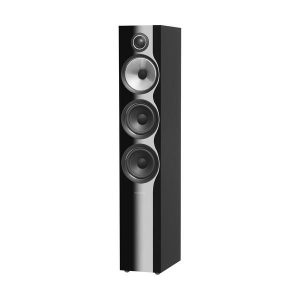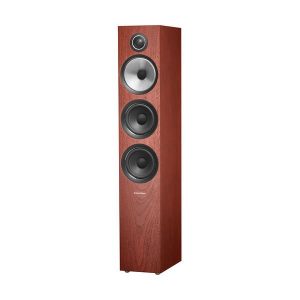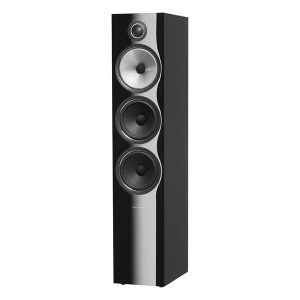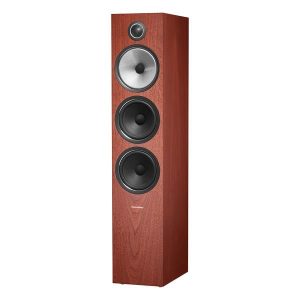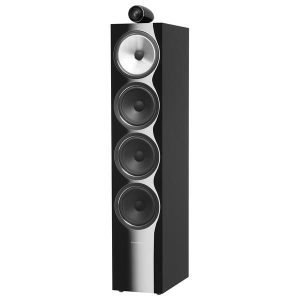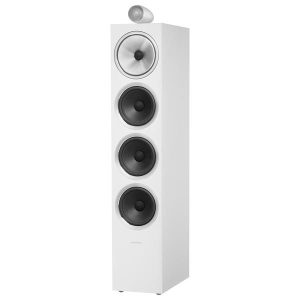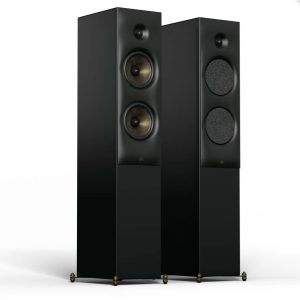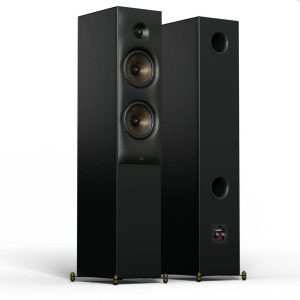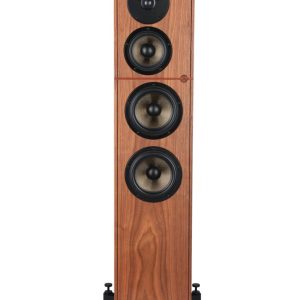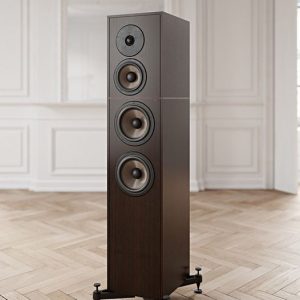


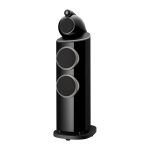
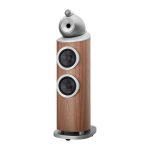
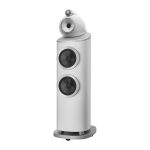
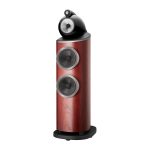
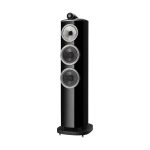
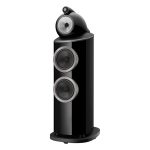
Bowers & Wilkins 803 D4 Floorstanding Speakers
20 000,00 €
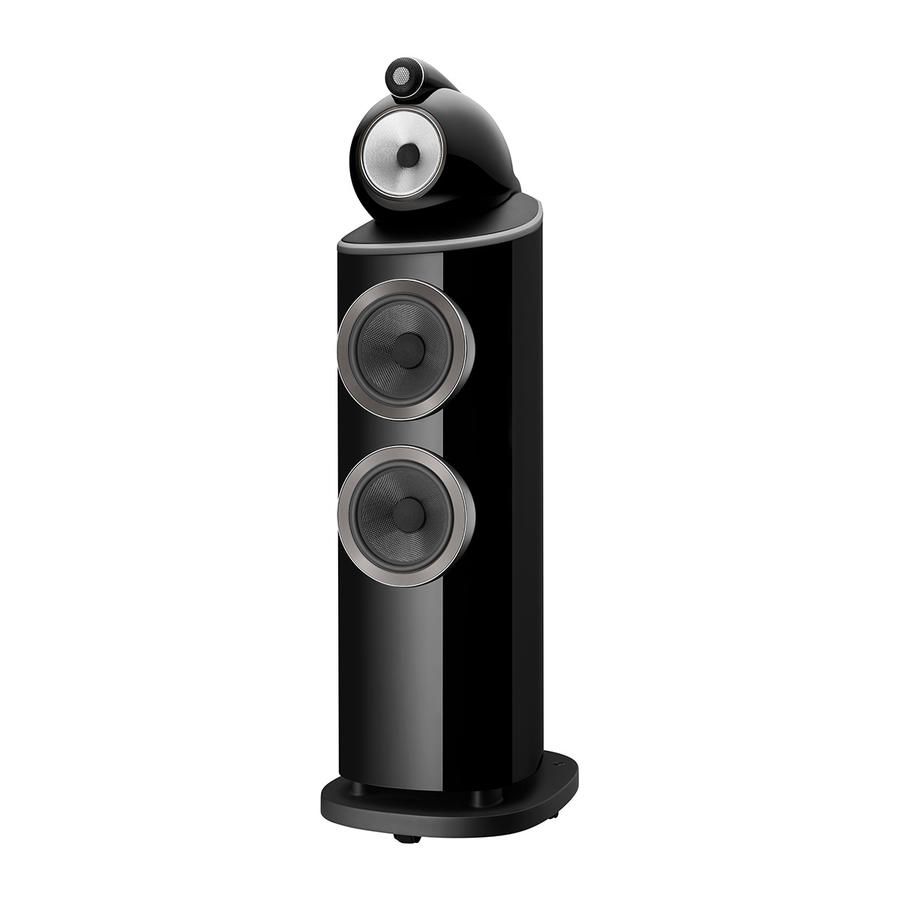
Bowers & Wilkins 803 D4 passive three-way floorstanding speakers are designed for a home stereo system with an external amplifier. The separate Continuum FST midrange enclosure and Biomimetic Suspension reduce unwanted air pressure and coloration. Two 180 mm Aerofoil drivers housed in aluminium modules have a rigid mechanical foundation. When choosing an amplifier, account for the 3.0-ohm minimum impedance.
Bowers & Wilkins 803 D4 floorstanding speakers are passive three-way bass-reflex models designed for a high-end home stereo system. This is the most compact 800 Series Diamond model with a separate midrange enclosure. The speakers require an external amplifier.
Who this model is for
This model suits buyers building a separate system with passive speakers and an amplifier. It is smaller than the 801 D4 and 802 D4, but remains a large and heavy speaker. Its 51.1 cm cabinet depth should be considered when planning clearance from the wall and space around walkways.
The minimum order quantity is two units, so orders are placed as a stereo pair.
Three-way design
The 25 mm diamond-dome tweeter is housed in a separate, mechanically decoupled module. The 130 mm Continuum FST midrange driver has its own enclosure. Its Biomimetic Suspension reduces unwanted air pressure and the coloration associated with a conventional fabric suspension.
Two 180 mm Aerofoil bass drivers are installed in solid aluminium modules. Each module is clamped to an internal aluminium plate at the cabinet’s stiffest point, providing a rigid mechanical foundation for the bass section.
Choosing an amplifier and speaker cable
The recommended amplifier power is 50-500 W into 8 ohms with an unclipped programme signal. This range is not the speaker’s output power; it is the recommended range for amplifier selection.
Nominal impedance is 8 ohms, but the minimum is 3.0 ohms. Amplifier choice should therefore account not only for rated power but also for the ability to supply current into a low-impedance load.
The speakers connect to the amplifier with speaker cable. The maximum recommended cable impedance is 0.1 ohm. For longer runs, use a thicker conductor to avoid exceeding this limit.
There are no built-in volume, phase or filter controls. These adjustments must be made through the amplifier or system processor if the equipment provides them.
Positioning and setup
The speaker is intended only for floor placement. Each cabinet weighs 62.15 kg, so two people should unpack it in the listening room. Castors assist with initial positioning, while the integrated spikes and stabilisers secure the final position.
Keep the magnetic spike cups in place on hard floors. They protect the floor from direct contact with the spikes. Because the bass-reflex port faces downward, accurate spike adjustment also helps maintain the intended clearance above the floor.
Begin with both speakers positioned symmetrically relative to the listening seat. Then adjust their distance from the walls and toe-in angle in small steps. After each change, assess the bass balance and the stability of the central stereo image.
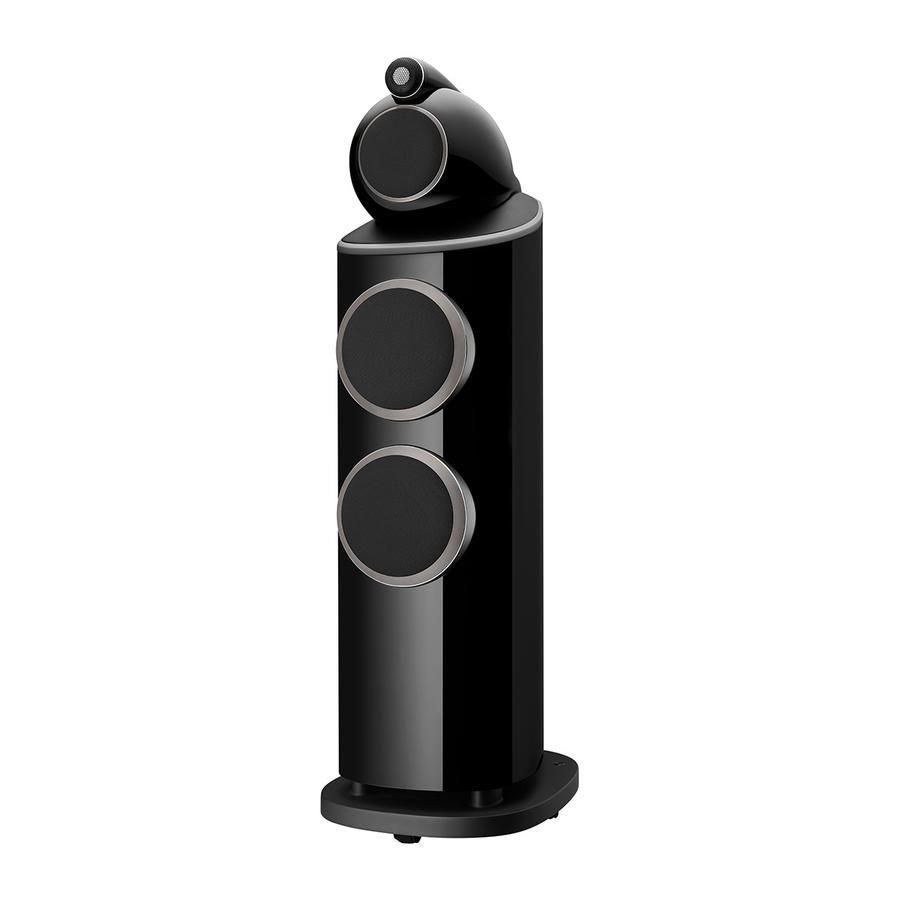
The grilles attach magnetically. The protective steel mesh does not make the diamond dome completely resistant to contact. A small amount of movement in the mechanically decoupled tweeter module is part of the design, not a fault.
Finishes and supplied accessories
Available finishes are gloss black, gloss white, satin walnut and satin rosenut.
A pair includes two midrange grilles and four bass grilles. Four terminal link wires, four stabilisers and four stabiliser caps are also supplied. Adjustment tools comprise a T45 tool and a metal spike adjustment bar. A cleaning cloth is included for care.
Technical specifications
| Model | Bowers & Wilkins 803 D4 |
|---|---|
| Series | 800 Series Diamond |
| Type | Passive three-way bass-reflex floorstanding speaker |
| Tweeter | 1 × 25 mm diamond dome |
| Midrange driver | 1 × 130 mm Continuum FST |
| Midrange suspension | Biomimetic Suspension |
| Bass drivers | 2 × 180 mm Aerofoil |
| Bass construction | Solid aluminium modules coupled to an internal aluminium plate |
| Frequency range | 16 Hz-35 kHz |
| Frequency response | 19 Hz-28 kHz, ±3 dB from the reference axis |
| Sensitivity | 90 dB, measured on-axis at 2.83 V and 1 m |
| Harmonic distortion | Second and third harmonics: less than 1% from 80 Hz to 20 kHz; less than 0.3% from 100 Hz to 20 kHz, measured at 90 dB and 1 m on-axis |
| Nominal impedance | 8 ohms |
| Minimum impedance | 3.0 ohms |
| Recommended amplifier power | 50-500 W into 8 ohms with an unclipped programme signal |
| Maximum recommended cable impedance | 0.1 ohm |
| Power source | External amplifier |
| Built-in controls | None |
| Bass-reflex port | Downward-firing |
| Dimensions | 1165 × 357 × 511 mm (height × width × depth) |
| Weight per speaker | 62.15 kg |
| Finishes | Gloss black, gloss white, satin walnut, satin rosenut |
| Installation | Floor placement only |
| Minimum order quantity | 2 units |
FAQ
Can the speakers be connected directly to a music player?
No. These are passive speakers. Connect the player to an external amplifier, then connect the speakers to the amplifier’s speaker outputs.
What should I consider when choosing an amplifier?
Choose an amplifier capable of remaining stable when driving a low-impedance load. Adequate current capacity is important for listening at higher volume levels without clipping.
How should I move the speakers safely into their final position?
Each speaker weighs 62.15 kg, so plan the carrying route in advance and have two people unpack it in the listening room. Use the castors only to assist with movement within the room.
How should the speakers be placed on a hard floor?
Keep the magnetic cups beneath the spikes. They separate the metal spikes from wood, laminate or another hard flooring surface.
Does slight movement in the tweeter module indicate a fault?
No. The module is mechanically decoupled from the main cabinet, so a small amount of movement is intentional.
Must the grilles be fitted while listening?
No. The grilles attach magnetically and can be removed. Do not touch the diamond dome, even when the protective mesh remains in place.