
Audiovector ZERO Super Speaker Cable
830,00 €
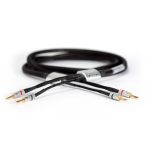
Audiovector ZERO Super is a 3.15 m screened speaker cable designed to connect an amplifier to a passive speaker. Its pure copper conductors use an asymmetric construction, with different diameters for the positive and negative conductors. The connections between the cable and plugs are crimped rather than soldered. The stated length helps you plan your equipment layout and cable route within the room.
Audiovector ZERO Super cable is a 3.15 m screened speaker cable designed to connect an amplifier to a passive speaker. It uses pure copper conductors, an asymmetric construction, and crimped connections between the cable and plugs.
The 3.15 m cable is suitable when the distance between the amplifier and speaker is slightly more than three metres. Its stated length lets you plan the positions of your equipment and speakers before routing the cable.
What this cable is designed for
The cable carries the amplifier’s output signal to a passive speaker. It is not an RCA or XLR line-level cable, and it is not intended to carry mains power. This distinction is important when choosing a connection for the type of signal used by your system.
Before making your choice, measure the complete route from the amplifier to the speaker. Include drops behind furniture, bends, and a small amount of slack near the equipment. The cable should not be stretched tight or left supporting the connectors with its own weight.
Pure copper conductors
Pure copper is used for both signal conductors. This clearly identifies the conductor material, so you do not have to rely on unspecified metal alloys when selecting the cable.
The positive and negative conductors have different diameters. Because of this asymmetric construction, the marked polarity must be observed during connection. The same conductor must connect the corresponding amplifier and speaker terminals at both ends of the cable.
Screened construction
This is a screened cable. The screen is an additional part of the cable construction intended to reduce the effects of electromagnetic fields in the surrounding environment. Even so, it is advisable to route the cable separately from mains power cables.
If audio and power cables have to cross, they should ideally meet at a right angle. Long parallel runs should be avoided. Any unused cable should also not be wound tightly into a coil.
Crimped connections
The cable and plugs are joined using crimped connections rather than solder. A crimped connection is formed by mechanically compressing the contact around the conductor. There is no need to heat the factory-made connections or add solder during installation.
When disconnecting the cable, hold the plug instead of pulling on the cable itself. This prevents unnecessary mechanical stress on the crimped areas. Sharp bends close to the connection should also be avoided.
Connection and initial checks
Switch off the amplifier before connecting the cable. First identify the markings for the positive and negative conductors. Then maintain the same polarity all the way from the amplifier to the speaker.
Reversed polarity on one channel can impair phase alignment between the channels. This may make the stereo image less stable. Once the connection is complete, check both ends of the cable before switching the system on.
This cable is intended for a speaker-level connection. It should not be connected to an amplifier’s line-level, phono, digital, or subwoofer outputs.
Use in different audio systems
This cable is intended for one speaker-level run from an amplifier to a passive speaker. In a stereo or multichannel system, every passive speaker requires a separate cable connected to the corresponding amplifier output. The same polarity must be maintained at both ends of each cable: connect the positive conductor to the positive terminals and the negative conductor to the negative terminals on both the amplifier and speaker.
Planning the cable route in your room
Before buying, measure the actual route from the amplifier to the speaker according to your planned equipment layout. Include bends, drops behind furniture, and a small amount of slack beside both devices. Compare the 3.15 m length with this complete route rather than simply measuring the straight-line distance between the components. Measure along the path that the cable will actually follow.
The cable should be long enough to lie naturally without being pulled tight or placing strain on the connections. Leave enough room behind both the amplifier and speaker to prevent the cable from being sharply bent where it meets the plugs.
Technical specifications
| Model | Audiovector ZERO Super |
|---|---|
| Product type | Screened speaker cable |
| Length | 3.15 m |
| Conductor material | Pure copper |
| Construction | Asymmetric |
| Conductors | Different diameters for the positive and negative conductors |
| Screening | Yes |
| Cable-to-plug connection | Crimped, not soldered |
| Intended use | Connecting an amplifier to a passive speaker |
FAQ
How can I tell whether the cable is long enough?
Measure the actual route, including bends and drops behind furniture. Leave some slack beside both devices so that the connections are not placed under tension.
Can this cable be used in a stereo system?
Yes. It is designed to connect an amplifier to a passive speaker. The left- and right-channel runs are connected separately, with consistent polarity maintained for each channel.
Is it suitable for a home cinema system?
It can be used to connect a passive speaker channel to an AV amplifier. A powered subwoofer will generally require a different type of line-level connection.
Why is it important not to reverse the positive and negative conductors?
Reversed polarity on one channel can disrupt the phase relationship between the speakers. Follow the cable markings while connecting it and check both ends before use.
Can the cable be routed beside mains power cables?
Long parallel runs are best avoided even with a screened cable. If the cables need to cross, arrange them at an angle as close to 90 degrees as possible.
Do the factory connections need additional soldering?
No. The cable and plugs have factory-crimped connections, so they do not need to be modified or soldered.
Is this cable suitable for a line-level audio signal?
No. It is intended for a speaker-level signal between an amplifier and a passive speaker. RCA, XLR, and digital connections require other cable types.