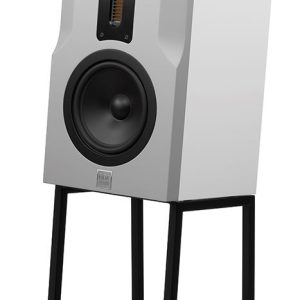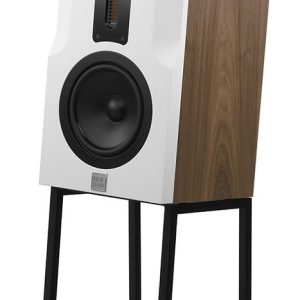
Epos ES-14N Stand-Mount Speaker
4 000,00 €
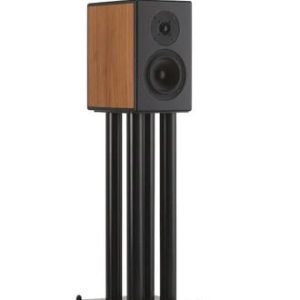
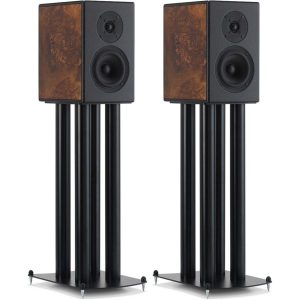
The Epos ES-14N stand-mount speaker is a passive two-way model designed for music listening on a separate stand. Its two-layer MDF cabinet and internal bracing reduce unwanted cabinet radiation. The rear bass-reflex port is tuned to 38 Hz, so its distance from the wall affects bass balance. The speaker uses single 4 mm banana-plug connections. A removable protective grille is supplied, but the stand is not included.
The Epos ES-14N stand-mount speaker is a passive two-way bass-reflex design intended for use on a separate speaker stand. It is designed for music listening with an external amplifier. Because the reflex port is located at the rear, the distance from the wall affects its performance. The single pair of terminals supports conventional single-wiring only. A stand is not included.
Within the classically styled cabinet, each structural element serves a specific acoustic purpose. The bass driver uses a polypropylene cone, while the rear-mounted crossover divides the signal between the drive units.
Cabinet and acoustic design
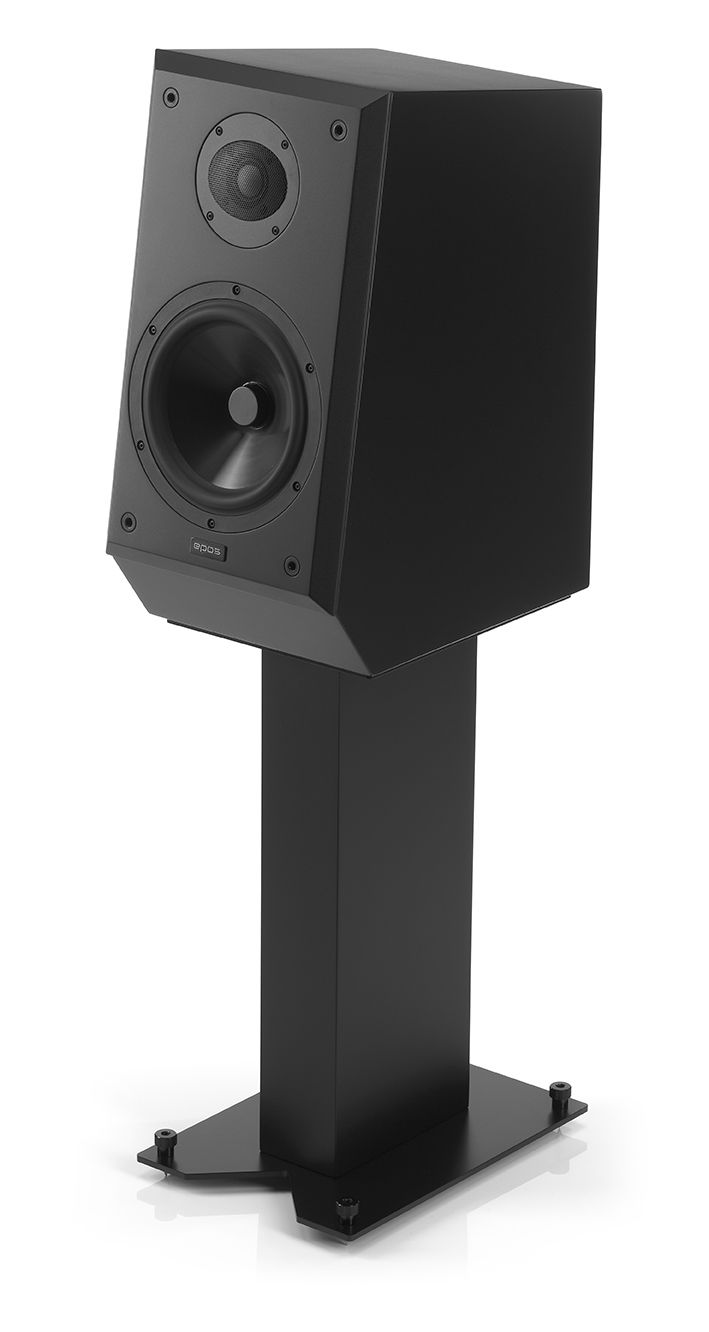
The cabinet volume is close to that of the earlier ES-14, although its shape has been revised. The backward-tilted front baffle time-aligns the bass and treble drivers. This angle also helps control the standing wave that forms between the front and rear cabinet walls.
The enclosure is made from two layers of MDF bonded with damping adhesive. Internal bracing controls panel vibration and reduces unwanted sound radiation from the cabinet. A relatively small amount of damping material is used inside.
The separate front baffle is both glued and screwed to the main enclosure. Its 45-degree chamfer controls diffraction in the 2,000-3,000 Hz region, helping to balance the upper midrange.
Bass driver construction
The bass driver combines a polypropylene cone with a 36 mm voice coil. The coil has an 18 mm-long, two-layer copper-wire winding on a non-metallic TIL former made from a mixture of glass fibre and epoxy resin.
The shape of the magnetic system was optimised through modelling so that the driver operates more consistently throughout the coil’s travel, with less variation in inductance. A flux-compensation magnet supplements the main ferrite magnet, reducing the stray magnetic field and adapting the system’s operation to the cabinet volume.
A neodymium disc on the pole piece also contributes to more consistent driver behaviour. The metal phase plug conducts heat away from the voice coil. These parts are mounted in a glass-fibre-filled plastic chassis, selected for its combination of rigidity and damping.
Bass-reflex operation
The bass-reflex port is positioned on the rear of the cabinet and shaped to reduce airflow noise. Holes in the middle of the port suppress open-pipe resonance. A carefully selected soft material covers these openings, damping unwanted resonances while preserving bass reproduction.
The enclosure uses a smooth fourth-order acoustic alignment tuned to 38 Hz. It is designed to work together with the room’s low-frequency reinforcement. Appropriate spacing from surrounding walls helps retain fast, accurate bass.
Amplifier connection
The speaker connects through 4 mm banana-plug sockets mounted on a metal plate. A comparatively small amount of metal is used inside the terminals. One speaker cable carries the amplifier signal to the crossover mounted on the rear panel.
The ES-14N is intended for single-wiring, so its frequency sections cannot be connected separately. There are no additional terminals for bi-wiring or bi-amping. As this is a passive speaker, volume is controlled by the connected amplifier.
Placement and protective grille
Use a stable stand purchased separately. Begin with some clear space between the rear of the cabinet and the room wall. From the listening position, adjust this distance in small steps until the bass sounds balanced. Do not obstruct the rear port.
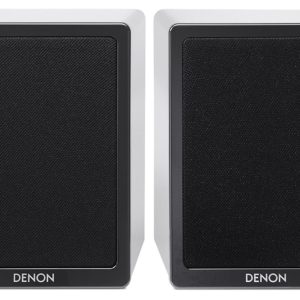
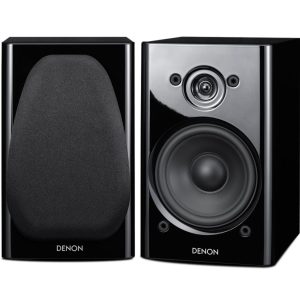
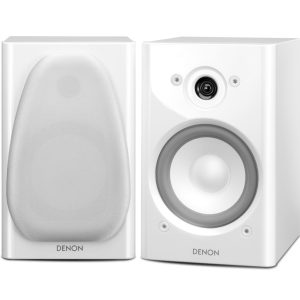
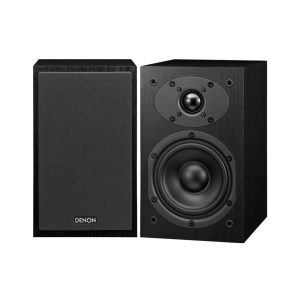
A removable protective grille is supplied. Removing it is recommended for music listening, while fitting it when the speaker is not in use provides protection. The tweeter also has its own integrated protection.
Technical specifications
| Type | Passive two-way stand-mount speaker |
|---|---|
| Acoustic design | Bass reflex |
| Cabinet volume and shape | Volume close to the earlier ES-14, with a revised cabinet shape |
| Cabinet material | Two-layer MDF construction with damping adhesive |
| Cabinet reinforcement | Internal bracing and a small amount of damping material |
| Front baffle | Tilted backwards, glued and screwed to the main cabinet |
| Front-baffle chamfer | 45 degrees; designed to control diffraction in the 2,000-3,000 Hz region |
| Bass driver | Polypropylene cone |
| Voice coil | 36 mm |
| Coil winding | 18 mm long, two-layer copper-wire winding |
| Coil former | Non-metallic TIL former made from a glass-fibre and epoxy-resin mixture |
| Magnetic system | Ferrite magnet, flux-compensation magnet and neodymium disc |
| Phase plug | Metal construction that conducts heat away from the voice coil |
| Driver chassis | Glass-fibre-filled plastic |
| Bass-reflex port | Rear-facing, with resonance-damping holes and a soft covering |
| Acoustic alignment | Smooth fourth-order alignment |
| Tuning frequency | 38 Hz |
| Connections | Single 4 mm banana-plug terminals on a metal plate |
| Crossover | Mounted on the rear panel |
| Tweeter protection | Integrated |
| Included items | Removable front protective grille; stand not included |
FAQ
Does this speaker need a separate amplifier?
Yes. This is a passive model, so it requires an amplifier with speaker-level outputs. Volume is adjusted on the amplifier.
How do I connect the speaker?
Use speaker cable fitted with 4 mm banana plugs. Each speaker requires one cable run.
Can the ES-14N be bi-wired?
No. The single terminals do not provide separate connections for the high- and low-frequency sections.
How much space should I leave behind the cabinet?
There is no single prescribed distance. Start with some open space behind the speaker, then adjust its position according to the bass balance.
Should I leave the grille on while listening to music?
Removing it is recommended. The grille is primarily intended to protect the speaker when it is not in use.
Is a speaker stand included?
No. A stable stand suited to the cabinet base and your chosen listening height must be purchased separately.