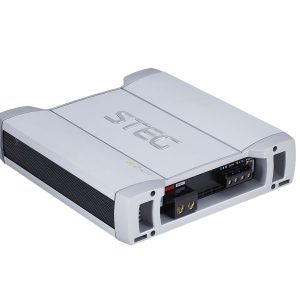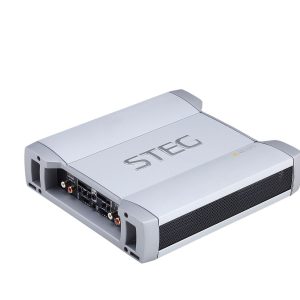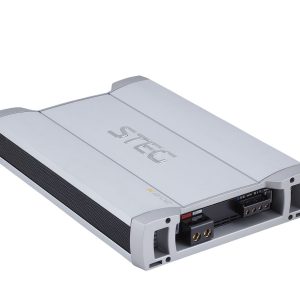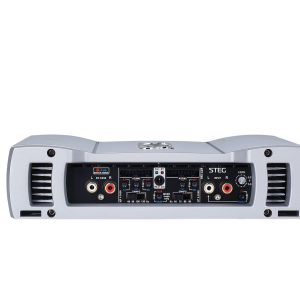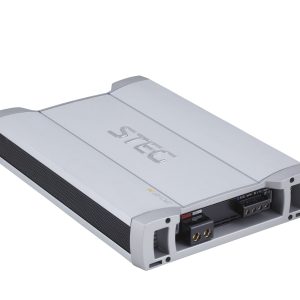
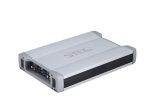
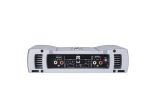
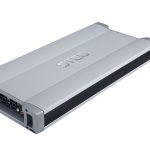
Steg K1.2500 Amplifier
700,00 €
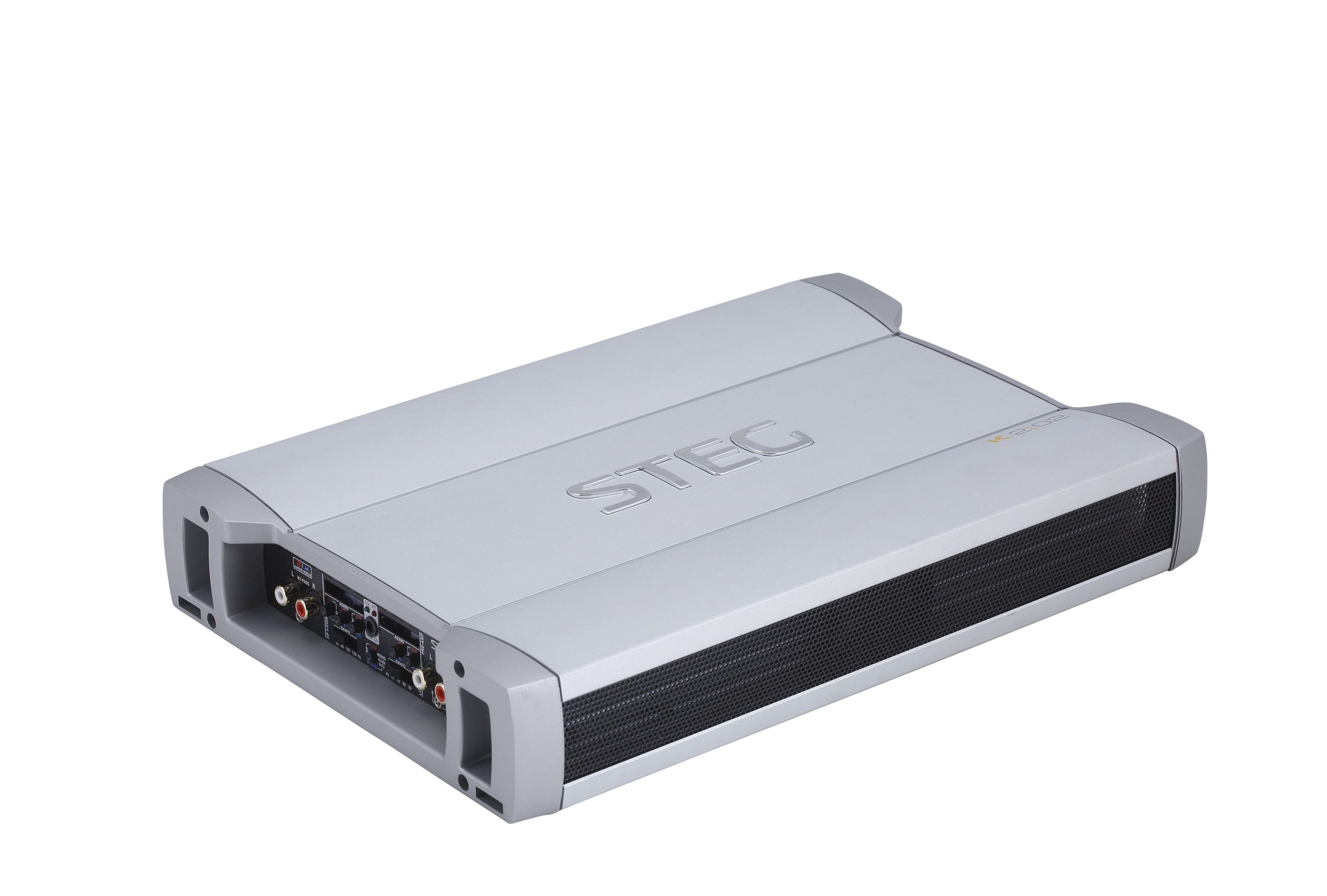
The Steg K1.2500 is a Class D monoblock car amplifier designed to drive a single-channel audio system load. With an 11-14.4 V supply, its stated output is 750 W RMS at 4 ohms, 1400 W at 2 ohms, and 2500 W at 1 ohm. Low-tolerance passive components and a carefully planned circuit layout help reduce power losses. Two protection systems continuously monitor important operating conditions and report faults through LED indicators.
The Steg K1.2500 amplifier is a Class D monoblock car amplifier designed for in-car audio systems. When choosing this model, it is important to consider the total impedance of the connected speakers, the wiring, and the power supply solution.
Purpose and system selection
This model is intended for a system that requires one high-power amplification channel. Its monoblock design does not provide separate left and right channels. Instead, it is designed to drive a single part of a car audio system. The final load is determined by the impedance of the speaker voice coils and the way they are wired, so the amplifier should be selected according to the total impedance of the connected speakers rather than simply the number of speakers.
Circuit design
The Class D amplifier maintains very low distortion even when operating with a low-impedance load. Its carefully planned circuit layout helps reduce power losses.
The circuitry uses selected low-tolerance resistors and capacitors. High-linearity coupling circuits feature low thermal drift, while polyester capacitors intended for audio circuits are used for signal transfer.
Power and load selection
At 4 ohms, the specified output is 1 × 750 W RMS. When the load is reduced to 2 ohms, the specified output rises to 1 × 1400 W RMS. The highest stated output is available with a 1-ohm load: 1 × 2500 W RMS.
All power ratings apply with an 11-14.4 V supply. As load impedance decreases, the current demand placed on the vehicle’s electrical system increases. Power cables, grounding, and protection components must therefore be selected for the actual system load. The total speaker impedance must be calculated before any connections are made.
Signal and power matching
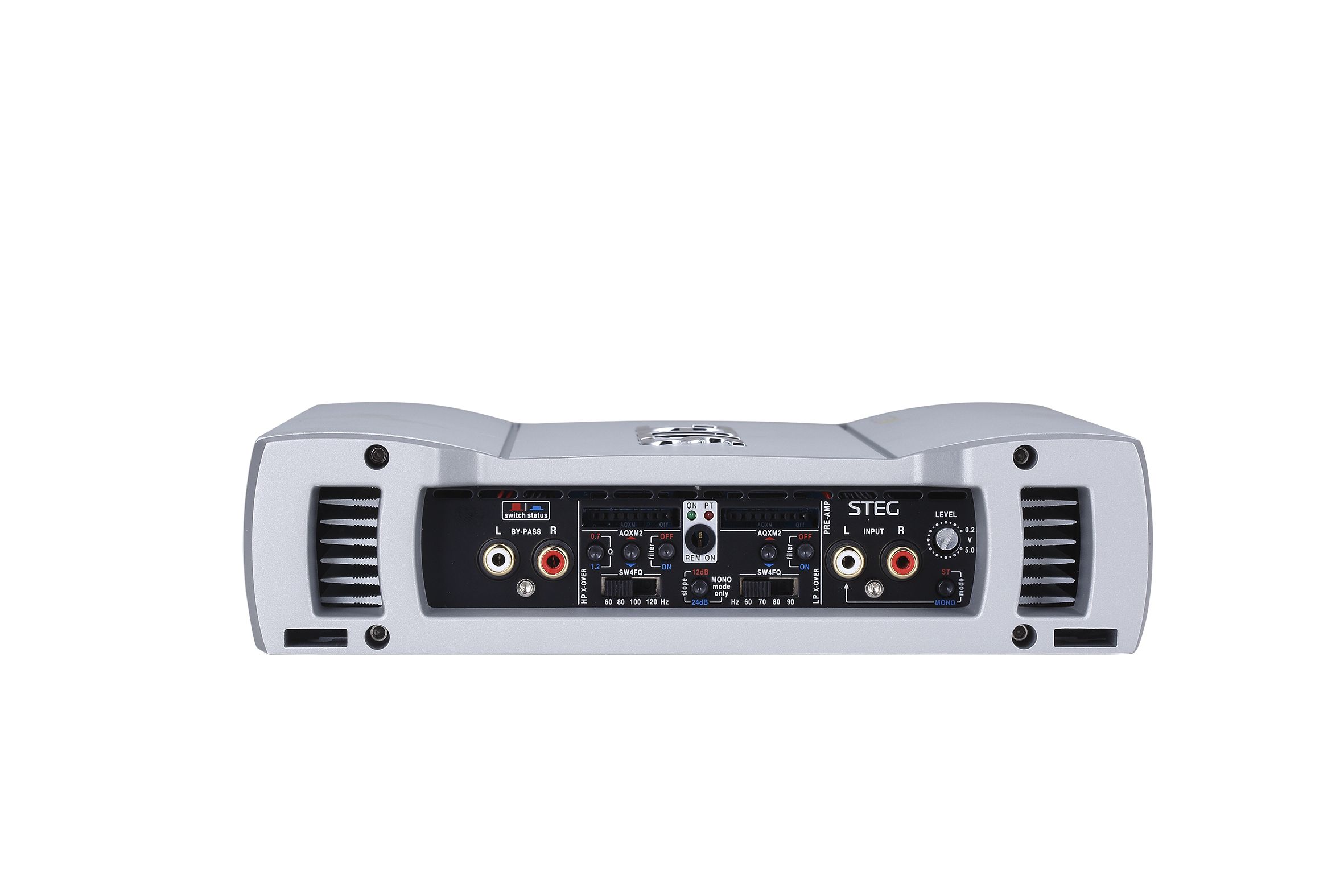
The input sensitivity covers a range of 0.2-5 V RMS. This allows the amplifier to be matched to car audio sources with different output signal levels. During the initial setup, begin with the source volume set low. Increase the level gradually and listen carefully to make sure the sound remains clean.
The supply voltage must remain within the stated range while the amplifier is under load. A voltage drop may prevent the system from reaching the specified power figures. Amplifier output should not be assessed separately from the capacity of the vehicle’s electrical system.
Dual protection system
The first protection system is managed by a microprocessor. It continuously monitors for an output short circuit, DC at the speaker output, and excessive temperature. The system also supervises switch-on muting and detects a supply voltage outside the permitted range.
Sensors in the circuitry continuously send operating data to the protection software. If a fault is detected, the system responds as required. LED indicators on the control panel report the fault condition.
The INTELLISPEED system controls fan operation according to the amplifier’s operating state. The second protection system is managed by the modulator. It monitors the switching circuit of the output stage, extending protection to the operation of the Class D output stage itself.
Installation location
The 500 × 56 × 232 mm enclosure requires sufficient mounting space. The amplifier weighs 6.47 kg, so it must be installed on a strong, secure base. Leave enough clearance around the enclosure for airflow. Do not cover the fan area or obstruct the indicators on the control panel.
Before securing the amplifier, check that there will be enough room for the cables and their required bend radius. Power and speaker cables should not pull on the terminals. The control panel must remain accessible for initial adjustment and for checking the protection indicators.
Use in different systems
This model is designed for car audio equipment. It is not a conventional mains-powered amplifier for a home stereo or home cinema system.
When it is installed alongside other amplifiers, the required power supply capacity must be calculated for the entire installed system rather than for this unit alone. A suitable separate amplification solution is required for the system’s other channels.
Technical specifications
| Model | Steg K1.2500 |
|---|---|
| Type | Class D monoblock car amplifier |
| Number of channels | 1 |
| RMS power at 4 ohms | 1 × 750 W |
| RMS power at 2 ohms | 1 × 1400 W |
| RMS power at 1 ohm | 1 × 2500 W |
| Supply voltage for stated RMS ratings | 11-14.4 V |
| Input sensitivity | 0.2-5 V RMS |
| Passive components | Selected low-tolerance resistors and capacitors |
| Capacitor type | Polyester capacitors intended for audio circuits |
| Coupling circuits | High linearity with low thermal drift |
| Circuit layout | Designed to reduce power losses |
| Number of protection systems | 2 |
| Conditions monitored by the microprocessor | Short circuit, DC at the output, temperature, switch-on muting, and supply voltage |
| Fan control | INTELLISPEED |
| Fault indication | LED indicators on the control panel |
| Second protection system | Modulator-controlled monitoring of the output-stage switching circuit |
| Dimensions | 500 × 56 × 232 mm |
| Weight | 6.47 kg |
FAQ
How do I choose the correct load impedance?
Calculate the final impedance of all connected speaker voice coils. It must correspond to one of the stated operating loads. Always consider the actual wiring arrangement, as series and parallel connections produce different total impedance values.
What should I consider when using a 1-ohm load?
This load is associated with the highest stated power output and the greatest current demand. Correctly selected power cables, a suitable ground connection, and sufficient capacity from the vehicle’s electrical system are therefore especially important.
How do I match the amplifier to the audio source?
The source’s output signal must fall within the specified input sensitivity range. Begin adjustment at a low volume. Increase the signal gradually to avoid overloading either the source output or the amplifier input.
What does an illuminated protection indicator mean?
An LED indicator may show that the protection system has detected a fault. Check the load, speaker output, temperature, and supply voltage. Correct the cause before continuing to use the system.
Is this model suitable for a two-channel stereo system?
Not as the system’s only stereo power amplifier. The monoblock circuit drives one channel and does not create separate left and right signals. A separate amplification solution is required for the other channels.
Can it be used in a home cinema system?
This model is designed for a vehicle power system. It cannot be connected directly to a household mains supply like a conventional home amplifier. A home cinema system requires an amplifier designed for that type of installation.
What should I check before permanently mounting the enclosure?
Make sure the chosen location can support the weight of the unit. Leave sufficient space for ventilation, cable routing, and access to the control panel. Once installation is complete, the cables must not press against or pull on the terminals.