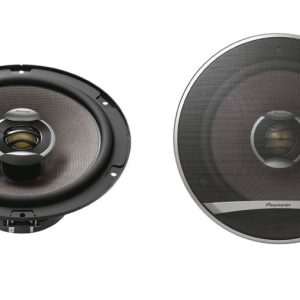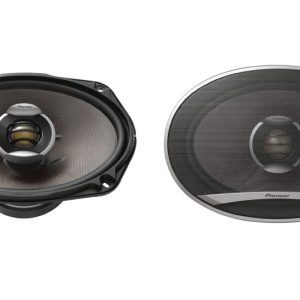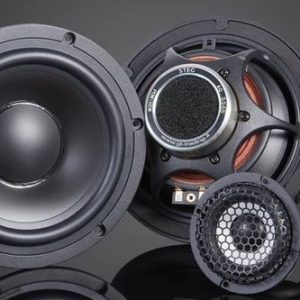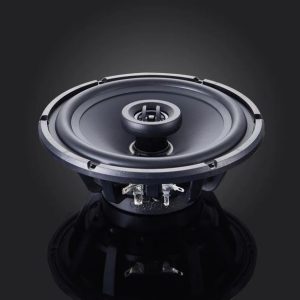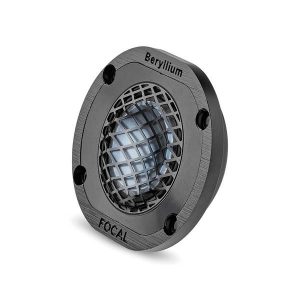
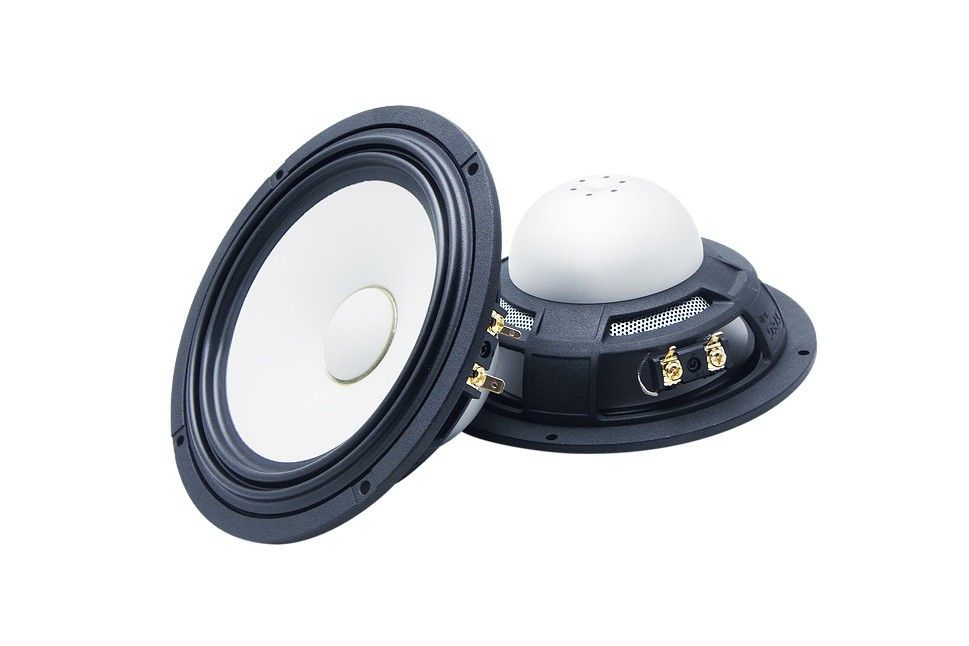
Steg RE 65C Midbass Speakers
550,00 €
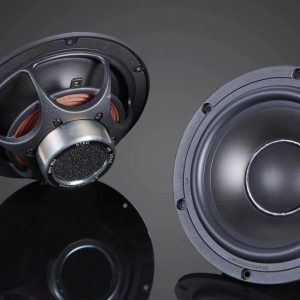
Steg RE 65C car midbass speakers are designed for an audio system with separately controlled frequency ranges. Their 60 W RMS rating helps with amplifier-channel selection, while the 4-ohm impedance defines the electrical load. The 50-10,000 Hz response allows the model to be combined with a tweeter and subwoofer.
Steg RE 65C speakers are premium car midbass speakers designed to reproduce frequencies from 50 to 10,000 Hz. The key figures for selecting a suitable amplifier are their 60 W RMS power rating and 4-ohm impedance.
This model is intended for a car audio system in which separate frequency ranges are controlled individually. It does not replace a subwoofer designed to reproduce the deepest bass. A properly matched tweeter is also required to cover the full high-frequency range.
Role in the audio system
The frequency response begins at 50 Hz, allowing the speaker to reproduce part of the bass range as well as midrange frequencies. The upper limit of 10,000 Hz confirms that this is not a full-range solution. The midbass speaker can deliver the rhythmic foundation of the music, lower instrumental notes and part of the vocal range, while the other components in the system handle the deepest and highest frequencies.
Choosing an amplifier
The 60 W RMS figure represents the continuous rated power and should be used when matching the speaker to an amplifier channel. The 80 W maximum power rating describes a short-term limit, so it should not be treated as the main criterion when choosing an amplifier.
The amplifier channel must be suitable for a 4-ohm load. An underpowered amplifier driven close to the point of distortion is not safer simply because it has a lower rated output. The system should be adjusted so that the signal remains clean as the volume is increased.
The 87 dB sensitivity, measured with 1 W of power at a distance of one metre, helps compare electrical efficiency. Under the same conditions, a speaker with higher sensitivity would play louder. Adequate amplifier headroom is therefore important when aiming for the desired listening level without distortion.
Connection and frequency control
In an actively controlled system, each midbass speaker is connected to its own amplifier channel or to a channel controlled by an audio processor. This makes it possible to adjust the filters, level and time alignment separately. Active operation offers greater control over the final result, but it also requires more amplifier channels.
When using a passive crossover, the signal is first sent to the appropriate crossover input. The speaker is then connected to the output intended for it. The crossover must be suitable for the speakers being used and for their impedance.
A high-pass filter prevents very deep bass from being sent to the midbass speaker. Choose the initial setting according to the lowest frequency range the speaker is expected to reproduce and the installation conditions. Raise the cutoff point if cone movement becomes excessive at higher volume or if the sound begins to lose clarity.
A low-pass filter or passive crossover blends the midbass speaker with the tweeter. Select the final crossover point while listening to both sides of the system from the driver’s seat. Excessive overlap can make part of the midrange sound too prominent.
Installation in the vehicle
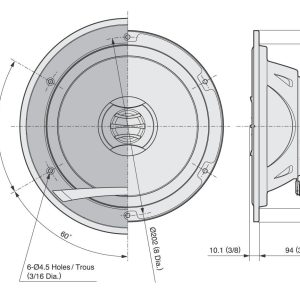
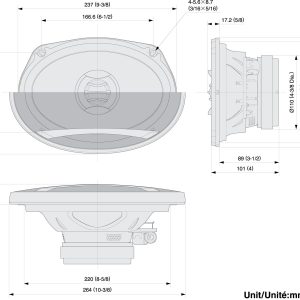
Mechanical compatibility depends on the vehicle’s mounting opening, available installation depth and fixing points. The 4-ohm impedance describes the electrical load but does not confirm that the speaker will physically fit a particular vehicle. The movement of the window mechanism and door trim must also be taken into account.
A firm mounting surface reduces unwanted vibration around the speaker. A flexible or poorly sealed installation position can weaken lower-frequency reproduction. Resonances from the door metal or trim may also mask details that the speaker would otherwise reproduce clearly.
The left and right speakers must be connected with matching polarity. Reversed polarity on one side can weaken the central stereo image and reduce bass consistency. After installation, listen from the driver’s seat and check both the position of centred vocals and the coherence of the bass.
System tuning
In a stereo system, a separate amplifier channel is used for each side. Channel levels should be matched so that the soundstage does not pull towards one side of the vehicle. Time alignment can help compensate for the different distances between the speakers and the driver.
Adjust the crossover transition while listening from the driver’s seat. The aim is to prevent an obvious dip or excessive emphasis where the reproduced frequency ranges meet.
Connecting more than one speaker to a single channel changes the total electrical load. Two identical 4-ohm speakers connected in parallel would create a lower load. This arrangement is suitable only for an amplifier that is designed to support it.
Technical specifications
| Model | Steg RE 65C |
|---|---|
| Type | Car midbass speakers |
| Segment | Premium |
| Rated power | 60 W RMS |
| Maximum power | 80 W |
| Frequency response | 50-10,000 Hz |
| Sensitivity | 87 dB at 1 W / 1 m |
| Impedance | 4 ohms |
FAQ
What are these speakers designed for?
They are designed to reproduce the midrange and lower-frequency portion of a car audio system. Other properly matched system components are required to cover the complete frequency range.
What type of amplifier should I choose?
Choose a car amplifier that can operate stably with a 4-ohm load. Match its channel output to the speaker’s continuous rated power rather than using the maximum power figure as the primary reference.
Is a tweeter required?
Yes, if you want to reproduce the highest part of the audible frequency range. The specified response of this model ends at 10,000 Hz.
Can this model be used with a subwoofer?
Yes, provided that the frequency ranges are divided correctly. The subwoofer can handle the deepest bass, allowing the midbass speaker to operate within a range better suited to it.
How should I begin adjusting the crossover filters?
Start by limiting the very lowest frequencies, then listen at a higher volume. Adjust the filter if you hear distortion or notice excessive cone movement.
Can the speakers be connected directly to a multichannel audio processor?
The processor should control an amplifier channel rather than replace the power amplifier. In an active system, each side must be assigned a suitably amplified channel.
How can I check whether the speakers will physically fit my vehicle?
Before purchasing, compare the vehicle’s mounting opening, installation depth and fixing points. You should also check the movement and clearance of the window mechanism and door trim.