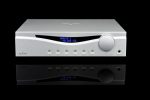
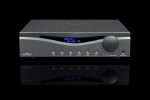
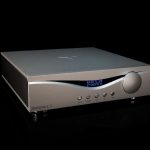
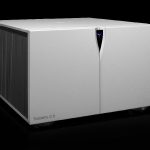
Audia Flight FLS1 Preamplifier
6 350,00 €
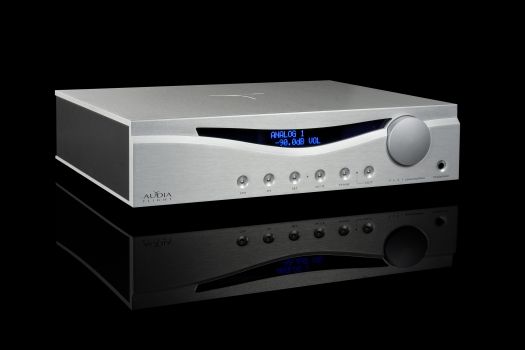
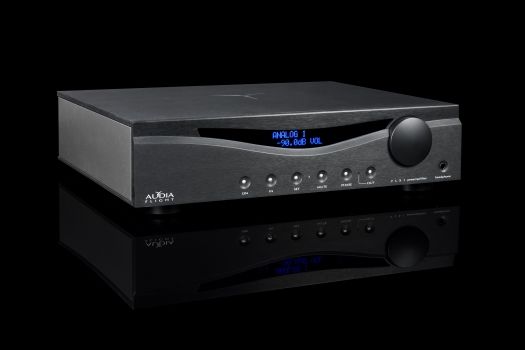
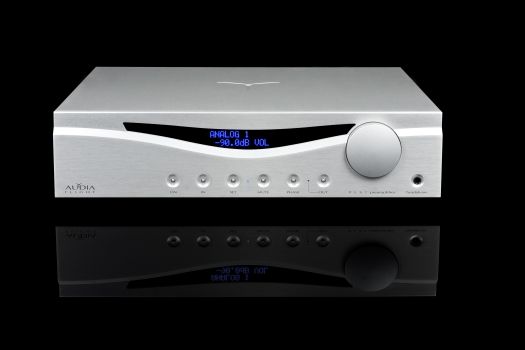
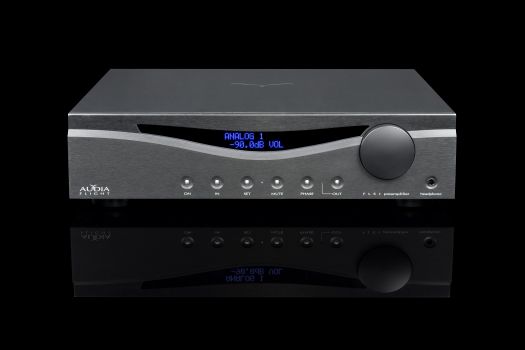
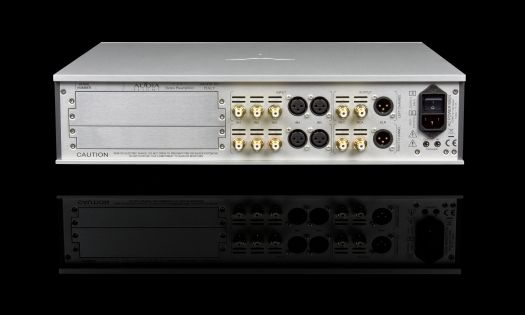
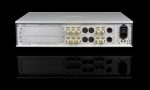
The Audia Flight FLS1 is a stereo preamplifier for an analogue Hi-Fi system and headphone listening. Three RCA and two XLR inputs allow several music sources to remain connected at the same time. RCA and XLR outputs provide a choice to match the power amplifier’s connections. Volume is adjusted in 0.5 dB steps for precise level control. Phono, DAC and additional-input boards are available separately.
The Audia Flight FLS1 preamplifier is designed to control the sources, power amplifier and headphones in an analogue stereo system. It features three RCA inputs and two XLR inputs. The signal can be sent to a power amplifier through either an RCA or XLR output. A dedicated headphone output lets you listen to music without using a power amplifier and speakers.
This is not an integrated amplifier, so passive speakers cannot be connected directly. In a conventional stereo system, the FLS1 sits between the music sources and the power amplifier. Its five analogue inputs allow several sources to remain connected without cables having to be swapped repeatedly.
Connecting analogue sources
The three unbalanced RCA inputs are intended for sources with conventional analogue outputs. These may include a CD player, an external DAC or another line-level device. Choose a cable that matches the output connection provided by the source.
The two balanced XLR inputs are suitable for equipment fitted with XLR outputs. Over a longer cable run, a balanced connection generally provides better rejection of common-mode interference. An RCA-to-XLR adapter does not create a balanced signal by itself, so using the same connection type at both ends is the most appropriate approach.
Outputs and their uses
One RCA output and one XLR output are provided for connection to a power amplifier. The XLR connection is worth choosing when the power amplifier also has balanced connectors. The RCA output is suitable for a conventional unbalanced stereo signal chain.
A separate REC RCA output is intended for an analogue recording device. It should not be confused with the main RCA and XLR outputs used for the power amplifier. Recording and monitoring options also depend on the capabilities of the connected recording device.
The output impedance is below 1 Ω, making the preamplifier suitable for passing a signal to the next component in the stereo chain. The input impedance is 47 kΩ and applies to the analogue inputs.
Volume adjustment
The gain range extends from -90 dB to +10 dB. This allows the level to be reduced to near silence or increased for a weaker input signal. When connecting a power amplifier for the first time, the safest approach is to begin at a low setting and raise the volume gradually.
The 0.5 dB adjustment steps make it possible to reproduce a chosen listening level precisely. Fine adjustment is particularly useful when setting the overall volume at low listening levels. The +10 dB position should only be used after considering the source level and the sensitivity of the rest of the system.
Headphone listening
The specified headphone output power is 12 W RMS per channel into an 8 Ω load (10 V RMS). These figures apply specifically to the stated load and therefore cannot be transferred directly to every pair of headphones.
Reduce the volume before connecting headphones. Models with different impedances and sensitivities can produce very different sound-pressure levels at the same setting. A power amplifier is not required for headphone listening because the headphones connect directly to the preamplifier’s headphone output.
Optional expansion boards
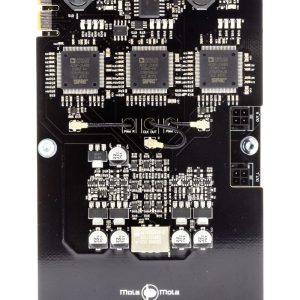
An optional MC/MM phono-stage board is available for the FLS series. It allows a turntable fitted with either an MC or MM cartridge to be connected. The board is not included as standard, so the standard RCA inputs should not be treated as phono inputs.
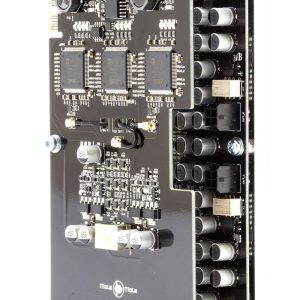
An optional digital-to-analogue converter board (DAC) adds one AES/EBU input, one S/PDIF input, two TOSLINK inputs and one USB input. It supports PCM signals up to 32-bit/384 kHz and DSD512. Without this board, a digital source requires a separate DAC with an analogue output.
Another optional FLS board adds either two RCA inputs or two XLR inputs. It is relevant to systems in which the five standard analogue inputs are not sufficient. The RCA and XLR versions are different connection options and should be selected according to the outputs available on the source equipment.
Equipment-rack placement and power
The enclosure measures 450 mm wide, 120 mm high and 380 mm deep. The equipment shelf must also provide room behind the unit for the rear connectors and the cables’ bending radius. This is particularly important with stiffer XLR cables. The 11 kg weight requires a stable shelf with a suitable load rating.
The available power-supply versions are 100 V, 110-115 V, 220-230 V and 240 V for 50-60 Hz mains supplies. Select the version that matches the local mains voltage. The unit consumes 50 W during operation and less than 1 W in standby mode.
Technical specifications
| Product type | Stereo preamplifier with headphone output |
|---|---|
| Unbalanced inputs | 3 RCA |
| Balanced inputs | 2 XLR |
| Unbalanced output | 1 RCA |
| Balanced output | 1 XLR |
| Recording output | 1 REC RCA |
| Gain range | -90 dB to +10 dB |
| Adjustment step | 0.5 dB |
| Frequency response | 0.3 Hz-500 kHz at -3 dB |
| Total harmonic distortion | Less than 0.05% |
| Signal-to-noise ratio | 110 dB |
| Input impedance | 47 kΩ |
| Output impedance | Less than 1 Ω |
| Headphone output power | 12 W RMS per channel into an 8 Ω load (10 V RMS) |
| Power-supply versions | 100 V, 110-115 V, 220-230 V or 240 V; 50-60 Hz |
| Standby power consumption | Less than 1 W |
| Operating power consumption | 50 W |
| Dimensions | 450 × 120 × 380 mm (width × height × depth) |
| Weight | 11 kg |
| Shipping dimensions | 600 × 270 × 560 mm (width × height × depth) |
| Shipping weight | 15 kg |
| Optional phono board | MC/MM, designed for the FLS series |
| Optional DAC inputs | 1 AES/EBU, 1 S/PDIF, 2 TOSLINK and 1 USB |
| Optional DAC board formats | PCM up to 32-bit/384 kHz and DSD512 |
| Optional input board | Two additional RCA or two additional XLR inputs |
FAQ
What equipment is required for a complete stereo system?
You will need a music source, a power amplifier and speakers. The preamplifier selects the source and controls the signal level, but it does not power passive speakers.
When should I choose XLR rather than RCA?
Choose XLR when both the source and the power amplifier have balanced connections. RCA is suitable for equipment with unbalanced analogue outputs. Match the connection type to both devices being linked.
Can a turntable be connected directly?
The optional phono-stage board is required for a direct signal from an MC or MM cartridge. Alternatively, an external phono stage can be connected to an RCA input.
How do I connect a computer or another digital source?
Digital connections are provided by the optional DAC board. Without it, use an external converter that turns the digital signal into an analogue RCA or XLR signal.
Can I connect headphones without a separate headphone amplifier?
Yes. The unit has its own headphone output. Begin at a low volume because the specified output-power figure applies to the very low 8 Ω load.
How does this model fit into a home-cinema system?
This is a stereo preamplifier, not a multichannel AV processor. It has no HDMI or multichannel inputs. In a home-cinema installation, it can serve a separate analogue stereo signal chain.
Is it intended to control multiple rooms?
Independent zone control is not the purpose of this stereo preamplifier. A multiroom installation would require a separate signal-distribution solution and volume control for each zone.
What should I check before placing it on an equipment shelf?
Check the shelf depth, load capacity and available cable space. Additional clearance is required behind the unit for the RCA and XLR plugs, and this clearance is not included in the enclosure dimensions.