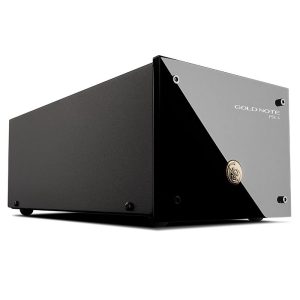
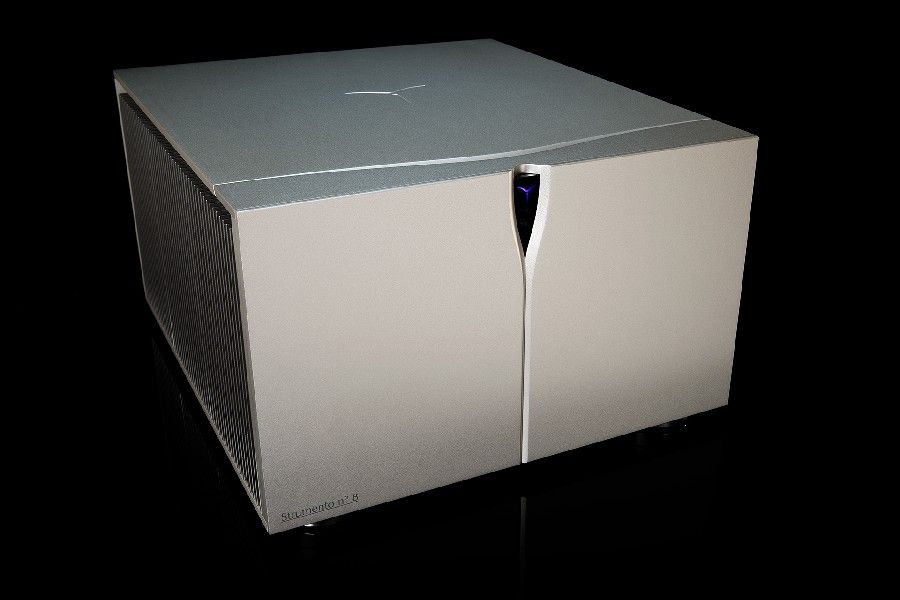
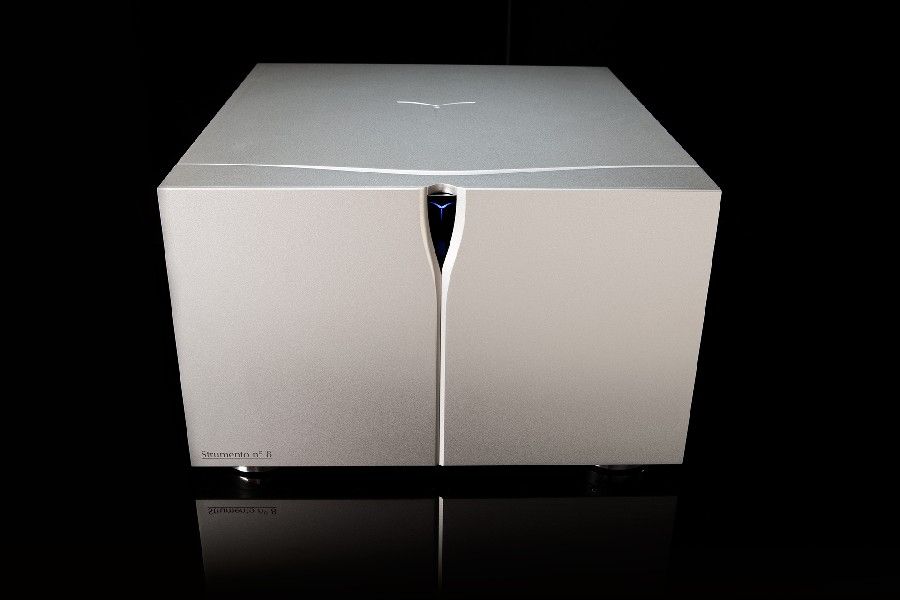

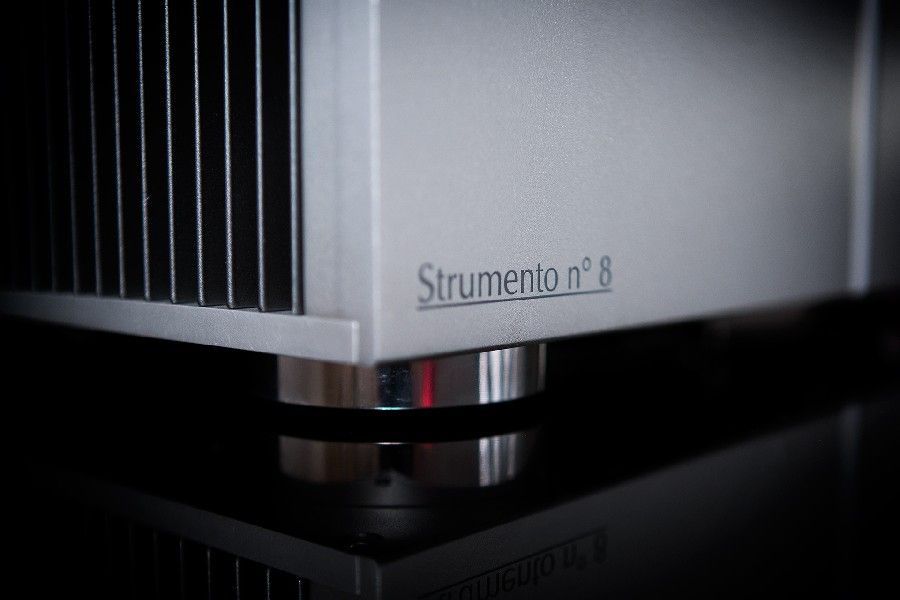
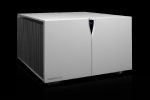
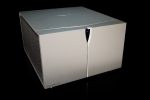
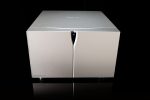

Audia Flight Strumento n°8 Monoblock Power Amplifier
25 000,00 €
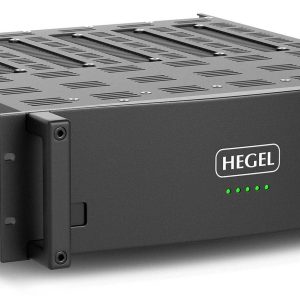
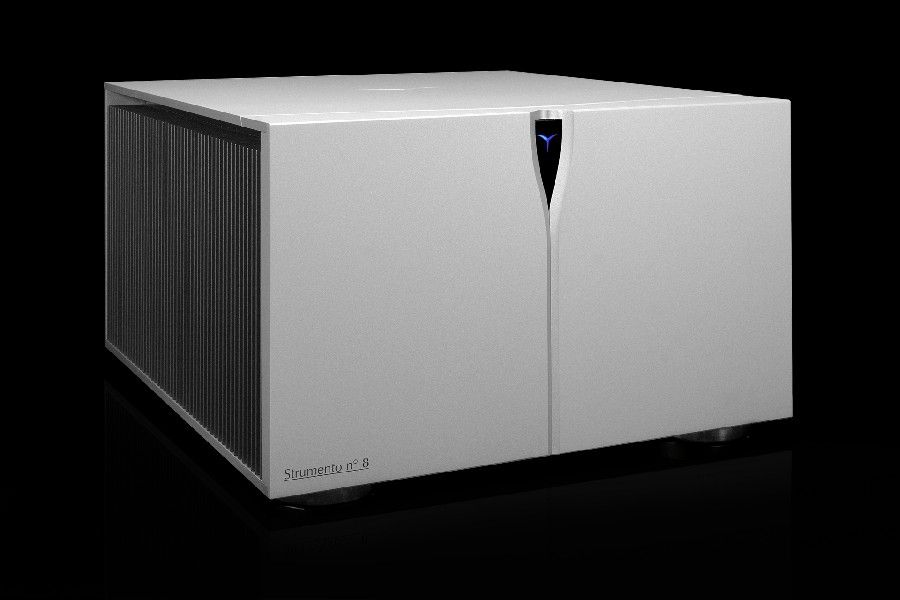
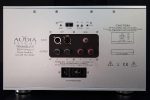
Audia Flight Strumento n°8 is a monoblock power amplifier for a single channel in a stereo or home cinema system. It delivers 500 W RMS into 8 ohms, with higher stated output into lower impedances. Balanced and unbalanced inputs allow a suitable connection to be selected for the preamplifier. Because the unit weighs 95 kg, it requires substantial support and a carefully planned location.
Audia Flight Strumento n°8 is a monoblock power amplifier designed to drive one channel of an audio system. It is suitable for systems in which each loudspeaker is powered by its own dedicated power amplifier. Its rated output is 500 W RMS into 8 ohms, 1000 W into 4 ohms and 2000 W into 2 ohms.
This unit weighs 95 kg, so its location should be planned before the system is assembled. Compatibility with a preamplifier depends on the amplifier’s 29 dB gain, 1.41 V RMS input sensitivity and 7.5 kΩ input impedance. Mains power and ventilation requirements must be considered separately.
Power Output and Loudspeaker Load
The power output figures are specified for three different loads. As impedance decreases, the stated output rises consistently. This is important when selecting an amplifier for loudspeakers whose impedance may fall below their nominal rating during music playback.
The 2-ohm power figure does not by itself guarantee compatibility with every demanding loudspeaker. You should also consider the loudspeaker’s nominal and minimum impedance, together with the amplification power recommended by its manufacturer. One Strumento n°8 drives only one channel.
The damping factor is greater than 1000 into 8 ohms. This figure describes the amplifier’s electrical control over the bass drivers. The final result is also affected by the resistance of the loudspeaker cables and by the construction of the loudspeakers themselves.
Balanced and Unbalanced Inputs
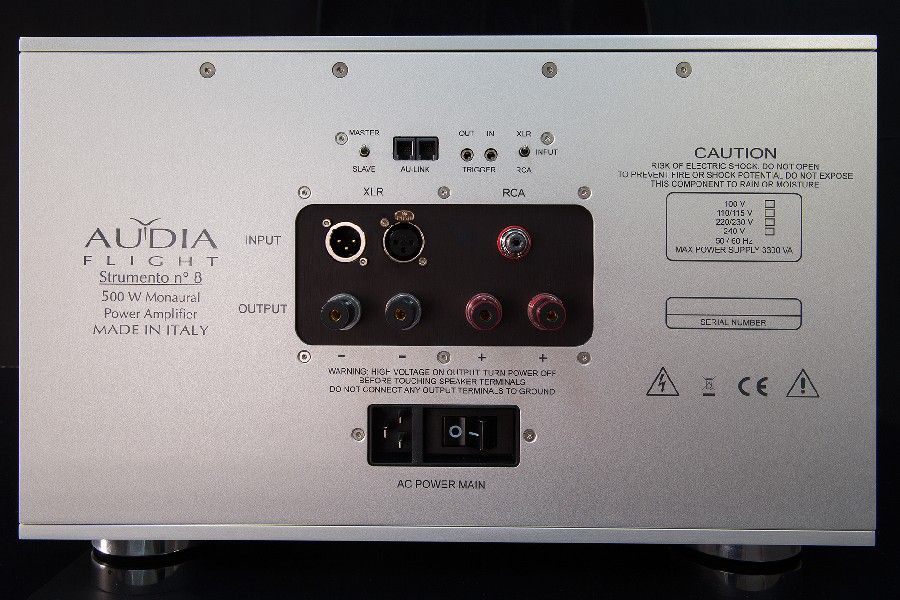
You can choose between a balanced input and an unbalanced input. Both have an input impedance of 7.5 kΩ. The most appropriate connection should be selected according to the preamplifier output and the cable being used.
A balanced connection is generally useful for a longer signal path or in an environment with more electrical interference. An unbalanced connection is suitable when the system’s preamplifier provides only the corresponding output type. The connector formats are not specified, so they should not be inferred from the input descriptions alone.
The amplifier has a gain of 29 dB and an input sensitivity of 1.41 V RMS. These figures help determine how the power amplifier will match the output level of a preamplifier. The 7.5 kΩ load is particularly relevant when the source has a higher output impedance.
Building the System
A conventional stereo system normally requires two identical monoblock power amplifiers. One unit drives the left channel and the other drives the right channel. This arrangement gives each channel its own dedicated power amplifier.
This is not an integrated amplifier. Volume control requires a preamplifier or another source component with a variable-level analogue output. A fixed-level source must not be connected directly unless suitable volume control is provided between the source and the power amplifier.
In a home cinema system, the amplifier can be used for one selected channel. The processor or AV amplifier must provide a line-level output for that channel. Several units may be used for multiple channels, with one separate amplifier assigned to each channel.
Placement and Power Consumption
The enclosure measures 450 × 280 × 500 mm. In addition to checking the width of the shelf, you must allow for the unit’s 500 mm depth. Further space is required behind the amplifier for connectors and cables.
The rack or shelf must safely support the amplifier’s 95 kg weight. Do not check only the furniture’s total load capacity. The strength of the individual shelf and the position of its supports are also important.
Nominal power consumption with no signal is 330 W. When delivering 600 W RMS into an 8 Ω load, consumption reaches 1100 W. An enclosed compartment is therefore unsuitable, and sufficient space must be left around the enclosure for air circulation.
The shipping carton measures 580 × 410 × 700 mm, while the total shipping weight is 125 kg. Delivery access and final placement should be planned in advance. The method used to move the amplifier must be appropriate for its weight.
Technical Figures and Their Meaning
The frequency response of 0.3 Hz to 1 MHz is measured at 1 W RMS using -3 dB limits. These conditions are essential for interpreting the stated range correctly. It should not be compared directly with another measurement if different limits or conditions were used.
The slew rate into 8 ohms is greater than 200 V/µs. Total harmonic distortion is below 0.05%, and the signal-to-noise ratio is 110 dB. These figures describe the amplifier’s electrical performance under the stated conditions.
Technical Specifications
| Type | Monoblock power amplifier |
|---|---|
| Output power into 8 Ω | 500 W RMS |
| Output power into 4 Ω | 1000 W RMS |
| Output power into 2 Ω | 2000 W RMS |
| Gain | 29 dB |
| Input sensitivity | 1.41 V RMS |
| Frequency response | 0.3 Hz-1 MHz at 1 W RMS and -3 dB limits |
| Slew rate | Greater than 200 V/µs into 8 Ω |
| Total harmonic distortion | Less than 0.05% |
| Signal-to-noise ratio | 110 dB |
| Unbalanced input impedance | 7.5 kΩ |
| Balanced input impedance | 7.5 kΩ |
| Damping factor | Greater than 1000 into 8 Ω |
| Available mains voltage versions | 100 V, 110-115 V, 220-230 V or 240 V; confirm which regional version the store supplies before purchasing |
| Mains frequency | 50-60 Hz |
| Standby power consumption | Less than 1 W |
| Nominal consumption with no signal | 330 W |
| Consumption while delivering 600 W RMS into an 8 Ω load | 1100 W |
| Dimensions | 450 × 280 × 500 mm, width × height × depth |
| Weight | 95 kg |
| Shipping carton dimensions | 580 × 410 × 700 mm, width × height × depth |
| Shipping weight | 125 kg |
FAQ
How many amplifiers are required for a stereo system?
Two are normally required because each unit amplifies one channel. When planning space for two amplifiers, account for the load capacity of the shelves and the combined equipment weight of 190 kg.
Which input should I use?
Choose the input that matches the output of your preamplifier. A balanced connection is generally preferred for a longer cable run. The electrical input impedance is the same for both input types.
Can the amplifier be connected directly to an audio source?
Only if the source has a dependable variable-level analogue output. Otherwise, a preamplifier is required between the source and the power amplifier.
How can it be incorporated into a home cinema system?
The AV processor must provide a line-level output for the selected channel. One power amplifier will serve one channel, such as a front loudspeaker.
Does the 2-ohm power rating mean that it is compatible with every loudspeaker?
No. The loudspeaker’s minimum impedance, sensitivity and recommended amplification power must also be considered. Together, these details help you assess the actual load presented to the amplifier.
What kind of location does the amplifier require?
It requires a very strong, deep and well-ventilated shelf. You should also allow space for the cables and plan a safe method of moving the unit into position.
Which mains voltage version is required?
Several voltage versions are available, so you must confirm with the store before purchase which regional version suitable for your local mains supply will be provided. The mains frequency must fall within the specified range.
Related products and categories
Related products