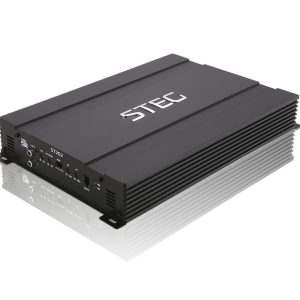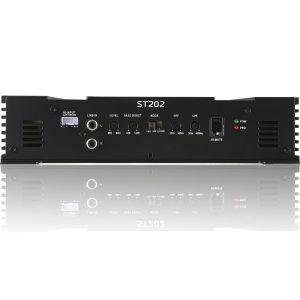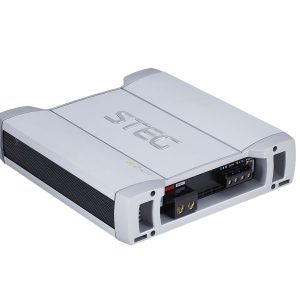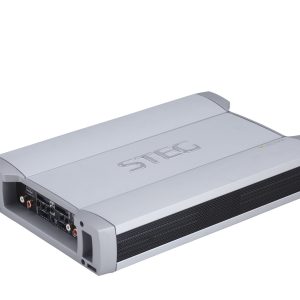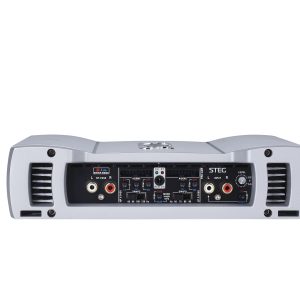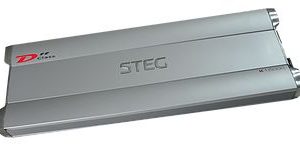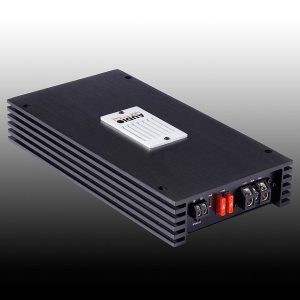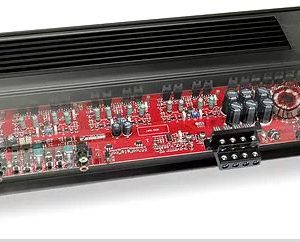
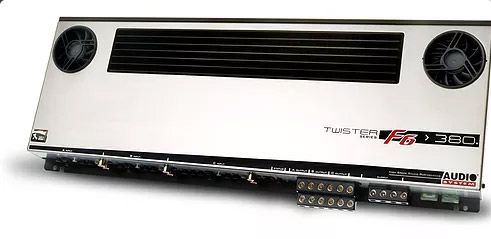
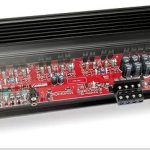
Audio System F6.380 Amplifier
440,00 €
The Audio System F6.380 amplifier is a six-channel car audio model designed to drive several speaker circuits. It delivers up to 6 × 80 W RMS into 2 ohms or 3 × 160 W RMS in mono mode into 4 ohms. Adjustable high-pass and low-pass filters help distribute frequency ranges between different speakers. The 0.2-5 V RMS input sensitivity allows the amplifier level to be matched to the audio source.
The Audio System F6.380 amplifier is a six-channel car audio power amplifier designed for systems in which a single amplifier needs to drive several speaker circuits. Its six channels provide greater flexibility when planning the front, rear, or other speakers in a vehicle audio system.
The amplifier can operate in stereo or mono mode. Its power ratings are specified at a 14.4 V supply voltage, so they should always be considered together with the impedance of the connected speakers and the selected channel configuration.
Choosing the channel and power configuration
With a 4-ohm load, the six stereo channels each deliver 60 W RMS. This configuration is suitable for a system with six independently powered speaker channels. Individual speakers should be selected according to their nominal impedance and RMS power rating.
With a 2-ohm load, output increases to 80 W RMS per channel. The lower impedance makes more power available, but the total connected load must not fall below two ohms. This is particularly important when connecting more than one speaker to the same circuit.
In mono mode, the amplifier provides 3 × 160 W RMS into 4 ohms. This configuration is useful when a system requires three higher-powered mono circuits. The stereo-mode output rating at 2 ohms should not be applied to mono operation.
Adjustable frequency filters
The built-in high-pass filter can be adjusted from 20 to 150 Hz. It attenuates frequencies below the selected cutoff point, allowing the lowest part of the frequency range to be kept away from smaller speakers.
The low-pass filter is adjustable from 45 to 300 Hz. It allows frequencies below the selected cutoff point to pass and is useful when shaping the signal supplied to a low-frequency speaker.
Both filters have a slope of 12 dB per octave. Frequencies beyond the selected cutoff are reduced gradually, helping the operating ranges of adjacent speakers blend smoothly. Choose an initial cutoff according to each speaker’s working range, then assess the final result by listening from the driver’s seat.
Setting the input sensitivity
The input sensitivity is adjustable from 0.2 to 5 V RMS. This range allows the amplifier’s input level to be matched to the output signal of the audio source. The sensitivity control is not a conventional volume control.
Begin the adjustment with a lower gain setting. Set the source unit to a normally high listening level, then gradually increase the amplifier sensitivity. Stop before audible distortion appears. This approach preserves a useful adjustment range and reduces the risk of making background noise more noticeable.
Frequency response and system planning
The specified frequency response extends from 5 to 25,000 Hz. This allows the same amplifier to be used for low-, mid-, and high-frequency circuits. In practice, the range reproduced by each circuit is determined by the filter settings and the connected speakers.
When planning the system, first allocate the six channels according to the purpose of the speakers. Next, choose the appropriate impedance and filter for each circuit. Adjust the input sensitivity only after these decisions have been made. Following this order helps prevent gaps between frequency ranges or excessive overlap.
Choosing an installation location
The enclosure measures 550 × 50 × 220 mm and weighs 4.6 kg. Before installation, measure the intended location in all three dimensions. Allow additional room for cable routing and air circulation.
Install the amplifier on a firm surface capable of supporting its weight. Its position must not interfere with seat mechanisms or the arrangement of luggage. Choose the cross-sectional area of the power and speaker cables according to the vehicle audio system design and the actual connected load.
Understanding the power ratings
The power figures are stated as RMS ratings at 14.4 V and at the specified loads; the manufacturer’s description does not provide other measurement conditions. These figures therefore apply to the stated supply voltage and impedance. Actual performance may differ if the voltage of the vehicle’s electrical system or the speaker impedance changes.
Do not select speakers based solely on the highest power figure. Consider the chosen operating mode, the load connected to each channel, and the speaker’s RMS power rating. This makes it easier to determine in advance which amplifier configuration suits the planned system.
Technical specifications
| Type | Car audio power amplifier |
|---|---|
| Number of channels | 6 |
| RMS power in stereo mode | 6 × 60 W, 4 ohms, 14.4 V |
| RMS power in stereo mode | 6 × 80 W, 2 ohms, 14.4 V |
| RMS power in mono mode | 3 × 160 W, 4 ohms, 14.4 V |
| Minimum load impedance | 2 ohms |
| Frequency response | 5-25,000 Hz |
| High-pass filter | 20-150 Hz |
| Low-pass filter | 45-300 Hz |
| Filter slope | 12 dB per octave |
| Input sensitivity | 0.2-5 V RMS |
| Dimensions | 550 × 50 × 220 mm |
| Weight | 4.6 kg |
FAQ
What type of car audio system is this amplifier suitable for?
It is designed for a system requiring up to six separately amplified channels. The channels can be allocated according to the needs of the front, rear, and low-frequency speakers.
Can 2-ohm speakers be connected?
Yes. A power rating with a 2-ohm load is specified for stereo operation. The total impedance connected to each channel must not be lower than the stated minimum limit.
Does the 2-ohm load rating also apply in mono mode?
The mono power rating is provided only for a 4-ohm load. Mono circuits should therefore be planned using the stated 4-ohm power figure.
Which filter should I use for my speakers?
Use the high-pass filter for speakers that do not need to reproduce the lowest frequencies. Use the low-pass filter for a circuit intended to reproduce the low-frequency range.
How should I set the filter cutoff points?
Start with the recommended operating range of the connected speakers. Then adjust the cutoff points while listening so that there is no gap or pronounced overlap between the different speaker circuits.
What is the purpose of the 0.2-5 V RMS input sensitivity range?
It is used to match the amplifier input to the signal level of the source unit. It is not intended for everyday volume adjustment.
Is this model intended for a home stereo or cinema system?
No. This is a car amplifier with power ratings specified at 14.4 V. It is not designed to be connected directly to a household mains supply.
What should I consider when choosing an installation location?
Check that there is enough room for the entire enclosure, cable routing, and air circulation. The mounting surface must be able to support the amplifier’s 4.6 kg weight securely.