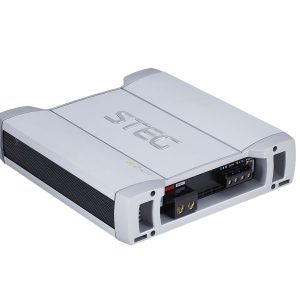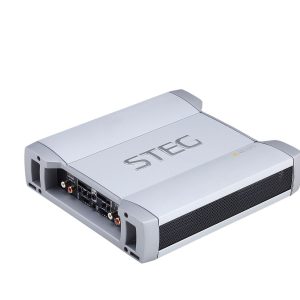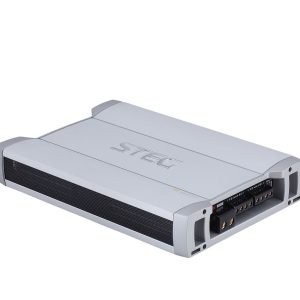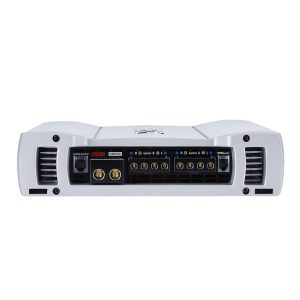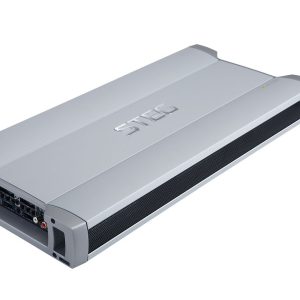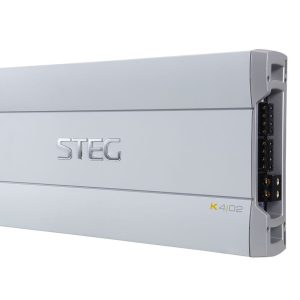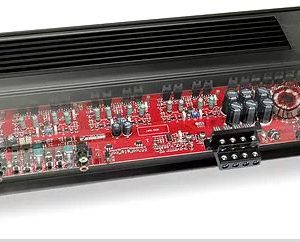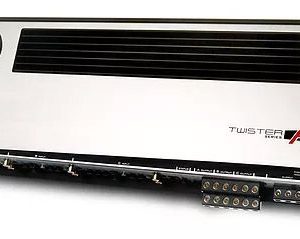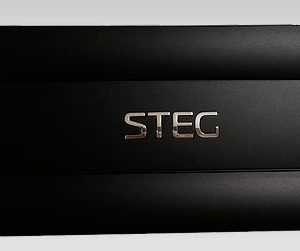
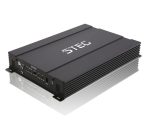
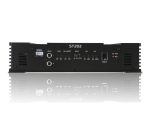
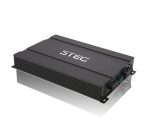
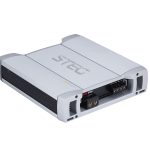
Steg ST202 Car Amplifier
180,00 €
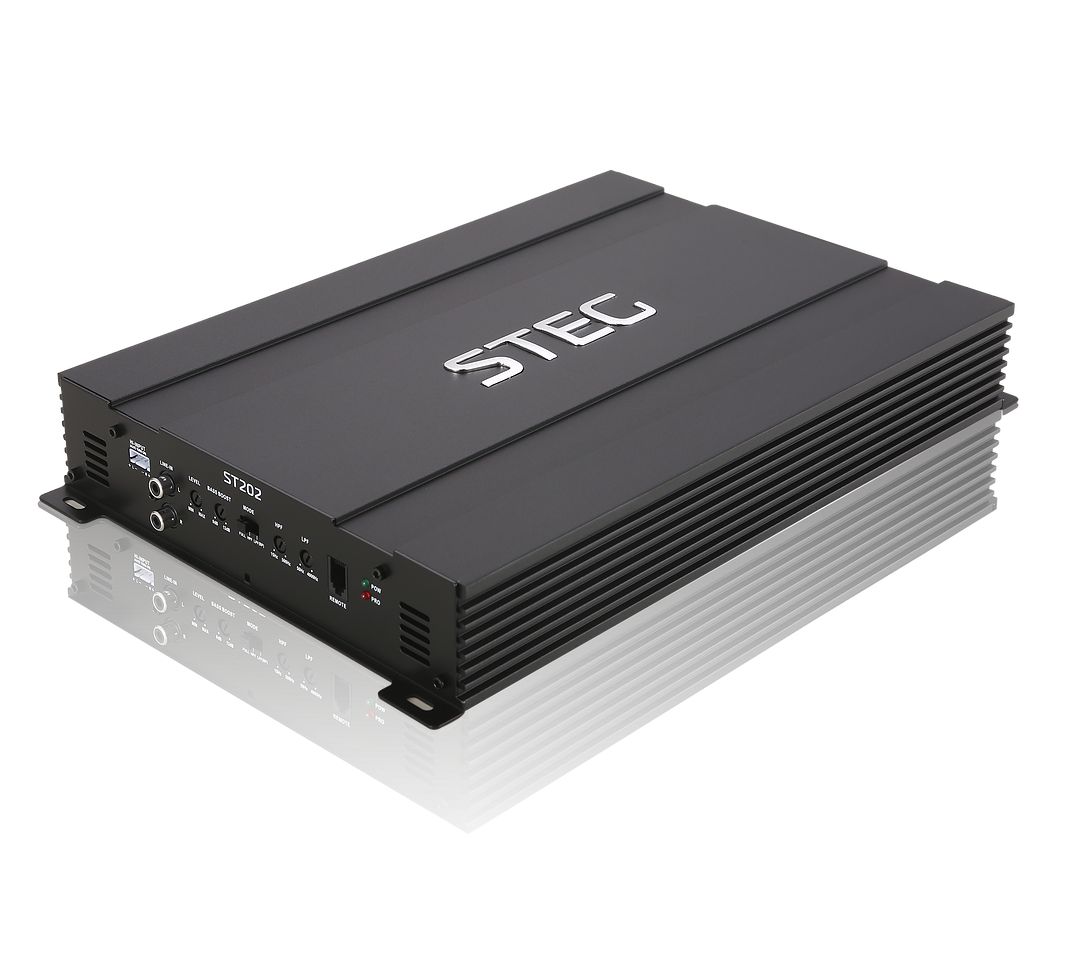
The Steg ST202 is a two-channel car audio power amplifier designed for a pair of speakers or one subwoofer connected in bridged mode. It supports a 2-ohm load per channel and a 4-ohm bridged configuration. High-level inputs and automatic turn-on may simplify integration with a factory head unit, while adjustable crossover filters provide more precise control over the reproduced frequency range.
The Steg ST202 car amplifier is a two-channel audio power amplifier designed for a pair of car speakers or a single subwoofer. In bridged mode, it can drive one 4-ohm load. In stereo mode, a 2-ohm load can be connected to each channel.
With a 14.4 V supply, the amplifier delivers up to 2 × 195 W RMS into 2 ohms. In bridged mode, it provides 1 × 390 W RMS into 4 ohms. This gives you a clear choice between a two-channel speaker system and one higher-powered channel.
What this amplifier is designed for
The two-channel design is suitable for a pair of front or rear car speakers. When the channels are bridged, the amplifier can power one 4-ohm subwoofer. A 2-ohm load must not be connected in bridged mode, because the specified load for this configuration is 4 ohms.
This model is also useful when upgrading a factory audio system. Its high-level inputs can accept a signal from a suitable speaker-level output. This is particularly relevant when the factory head unit does not have a separate low-level output.
Signal connection and automatic turn-on
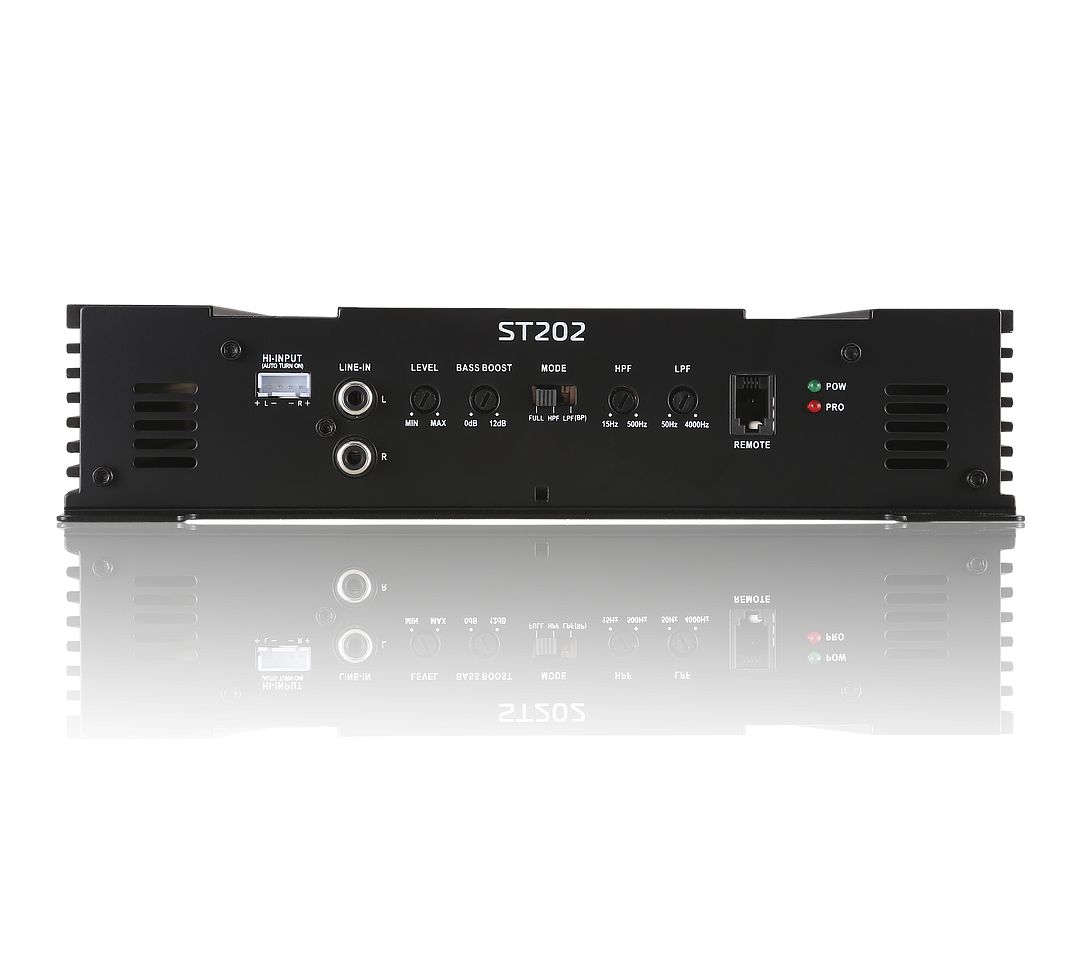
The input sensitivity is adjustable from 0.5 to 9 V RMS. This range allows the amplifier to be matched to source signals of different strengths. Sensitivity should be adjusted according to the output of the head unit and should not be treated as a volume control.
A dual differential input system with G.R.I.P.S. technology is provided for processing the incoming signal. The amplifier can also switch on automatically when it detects an audio signal. This feature may simplify installation with a factory system when a suitable high-level signal is used.
A remote-control function is also provided. This should not be confused with the supplied package contents, as the inclusion of a remote control is not specified.
Crossover filter settings
Dual-adjustment crossover technology provides three filtering options: high-pass, low-pass, and band-pass filtering. These options make it easier to adapt the amplifier to different parts of a car audio system.
The high-pass filter is adjustable from 15 to 500 Hz. It is useful for door speakers that do not need to reproduce the very lowest frequencies. Choose an initial cutoff based on the speaker manufacturer’s recommendations, then make any adjustments without exceeding the speakers’ intended operating range.
The low-pass filter has a range of 50-4000 Hz. When using a subwoofer, lower the cutoff until voices are no longer clearly audible from the subwoofer’s installation position. Make the final adjustment while listening from the driver’s seat.
The band-pass filter is adjustable from 15 to 4000 Hz. It allows the signal to be restricted at both ends of the frequency range. This is helpful when the amplifier is assigned to a specific frequency band in a multi-component audio system.
Adjustable bass boost ranges from 0 to +12 dB. Leave it at 0 dB during the initial setup. Apply additional boost only after setting the input sensitivity and filters, while checking carefully that the sound does not begin to distort.
How to interpret the stated power output
All power figures are RMS ratings measured with a 14.4 V supply voltage. In stereo mode, the amplifier delivers 2 × 125 W RMS into 4 ohms. When the load is reduced to 2 ohms per channel, output increases to 2 × 195 W RMS.
The 1 × 390 W RMS rating applies only to a bridged 4-ohm configuration. It must not be interpreted as a rating for a single 2-ohm speaker. When selecting speakers, consider their RMS power rating rather than relying only on a short-term or peak power figure.
Installation location and enclosure
The amplifier measures 360 × 52 × 230 mm and weighs 3.21 kg. Before installation, allow additional space for the connections, cable bends, and air circulation. Its 52 mm height may make installation in a confined area easier, but the enclosure must not be covered with trim or finishing materials.
The installation location should be dry and structurally secure. The amplifier should not be mounted next to heating ducts or where loose objects can move around it. Independent protection circuits monitor its operation, but they do not replace a correctly selected power cable and fuse. This model is made in Italy.
Technical specifications
| Type | Car audio power amplifier |
|---|---|
| Number of channels | 2 |
| Power into 4 ohms | 2 × 125 W RMS, stereo mode, 14.4 V |
| Power into 2 ohms | 2 × 195 W RMS, stereo mode, 14.4 V |
| Bridged power | 1 × 390 W RMS into 4 ohms, 14.4 V |
| Supported stereo load | 2 ohms per channel |
| Supported bridged load | 4 ohms |
| Input sensitivity | 0.5-9 V RMS |
| High-level inputs | Yes |
| Input system | Dual differential system with G.R.I.P.S. technology |
| Automatic turn-on | Activated when an incoming audio signal is detected |
| Remote control | Remote-control function provided |
| High-pass filter | 15-500 Hz |
| Low-pass filter | 50-4000 Hz |
| Band-pass filter | 15-4000 Hz |
| Bass boost | 0 to +12 dB |
| Crossover control | Dual-adjustment technology |
| Protection | Independent protection circuits |
| Dimensions | 360 × 52 × 230 mm |
| Weight | 3.21 kg |
| Country of manufacture | Italy |
FAQ
Can I connect two speakers?
Yes. In stereo mode, each channel drives a separate speaker. The load on either channel must not be lower than 2 ohms.
Can it power one subwoofer?
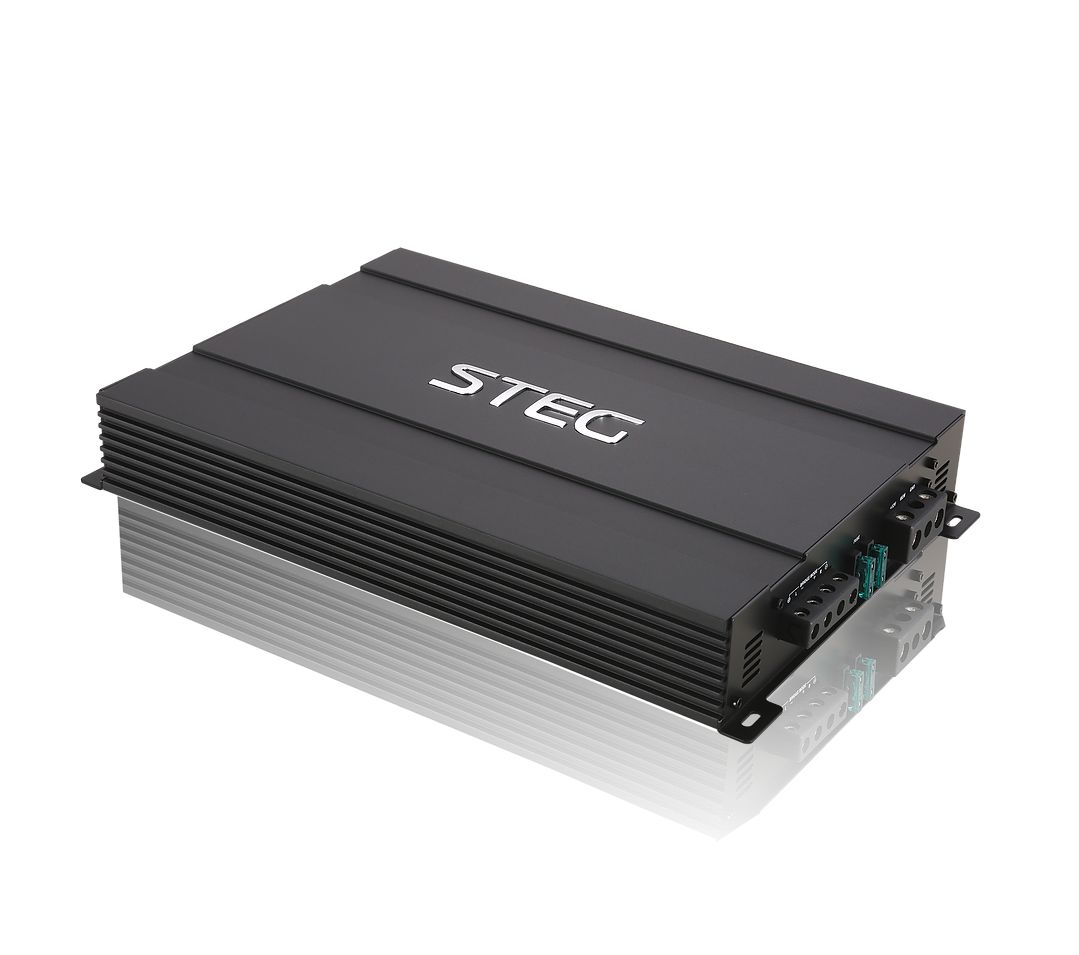
Yes, when the channels are connected in bridged mode. In this configuration, use a 4-ohm load and follow the terminal markings provided for bridged connection.
Can the amplifier be connected to a factory head unit?
The high-level inputs may be suitable if the head unit supplies an appropriate speaker-level signal. Signal detection may also activate the automatic turn-on function.
How should I set the input sensitivity correctly?
First, switch off any additional bass boost and set the crossover filters. Then adjust the sensitivity gradually to match the source signal, avoiding any audible distortion.
Which filter should I use for door speakers?
A high-pass filter is usually used. It removes the deepest frequencies and reduces unnecessary cone movement in smaller speakers.
Is this model intended for a home stereo or home cinema system?
No. This amplifier is designed for a car audio system. Its power requirements, supported loads, and automatic turn-on function are intended for automotive installation.
What should I consider when choosing an installation location?
Leave sufficient space for the connections and air circulation. The mounting surface should be stable, dry, and protected from loose or freely moving objects.