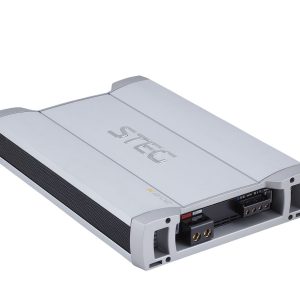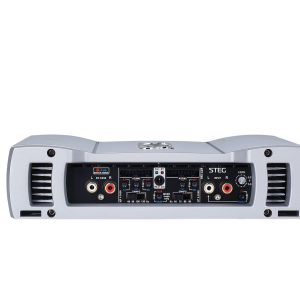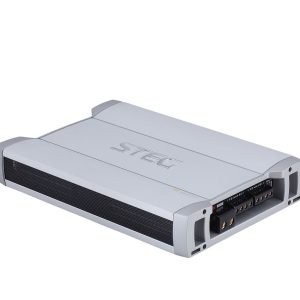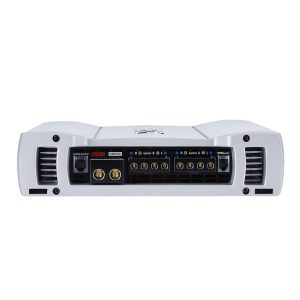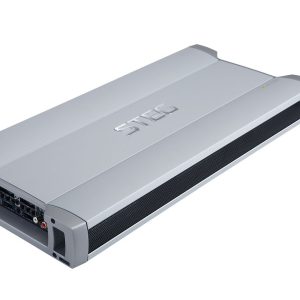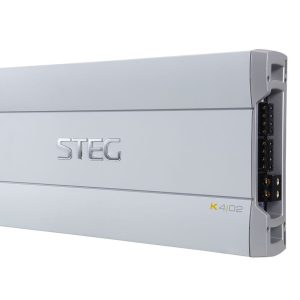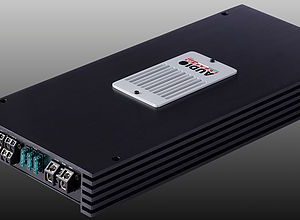
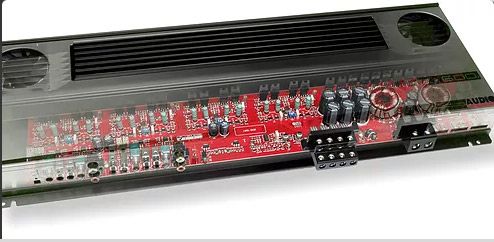
Audio System F4.650 Car Amplifier
430,00 €
The Audio System F4.650 is a four-channel car amplifier designed for four audio-system channels or two bridged 4-ohm loads. It delivers 4 × 170 W RMS at 4 ohms and 4 × 260 W RMS at 2 ohms. Adjustable high-pass and low-pass filters allow the reproduced frequency bands to be divided between the connected speakers.
The Audio System F4.650 amplifier is a four-channel car audio power amplifier. It is designed for systems requiring four independently amplified channels or two bridged outputs. In four-channel mode, it delivers 4 × 170 W RMS into 4 ohms. At 2 ohms, output increases to 4 × 260 W RMS.
In bridged mode, the two channel pairs can each deliver 520 W RMS into a 4-ohm load. This configuration is useful when four separate channels are not required. The stated bridged output applies specifically to a 4-ohm load.
Choosing the Channel and Load Configuration
Four channels allow the amplifier to power four channels in the vehicle’s audio system independently. This arrangement provides greater flexibility when balancing and configuring front and rear speakers. The load connected to each channel must be suitable for the selected operating mode.
Changing from a 4-ohm to a 2-ohm load increases the RMS output available from each channel. It also places greater demands on the vehicle’s electrical system and wiring. Bridged operation is intended for two 4-ohm loads, so it should not be treated as a direct substitute for four-channel operation.
The damping factor is greater than 400 at 4 ohms. Keeping speaker-cable resistance low helps the system make effective use of this figure. The choice of power and speaker cables therefore has a direct bearing on the performance of the complete installation.
Filters and System Tuning
The amplifier has one high-pass filter and one low-pass filter. The high-pass filter can be adjusted from 20 to 150 Hz. It reduces the level of frequencies below the selected cutoff point.
This filter can be set according to the frequency range supported by the connected speakers. Begin with the lower cutoff recommended by the speaker manufacturer. You can then refine the setting by listening carefully and checking that bass remains clean without overloading the speakers.
The low-pass filter is adjustable from 45 to 300 Hz. It passes the part of the signal below the chosen cutoff frequency. This makes it possible to separate a low-frequency channel from the range reproduced by the other speakers in the system.
Both filters have a slope of 12 dB per octave. This slope creates a gradual overlap between the reproduced frequency bands. The final cutoff settings are best assessed from the normal driving position, where the completed system will usually be heard.
Power Supply and Installation Location
The supported supply-voltage range is 10.5-16 V. The amplifier is therefore intended for a vehicle electrical system rather than a domestic mains supply. The power circuit must be selected to accommodate the current required by the chosen operating mode.
Maximum input current is 63 A in 4-ohm stereo operation. In bridged mode with a 4-ohm load, it can reach 110 A. The higher current demand increases the load placed on both the power cable and the vehicle’s electrical system.
A power cable with a cross-sectional area of at least 35 mm² is specified for a five-metre run. This requirement must be considered when planning the cable route from the power source. The same cable size should not automatically be assumed to be sufficient for a longer run.
Install the amplifier where it will not be covered by trim panels or other system components. Leaving free space around the housing helps heat generated during operation escape. It is also advisable to route power and signal cables separately to reduce the likelihood of interference.
The idle current with no input signal is 1.32 A. This means that the amplifier continues to draw current whenever it is switched on, even if no music is playing. Its remote turn-on control should switch the amplifier off together with the audio system.
Signal Characteristics
The input impedance is greater than 11 kilohms. This figure describes the load that the amplifier input presents to the connected signal source. It does not, by itself, identify the connector type or determine which adapter may be required.
Total harmonic distortion is below 0.025% at 1 kHz. This measurement applies with a 4-ohm load and at 90% of rated output. Under the same load and output conditions, DIM distortion is below 0.015%.
The signal-to-noise ratio is 103 dB when measured over the 10 Hz-22 kHz range. The A-weighted figure is 106 dB under the same frequency-range and output conditions. These measurement conditions are important when comparing this amplifier with other models.
Technical Specifications
| Model | Audio System F4.650 |
|---|---|
| Type | Four-channel car audio power amplifier |
| Number of channels | 4 |
| RMS output at 4 ohms | 4 × 170 W |
| RMS output at 2 ohms | 4 × 260 W |
| Bridged RMS output at 4 ohms | 2 × 520 W |
| Damping factor at 4 ohms | Greater than 400 |
| Input impedance | Greater than 11 kilohms |
| Filters | 1 high-pass filter and 1 low-pass filter |
| High-pass filter range | 20-150 Hz |
| Low-pass filter range | 45-300 Hz |
| Filter slope | 12 dB per octave |
| Total harmonic distortion | Below 0.025% at 1 kHz, 90% of rated output and a 4-ohm load |
| DIM distortion | Below 0.015% at 90% of rated output and a 4-ohm load |
| Signal-to-noise ratio | 103 dB over 10 Hz-22 kHz and at 90% of rated output |
| A-weighted signal-to-noise ratio | 106 dB over 10 Hz-22 kHz and at 90% of rated output |
| Supply voltage | 10.5-16 V |
| Minimum power-cable cross-section | 35 mm² for a cable length of 5 m |
| Maximum input current | 63 A in 4-ohm stereo operation |
| Maximum bridged input current | 110 A with a 4-ohm load |
| Idle current | 1.32 A with no input signal |
FAQ
What type of car audio system is this amplifier intended for?
It is intended for a system that requires four amplified channels. Alternatively, the channel pairs can be used to power two bridged 4-ohm loads.
When should I use four-channel mode?
This mode is suitable when you want to amplify four system channels independently. It provides greater flexibility when adjusting the levels of the front and rear speakers.
What must I know before using bridged mode?
The load connected to each bridged output must be 4 ohms. You must also account for the increased power-supply current requirement, which can reach 110 A.
How should I begin adjusting the frequency filters?
Start by choosing a cutoff based on the frequency range supported by the speakers. Then adjust it while listening so that adjacent frequency bands blend smoothly.
What power cable is required?
A cable with a cross-sectional area of at least 35 mm² is required for a five-metre run. The power circuit must also be suitable for the current drawn in the selected operating mode.
Is the amplifier suitable for a home stereo or home cinema system?
Not directly. It operates from a 10.5-16 V supply and is designed for a vehicle electrical system.
Where should the amplifier be installed in the vehicle?
Choose a dry location with free space around the housing. Do not cover the amplifier with trim, and keep the power wiring separate from the signal-cable route.