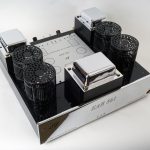
EAR Yoshino 890 Valve Power Amplifier
6 938,00 €
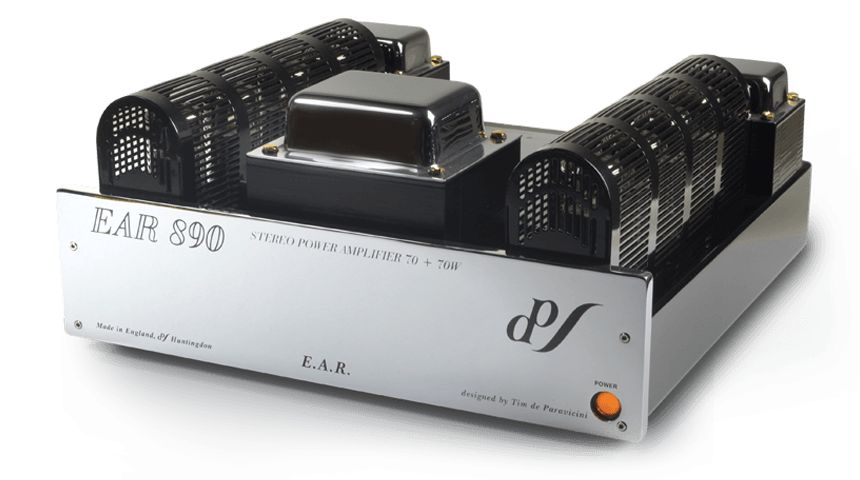
EAR Yoshino 890 is a valve power amplifier for a separates-based stereo system. It delivers 70 W in Class A when used in stereo mode or 140 W in monoblock mode. Balanced transformer-coupled and unbalanced inputs allow the connection to be selected to suit the preamplifier. Separate channel-level controls help fine-tune the left and right sides of the system.
EAR Yoshino 890 is a valve power amplifier for a separates-based stereo system. It is designed for listeners who prefer to choose their preamplifier and power amplifier independently. The unit can operate either as a two-channel stereo amplifier or as a single-channel monoblock.
Role in the audio system
This is a valve power amplifier that receives its signal from a preamplifier. The preamplifier handles source selection and everyday control of the overall listening volume, while the 890 raises the signal to the level required to drive the loudspeakers.
One unit can power the left and right channels of a conventional stereo system. In monoblock mode, a separate 890 is used for each stereo channel. A complete two-channel monoblock system therefore requires two amplifiers.
Valve circuitry and construction
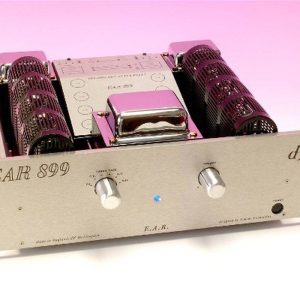
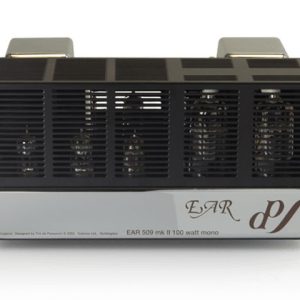
Tim de Paravicini developed the 890 circuitry from the design used in the EAR 834 integrated amplifier. Its power stage uses EI-manufactured KT90 output valves, with two pairs of KT90 valves assigned to each channel.
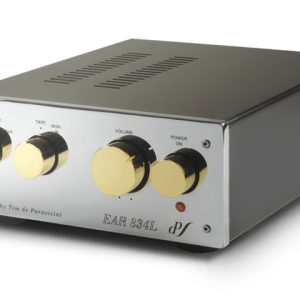
The amplifier uses the same chassis format as the EAR 834. Its front panel is made from thick brass, heavily chrome-plated and polished to a mirror finish.
No additional technical adjustment of the valve operating parameters is required from the user. Separate level controls for the two channels are provided for routine system setup.
Balanced and unbalanced inputs
The amplifier offers a choice of balanced and unbalanced inputs. Use the connection type provided by your preamplifier. The specific connector formats and standards are not defined in the available information.
The balanced inputs are transformer-coupled. This is relevant in systems where a balanced signal path is to be maintained through to the power-amplifier stage. A balanced connection can also be useful with longer cable runs that may be exposed to electromagnetic interference.
Choose the unbalanced input when using a preamplifier with a corresponding unbalanced output. The connection type does not change the role of the 890; it simply makes it possible to incorporate the amplifier into stereo systems built around different connection arrangements.
Setting the channel levels
Each channel has its own level control. During initial setup, place both controls at matching positions. Normal listening volume can then be adjusted from the preamplifier.
If the listening position is not equally distant from both loudspeakers, the individual channel levels can be refined separately. Make changes in small steps. From the listening position, vocals should remain centred between the loudspeakers and the soundstage should not pull noticeably to either side.
One possible application is to use the amplifier for the front channels of a home cinema system. Compatibility must, however, be checked against the line-level preamplifier outputs of the processor or AV amplifier. If the connection is suitable, channel levels are set during system calibration, after which it is sensible to leave the selected control positions unchanged.
Stereo and monoblock operation
Stereo mode allows one chassis to drive two loudspeakers. This is the simpler configuration, requiring one amplifier and one pair of signal connections. The specified output in this mode is 70 W in Class A.
In monoblock mode, the entire amplifier is used for a single channel and the stated output rises to 140 W. The higher power figure is achieved by giving up two-channel operation within one amplifier.
The choice between modes should be based on the system as a whole rather than the power figure alone. Loudspeaker sensitivity, nominal impedance, listening distance and the desired listening level all matter. A monoblock pair will also require two spaces on the equipment rack.
Placement and operating conditions
KT90 valves and Class A operation generate heat. Place the amplifier on a strong, open surface with unrestricted airflow. Do not cover the valves or install the chassis inside an enclosed cabinet.
Another component should not be placed above the amplifier, as this would obstruct the escape of warm air and make the valves harder to access. When using a monoblock pair, arrange the two units so that both receive similar ventilation.
Final adjustment of the separate channel controls is best carried out after the loudspeakers and listening position have been established. If the loudspeaker positions, listening distance or room layout changes, reassess the channel balance.
Technical specifications
| Model | EAR Yoshino 890 |
|---|---|
| Type | Valve power amplifier |
| Operating modes | Stereo and monoblock |
| Output power in stereo mode | 70 W, Class A |
| Output power in monoblock mode | 140 W |
| Output valves | EI KT90 |
| Valve configuration | Two pairs of KT90 valves per channel |
| Balanced inputs | Yes, transformer-coupled |
| Unbalanced inputs | Yes |
| Controls | Separate level control for each channel |
| Circuit basis | EAR 834 integrated-amplifier circuitry |
| Designer | Tim de Paravicini |
| Chassis format | Same format as the EAR 834 |
| Front-panel material | Thick brass |
| Front-panel finish | Heavily chrome-plated and polished to a mirror finish |
| Additional technical adjustments | Not required from the user |
FAQ
Does this power amplifier require a preamplifier?
In a conventional system, it is connected to a preamplifier. The preamplifier selects the source and controls overall volume. The 890’s channel controls are intended primarily for matching the system levels.
When should I use the balanced input?
Use it when your preamplifier has a balanced output. The 890’s balanced inputs are transformer-coupled. The unbalanced input is intended for a system with a corresponding unbalanced output.
How should I begin adjusting the two channel levels?
Start with both controls at equally low positions. Increase the level gradually and listen from the main seating position. Make individual corrections only if the soundstage clearly pulls to one side.
Is one amplifier sufficient for a stereo system?
Yes. In stereo mode, one unit drives both channels. In a monoblock configuration, a separate amplifier is required for each channel.
Can the 890 be connected to a home cinema system?
This is only a possible general connection scenario. Compatibility must be checked using the AV component’s line-level preamplifier outputs. The supplied information does not confirm compatibility with any particular processor or AV amplifier.
Where should the valve amplifier be placed?
Place it on an open, stable shelf and leave sufficient room for air to circulate. Do not put other components on top of the chassis, and never cover the valve area.
Do I need to adjust the valve operating parameters myself?
For everyday use, the owner adjusts only the channel levels. Technical valve adjustment is not required.
Are the amplifier’s dimensions and weight specified?
No. These measurements are not included in the supplied information. Confirm them before planning space on an equipment rack, while also allowing adequate clearance for air circulation.