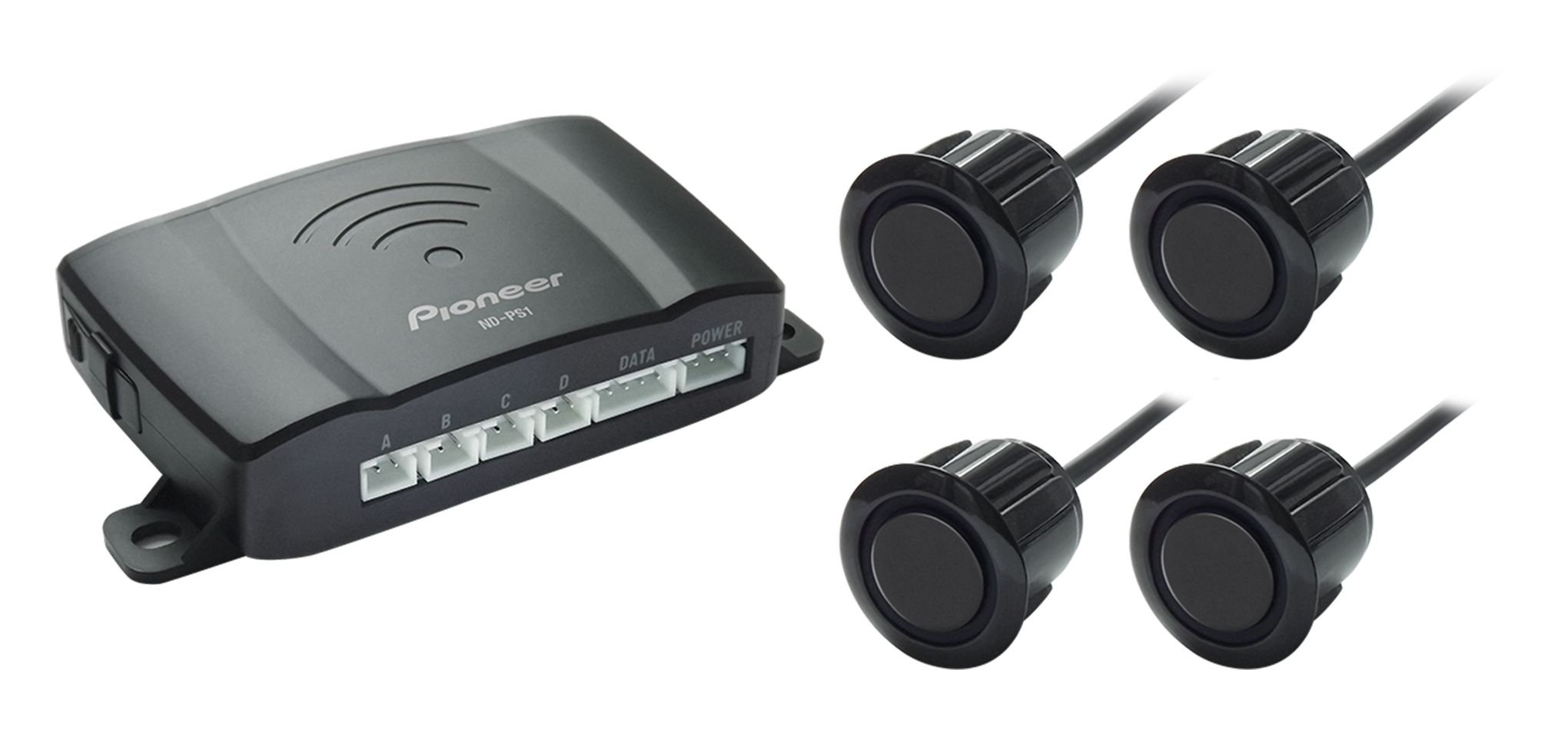


Pioneer ND-PS1 Parking Sensors
55,00 €
Pioneer ND-PS1 is a wired system with four rear parking sensors, designed for the SPH-10BT or SPH-20DAB car stereo. It provides audible and visual warnings to help assess obstacles while manoeuvring. The specified detection range is 0.3-2.5 m. Installation requires four 19 mm holes and a connection to the reversing-light circuit.
Pioneer ND-PS1 parking sensors provide a wired rear parking assistance system with four sensors. The system is designed to detect obstacles behind the vehicle while reversing. Its specified detection range is 0.3 to 2.5 metres.
Audible and visual warnings are delivered through a compatible car stereo, helping the driver assess the situation while manoeuvring. The sensors do not replace direct observation, mirrors or normal parking safety checks.
Purpose and operating principle
Four sensors mounted in the rear bumper monitor the area behind the vehicle. Their positioning allows the system to detect obstacles across different zones at the rear.
The sensors use ultrasonic waves to detect obstacles. Performance depends on sensor position and direction, the obstacle’s surface and the surrounding conditions. The stated 2.5 m limit is therefore not a guaranteed detection distance for every object.
Each sensor has a 2.5 m cable, allowing the wiring to be routed from the rear bumper to the control box. Because this is a wired system, installation requires a safe cable route through the vehicle.
Connection to the car stereo
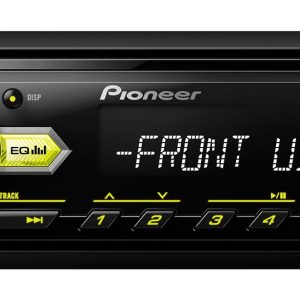
Direct connection is intended for the Pioneer SPH-10BT and Pioneer SPH-20DAB car stereos. The system should not be treated as a universal accessory for other Pioneer models. Check the exact model installed in the vehicle before ordering.
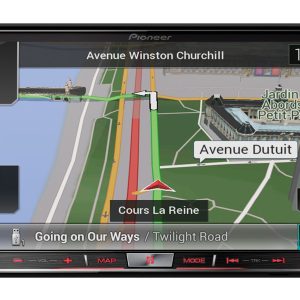
The control box must be connected to the reversing-light circuit so that the system activates when reverse gear is selected. The compatible car stereo then provides the audible and visual warnings.
In the seller’s description, the Pioneer Smart Sync parking-assistance display on a compatible phone is associated with the SPH-20DAB. Current app availability and phone compatibility must be checked before purchase.
Installation requirements
All four sensors are fitted in the rear bumper. The specified installation height is 55-65 cm above the ground. Correct positioning matters because sensors installed too high or too low may assess obstacles differently.
Each sensor requires a 19 mm mounting hole. A hole saw of the correct diameter is included. Before drilling, inspect the bumper’s internal structure and plan the cable-routing path.
This system is not suitable for a metal bumper. The sensors must not be painted, as a layer of paint may interfere with ultrasonic reception and reduce obstacle-detection performance.
Installation involves modifying the bumper and making electrical connections. Professional fitting by a specialist vehicle workshop is therefore recommended. Correct sensor direction and secure connections directly affect system operation.
Detection limitations and environmental effects
The nearest boundary of the specified range is 30 cm. An obstacle closer than this may fall outside the defined detection zone, so the area around the vehicle requires particularly careful observation during close manoeuvres.
Very small, elevated, smooth, round or sound-absorbing objects may remain undetected because these characteristics affect how ultrasonic waves are reflected. The system also cannot indicate an obstacle located outside the area monitored by the sensors.
Heavy rain, snow, moisture or ice accumulated on the sensors may affect operation. Warnings can also vary when reversing over gravel, uneven surfaces or slopes, or through tall grass. Remove snow and dirt from the sensors before driving.
The sensors have a wider operating-temperature range than the control box, although extreme temperatures may still influence detection. The sensors carry an IP67 protection rating, but this rating does not apply to the control box or the complete installation.
Testing after installation
After connection, test the system in a safe location using a clearly visible obstacle. Check different areas behind the rear bumper to assess the position of each sensor and the way warnings are presented.
Move slowly during testing and continue observing the surroundings. If one area responds differently, first check the relevant sensor’s position, direction and connection. Never test or use the system by relying solely on its warnings.
Technical specifications
| Product type | Wired rear parking assistance system |
|---|---|
| Number of sensors | 4 |
| Detection range | 0.3-2.5 m; the maximum limit is specified under test conditions |
| Sensor cable | 2.5 m for each sensor |
| Rated current | 10-30 mA at 14.4 V DC |
| Control-box operating temperature | -20 to 70 °C |
| Sensor operating temperature | -30 to 80 °C |
| Sensor protection rating | IP67 |
| Installation height | 55-65 cm above the ground |
| Mounting holes | 19 mm |
| Included installation tool | 19 mm hole saw |
| Electrical connection | Reversing-light circuit |
| Compatible car stereos | Pioneer SPH-10BT and Pioneer SPH-20DAB |
| Warning presentation | Audible and visual warnings through a compatible car stereo |
| Phone display | Associated in the seller’s description with the SPH-20DAB and Pioneer Smart Sync; current app availability and phone compatibility must be checked before purchase |
| Bumper restriction | Cannot be installed in a metal bumper |
| Painting | The sensors must not be painted |
FAQ
Is the system compatible with every Pioneer car stereo?
No. Direct connection is intended for the SPH-10BT and SPH-20DAB. Compatibility with other car stereos should not be assumed.
Does the parking information require a separate display?
No separate display is specified. Warnings are provided through a compatible car stereo. The seller’s description associates the phone display with the SPH-20DAB and Pioneer Smart Sync, but current app availability and phone compatibility must be checked before purchase.
Can the sensors be installed in any vehicle?
The bumper must accommodate four 19 mm holes at the correct height. Vehicles with a metal bumper are not suitable for this system.
Can I install the system myself?
Installation requires drilling the bumper, routing cables and connecting the control box to the reversing-light circuit. If you do not have experience with this type of work, choose a specialist vehicle workshop.
Can the sensors be painted to match the vehicle?
No. Before purchasing, consider whether the appearance of the unpainted sensors will suit the vehicle.
Does the system detect every obstacle up to 2.5 metres away?
No. Detection depends on the obstacle’s size, height, shape and surface, as well as environmental conditions. The stated maximum range was achieved under defined test conditions.
How should the sensors be maintained in winter?
Remove snow and ice from them. Accumulated deposits can affect ultrasonic-wave transmission and the accuracy of the warnings.
Can I rely entirely on the parking-sensor warnings?
No. This is an assistance system. While manoeuvring, always observe the surroundings, use the mirrors and carry out normal parking safety checks.
Related products