Audio System AE30 Midrange Speaker
180,00 €
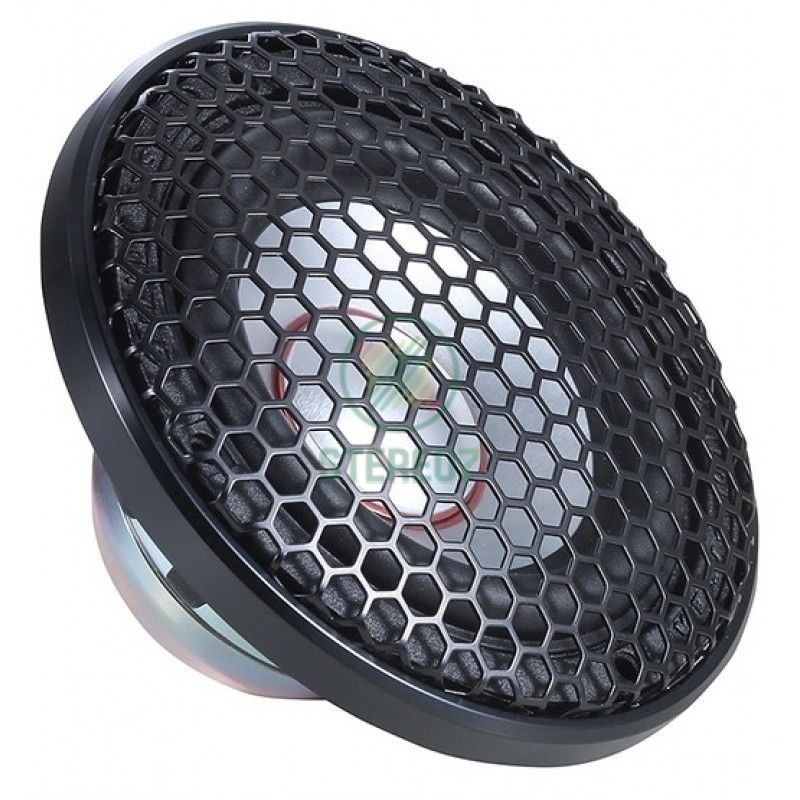
Audio System AE30 is a 3-inch midrange speaker for a car audio system. Its construction includes an aluminum cone, rubber surround, ventilated die-cast aluminum basket, and neodymium magnet. Plan for an 86 mm mounting opening and 42 mm of mounting depth. The published rated input power is 30 W RMS; the 3.6 Ω figure is DC resistance, not nominal impedance.
Audio System AE30 is a 3-inch midrange speaker for a car audio system. It is intended for a system in which separate speakers reproduce different parts of the frequency range. When choosing this model, its published 30 W rated input power is also an important consideration.
Construction and why it matters
The speaker has an aluminum cone and a rubber surround. The cone is the moving part that reproduces sound, while the surround allows it to move relative to the basket. During installation, avoid pressing on the cone or its edge. Apply installation force at the mounting points instead.
A ventilated die-cast aluminum basket and a neodymium magnet are also part of the AE30’s construction. Allow space behind the mounting surface for the entire speaker assembly, rather than judging fit from the visible front alone. Keep the basket’s ventilation openings clear of trim and installation materials.
Choosing a mounting location
Check two separate measurements at the intended position in the car door or another mounting location. The 3-inch figure is the speaker’s nominal size; it does not mean the speaker will fit a 3-inch cutout. The listed mounting diameter is 86 mm, and the mounting depth is 42 mm behind the mounting plane.
An opening with a suitable diameter is only part of the fit check. Glass, trim, or another mechanism may still obstruct the space behind it. In a door, check that the moving window does not enter the space the speaker needs at any point along its travel. Measure at the intended mounting plane, since the edge of a visible trim opening may differ from the mounting opening beneath it. If either dimension cannot be accommodated, choose another mounting location or a speaker with different dimensions.
Integrating it into a sound system
The AE30 is a midrange speaker component, so its role depends on the other speakers in the system. The crossover must direct the appropriate part of the signal to it. The published frequency range alone does not specify a particular crossover setting or slope.
If your system has an adjustable crossover, begin by considering the operating ranges of the adjacent speakers. Then adjust the transition between them while listening from the usual listening position. Do not treat this model’s stated 100 Hz lower limit as a universal filter setting. The final choice depends on the complete system and how its speakers work together.
The listed 3.6 Ω DC resistance is different from a speaker’s nominal impedance. That number alone is therefore insufficient to decide whether the AE30 suits a particular amplifier. Check the amplifier’s load requirements and the proposed wiring arrangement for all speakers connected to it.
Understanding the published figures
30 W is the published rated input power, also described as RMS power. It is not a maximum power rating. The 88 dB sensitivity figure is specified at 1 W and 1 m. Keep those measurement conditions in mind when comparing it with figures for other speakers.
The stated frequency range runs from 100 Hz to 20 kHz, but no tolerance is given. Its endpoints therefore do not show how evenly the speaker reproduces every frequency between them. Qms and Qes describe mechanical and electrical damping, respectively; Qts expresses their combined result. These figures are useful when assessing the driver as part of a planned installation.
Mms describes moving mass, while Vas is an equivalent air volume. Vas is a driver parameter, not an instruction to build an enclosure of that exact volume. Consider these parameters alongside the intended mounting environment and the other components in the system.
Technical specifications
| Type | Midrange speaker |
|---|---|
| Nominal size | 3 inches |
| Cone | Aluminum |
| Surround | Rubber |
| Basket | Ventilated die-cast aluminum |
| Magnet | Neodymium |
| Rated input power | 30 W RMS |
| Frequency range | 100 Hz-20 kHz; tolerance not specified |
| Sensitivity | 88 dB at 1 W / 1 m |
| DC resistance | 3.6 Ω |
| Qms | 3.9 |
| Qes | 0.53 |
| Qts | 0.46 |
| Moving mass, Mms | 2.9 g |
| Equivalent air volume, Vas | 0.21 l |
| Weight | 0.235 kg |
| Mounting depth | 42 mm |
| Mounting diameter | 86 mm |
FAQ
Is this speaker intended to reproduce bass?
It is a midrange speaker. If you want your car audio system to reproduce the lowest frequencies as well, the system needs a suitable component for that purpose. The stated 100 Hz lower limit does not make the AE30 a bass speaker.
Are mounting rings and grilles included?
The package contents for this store listing are not specified. If rings or grilles are necessary for your installation, check whether they are included before ordering.
Can I connect it directly to my existing amplifier?
The 3.6 Ω DC resistance figure alone cannot confirm that. Assess the load on the amplifier using the complete wiring arrangement. A midrange speaker also needs appropriate frequency division within the system.
Which crossover setting should I choose?
There is no single setting that suits every system. Consider the operating ranges of the neighboring speakers, then listen and adjust the transition between them. The published 100 Hz limit is not, by itself, a ready-made filter setting.
Can I use two of these speakers in a car stereo system?
Two midrange speakers can be planned for the left and right channels. Choose the wiring and filtering for each channel according to the complete system. The number of units in the package is not stated here, so check the quantity you need for both channels before ordering.
What does the 0.21 l Vas value mean?
Vas is a speaker parameter used when assessing how the driver will operate in its mounting environment. It does not mean the speaker requires an enclosure with a volume of exactly 0.21 l.