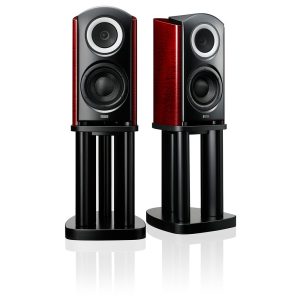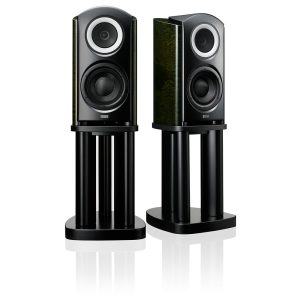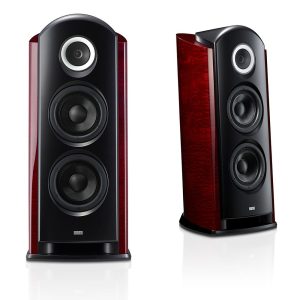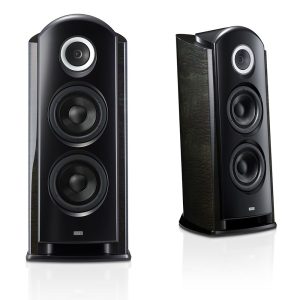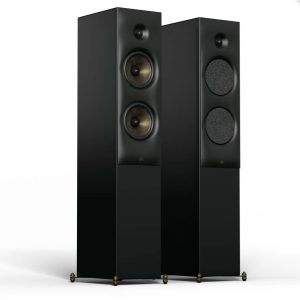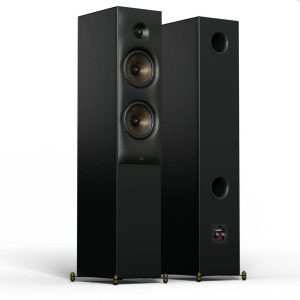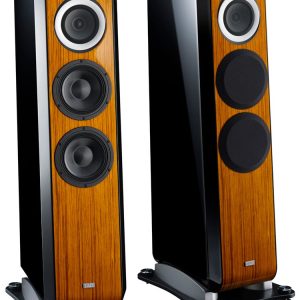



Tannoy EATON Bookshelf Speakers
6 000,00 €
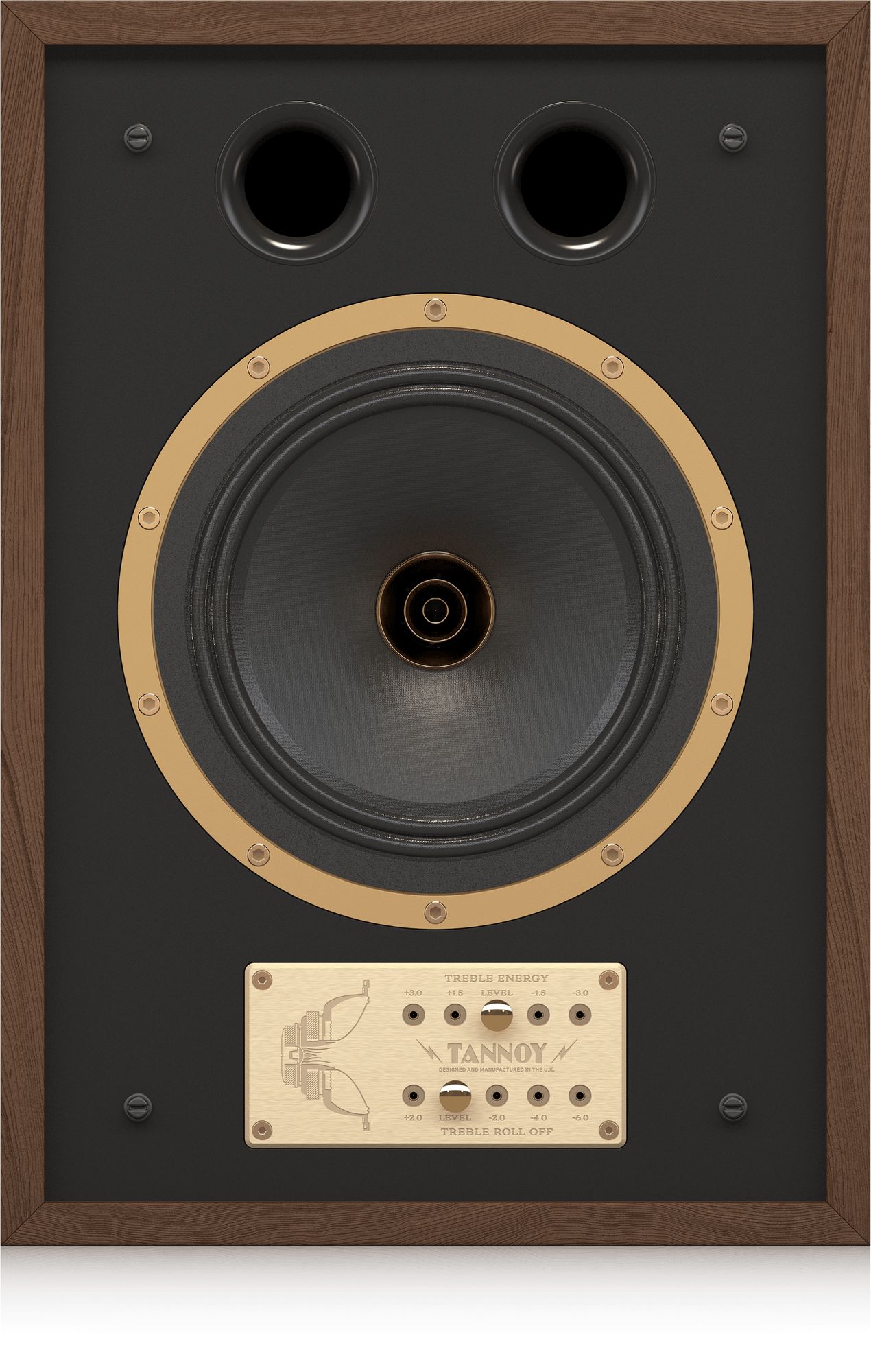
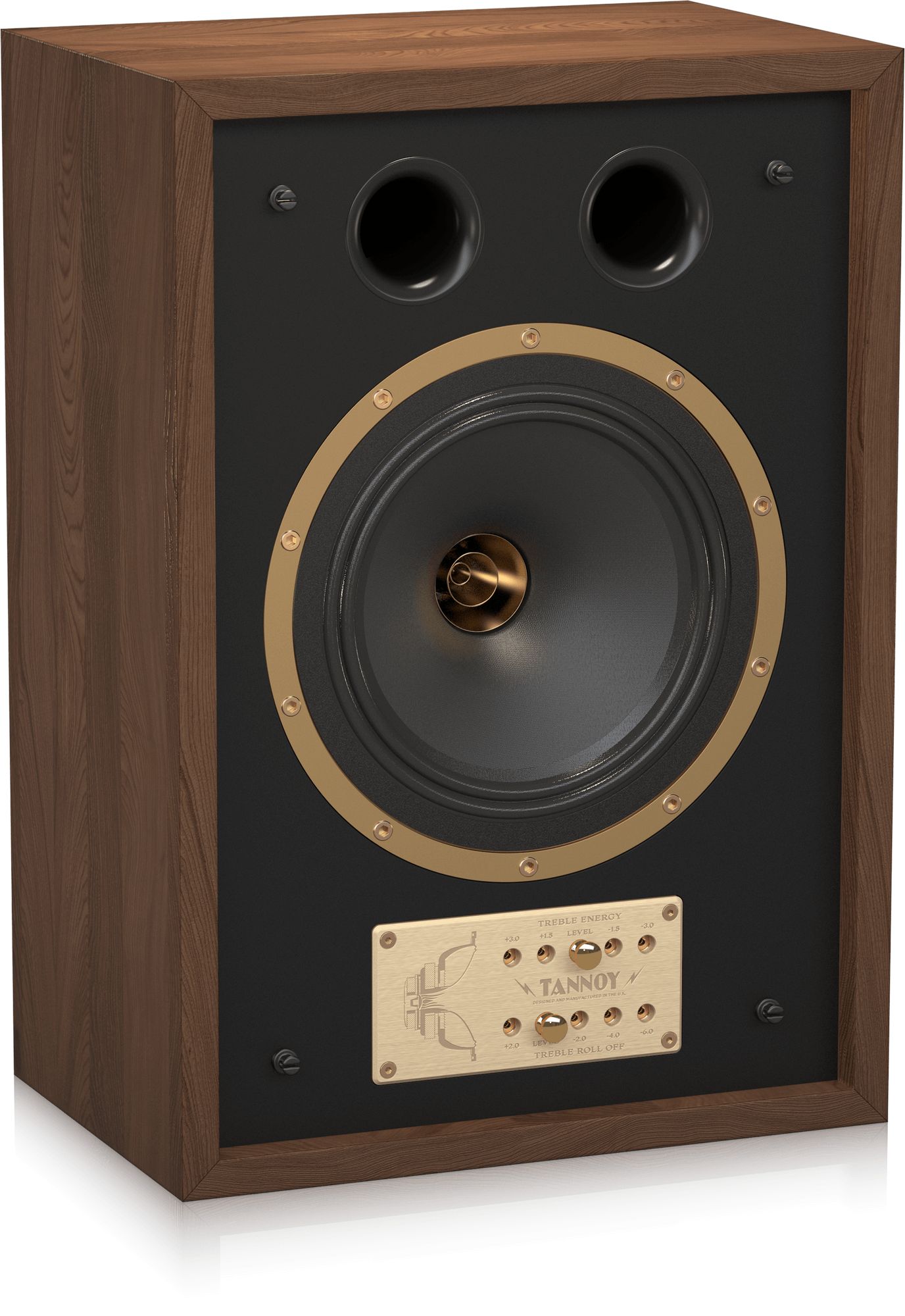
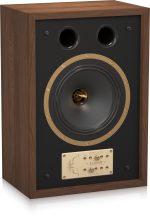
Tannoy EATON is a passive two-way bookshelf speaker designed for music listening in a home stereo system. Its 10-inch Dual Concentric driver places the low-frequency and high-frequency sections on the same axis. Front-mounted two-band controls let you adjust the frequency balance to suit the room. Recommended amplifier power is 20-200 W, while nominal impedance is 8 ohms. A fifth WBT terminal helps reduce radio-frequency interference.
Tannoy Legacy Eaton speakers are passive two-way bookshelf speakers designed for a home stereo system. Each enclosure features a 10-inch Dual Concentric driver, with the low-frequency and high-frequency sections arranged on the same axis. A nominal impedance of 8 ohms and a recommended amplifier power range of 20-200 W help you select suitable electronics for the system.
Design and sound reproduction
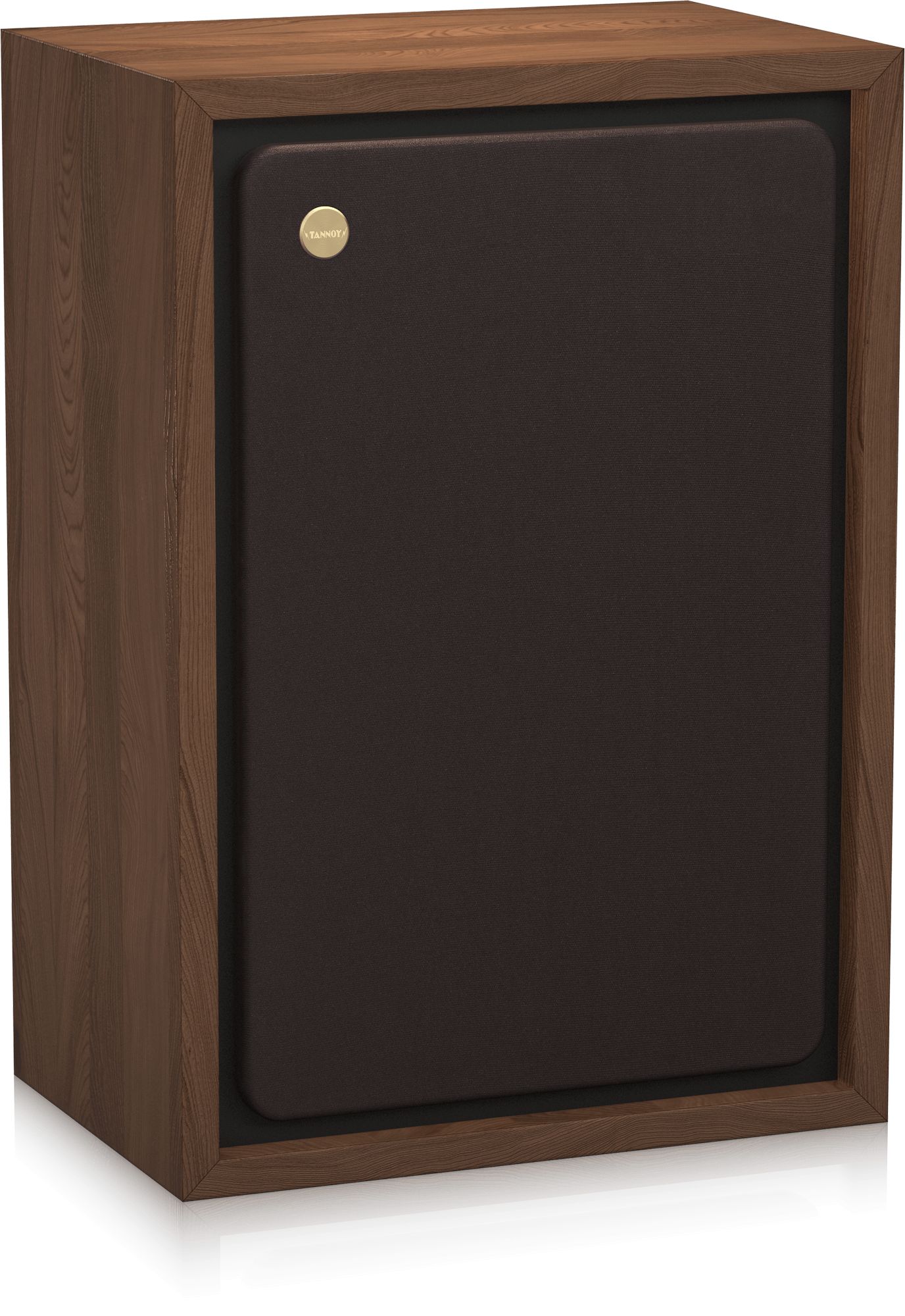
The model follows the design principles of the 1970s HPD series, combining that heritage with updated drivers and electronic components. Each cabinet is handcrafted in workshops operated by the Tannoy team in Poland and the United Kingdom.
The internal crossover uses separate paths for the low-frequency and high-frequency sections. A 1.2 kHz crossover frequency distributes the signal between the two sections of the coaxial driver. The cabinet also incorporates two distributed bass-reflex ports.
Connecting the amplifier
The amplifier signal is carried through speaker cables to five 4 mm WBT binding posts. These Tannoy-customised terminals have a multilayer 24-carat gold-plated finish. The fifth terminal is intended to reduce radio-frequency interference and improve midrange clarity.
Because this is a passive speaker, the music source connects to the amplifier rather than directly to the speaker. Maintain matching polarity on both stereo channels when connecting the cables.
Adjusting the frequency balance for your room
The front-mounted two-band energy control provides separate adjustment of the low and high frequencies. Begin with both controls in their neutral positions and change only one band at a time.
If the room reinforces the bass excessively, reduce the low-frequency level. If the sound is too subdued, carefully raise the high-frequency level. Make the final assessment from your usual listening position.
Placement
Each cabinet measures 538 × 376 × 250 mm, so it requires a strong stand or a suitably sized shelf. The pair weighs 40 kg, making it sensible to plan the supporting surface and final position before installing the system.
Place the centre of the coaxial driver approximately at ear level. Position both speakers symmetrically in relation to the listening seat, and do not obstruct the cabinet ports. Adjust the distance from surrounding walls by listening, as the room will affect the low-frequency balance.
Understanding the power ratings
20-200 W is the recommended amplifier power range. It is not the speaker’s continuous power-handling rating. Power handling is specified as 100 W continuous and 400 W short-term peak, so the 400 W figure should not be interpreted as a continuous rating.
Tannoy Legacy Eaton technical specifications
| Type | Passive two-way bookshelf or stand-mount speaker |
|---|---|
| Driver | 10-inch Dual Concentric coaxial driver with separate low-frequency and high-frequency sections |
| Frequency range | 40 Hz-30 kHz, ±6 dB |
| Recommended amplifier power | 20-200 W |
| Power handling | 100 W continuous, 400 W short-term peak |
| Sensitivity | 89 dB |
| Nominal impedance | 8 ohms |
| Crossover frequency | 1.2 kHz |
| Crossover | Separate paths for the low-frequency and high-frequency sections |
| Cabinet | Two distributed bass-reflex ports |
| Controls | Front-mounted two-band low-frequency and high-frequency energy control |
| Connections | 5 × 4 mm Tannoy-customised WBT binding posts with multilayer 24-carat gold plating |
| Dimensions | 538 × 376 × 250 mm per cabinet |
| Net weight | 40 kg per pair |
| Manufacture | Cabinets handcrafted in workshops in Poland and the United Kingdom |
| Design heritage | Based on the HPD series, with updated drivers and electronic components |
FAQ
Do these speakers require an amplifier?
Yes. These are passive speakers without a built-in amplifier. Choose a stereo amplifier within the recommended 20-200 W power range.
How do I connect them to a stereo amplifier or AV receiver?
Use the device’s speaker outputs and suitable speaker cables. Connect the cables to the 4 mm WBT binding posts while maintaining the same polarity on both channels.
Which positions should I use for the front controls initially?
Start with both bands set to their neutral positions. You can then adjust either the low or high frequencies separately to suit the room acoustics.
Can the speakers be placed on a shelf?
Yes, provided that the shelf is stable, suitably sized and does not obstruct the cabinet ports. A sturdy stand makes it easier to align the driver height with the listening position.
Is a 200 W amplifier suitable?
Yes. A 200 W amplifier is within the stated recommended range of 20-200 W. The 400 W figure refers only to the speaker’s short-term peak power handling.