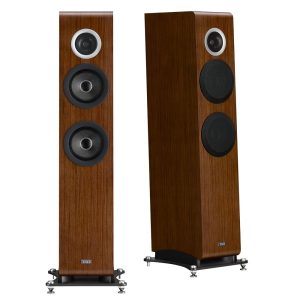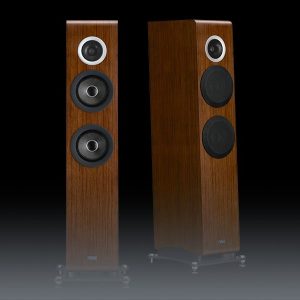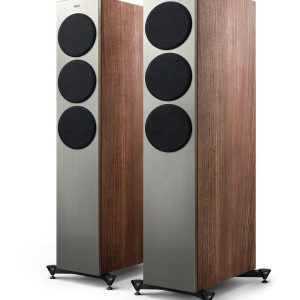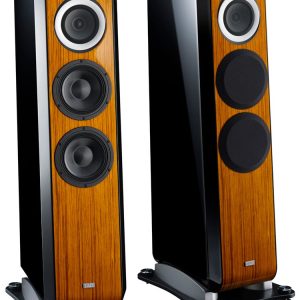


Sonus Faber OLYMPICA I Speaker
5 598,00 €
Sonus Faber OLYMPICA I is a two-way speaker for a home stereo system. Its 29 mm DAD driver handles the high frequencies, while the 150 mm M18 XTR-04 covers the midrange. Each frequency range therefore has a dedicated driver. The nominal 4-ohm impedance and 40-150 W recommendation help with amplifier selection. The stated 87 dB sensitivity was measured at 2.83 V from a distance of one metre.
Sonus Faber OLYMPICA I is a two-way speaker designed for a home stereo system. It uses separate 29 mm high-frequency and 150 mm midrange drivers, with each driver reproducing its designated frequency range.
Cabinet and Drivers
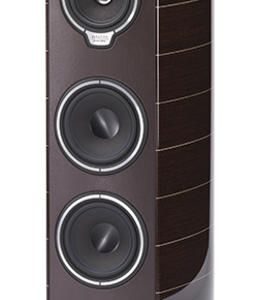
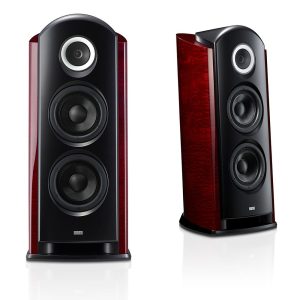
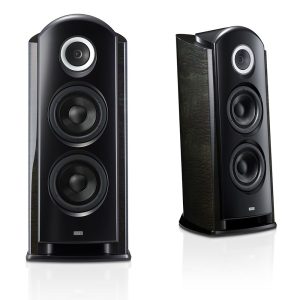
The cabinet features a distinctive Lyra-shaped design. High frequencies are handled by the 29 mm Arrow Point DAD H28 XTR-04 driver. DAD stands for Damped Apex Dome. This design combines the operating principles of a conventional dome and a ring radiator within a single transducer.
The 150 mm M18 XTR-04 driver is responsible for the midrange frequencies.
Connection and Amplifier Selection
The speaker connects to an amplifier’s speaker outputs using speaker cable. Its nominal 4-ohm impedance means that the amplifier must be designed to operate with this load. The recommended amplifier output of 40-150 W helps narrow the choice of suitable models. No continuous or short-term operating mode is specified for this power recommendation.
The upper figure should not be interpreted as the speaker’s continuous power rating. An amplifier’s ability to operate reliably into a four-ohm load is more important than a higher wattage figure on its own. After connecting the speaker, begin at a low volume and increase it gradually. Maintain the same polarity for both stereo channels so that the central stereo image and bass response are not weakened.
The stated 87 dB sensitivity was measured with an input of 2.83 V at a distance of one metre. When comparing this speaker with other models, use sensitivity figures measured at the same voltage and distance. Different test conditions can create a misleading impression of a sensitivity difference.
Positioning in the Listening Room
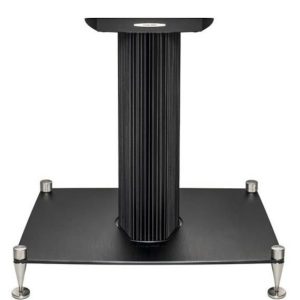
The cabinet measures 354 × 222 × 368 mm. Before installation, allow enough room for all three cabinet dimensions and provide a firm, stable support. When using a stereo pair, place both speakers at the same height and keep their distances from the listening position as similar as possible.
Position the high-frequency drivers as close as practical to the seated listener’s ear level. Begin with a symmetrical arrangement and turn the speakers slightly toward the listening position. Moving the cabinets closer to a wall may strengthen the room’s perceived bass balance. Pulling them farther into the room may reduce this effect, so determine the final position by listening to both channels together.
The stated 50-30,000 Hz frequency range is supplied without a measurement tolerance. The lower limit therefore does not guarantee a particular sound level at 50 Hz at the listening position. Compare this figure only with frequency ranges quoted under similar measurement conditions.
Technical Specifications
| Type | Two-way speaker |
|---|---|
| Design | Lyra shape |
| High-frequency driver | 29 mm Sonus faber Arrow Point DAD H28 XTR-04 |
| DAD construction | Damped Apex Dome combining conventional dome and ring-radiator principles |
| Midrange driver | 150 mm Sonus faber M18 XTR-04 |
| Frequency range | 50-30,000 Hz, tolerance not specified |
| Sensitivity | 87 dB SPL at 2.83 V/1 m |
| Nominal impedance | 4 ohms |
| Recommended amplifier power | 40-150 W, power-rating mode not specified |
| Dimensions | 354 × 222 × 368 mm |
FAQ
Which amplifier output should I use?
Use the amplifier’s speaker outputs and connect them with speaker cable. A line-level RCA output is not designed to power this speaker directly.
What should I check in the amplifier specifications?
Check that the amplifier is designed for a 4-ohm load. The measurement conditions and power-rating mode for the 40-150 W recommendation are not specified.
What are the signs of reversed polarity?
Reversed polarity may weaken the central stereo image and bass response. If this happens, check that the terminals are connected with the same polarity on both channels.
Can the speaker be placed directly against a wall?
The distance from the wall changes the bass balance heard in the room. Begin with some space behind the speaker, then adjust its position while listening to familiar recordings.
Does the 50 Hz limit mean that no additional bass will be needed?
No. This figure does not define the sound level at the lower limit. The final result will depend on the room, speaker placement and the amount of bass the listener prefers.