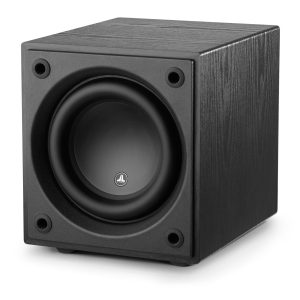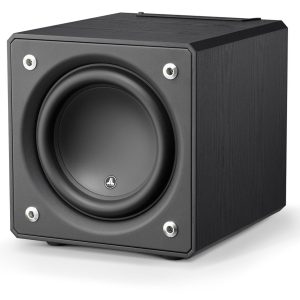
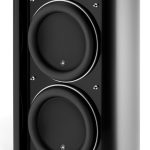
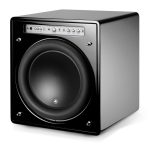
JL Audio Fathom f112v2-GLOSS Active Subwoofer
Original price was: 5 500,00 €.4 500,00 €Current price is: 4 500,00 €.
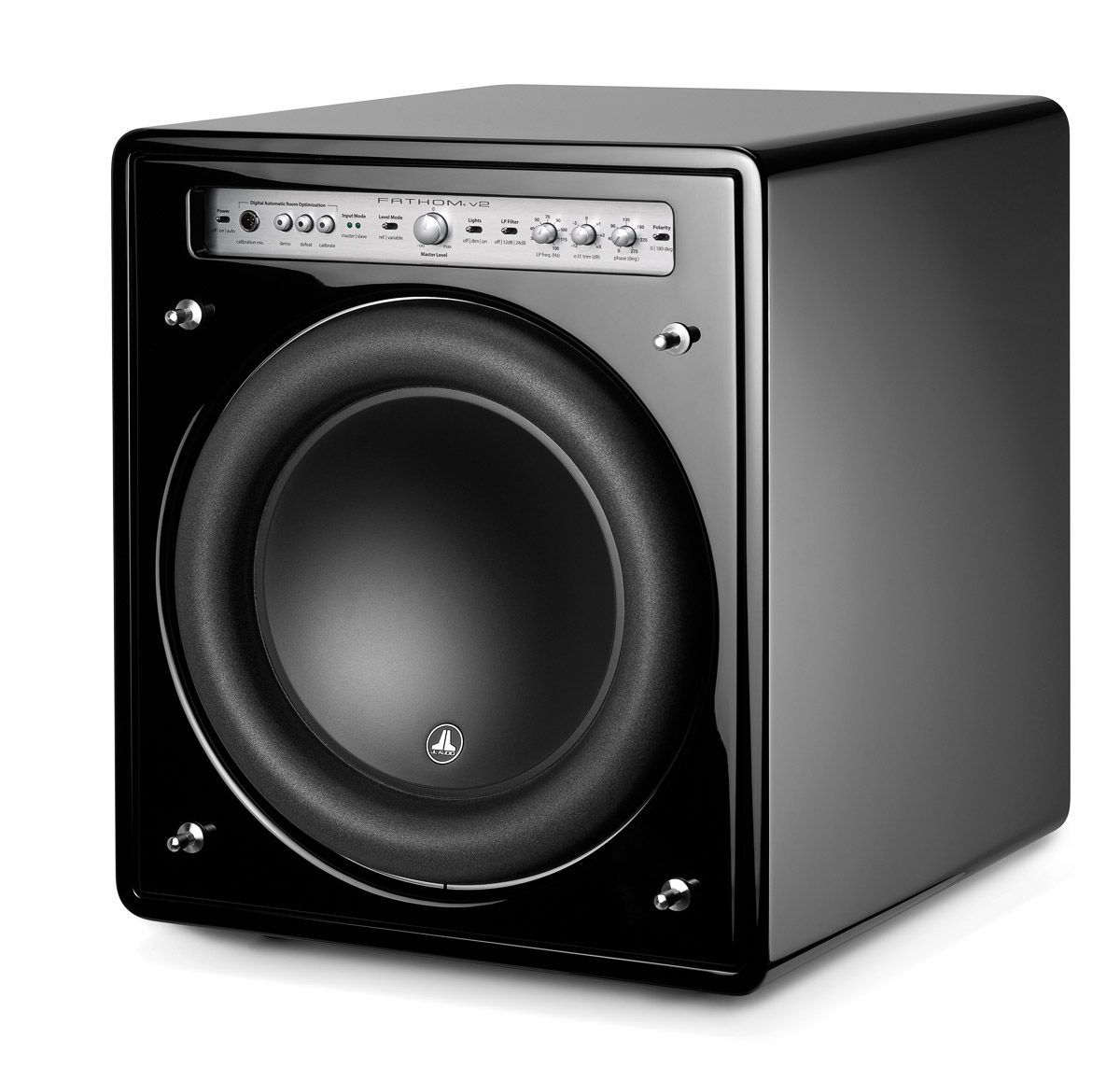
JL Audio Fathom f112v2-GLOSS is an active sealed-box subwoofer designed to extend the bass response of stereo and home cinema systems. Its 21-119 Hz anechoic response with a ±1.5 dB tolerance helps indicate the reproduced range. RCA and XLR inputs allow connection according to the system’s available output. D.A.R.O. calibration adapts its performance to the room acoustics, while phase, filter and level controls support precise integration with the main system.
JL Audio Fathom f112v2-GLOSS is an active sealed-box subwoofer designed for stereo and home cinema systems. It is suited to listeners seeking deep bass reproduction and flexible connection options. Its anechoic frequency response is 21-119 Hz with a ±1.5 dB tolerance. The integrated amplifier delivers 1.8 kW RMS of short-term power.
Who this model is for
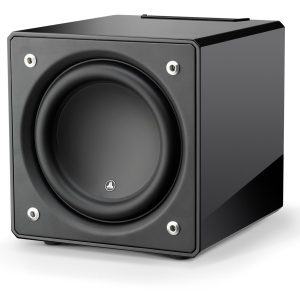
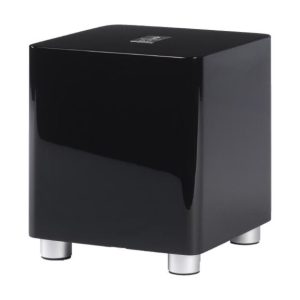
This subwoofer adds the low frequencies that the main speakers may not reproduce deeply enough. Its final bass balance depends on placement and room acoustics, so it is worth choosing the position before calibration. The GLOSS variant has a black high-gloss finish; when selecting it, consider both reflections and the care required by the surface.
The effective piston area is 0.0542 m², while effective displacement is 4.7 litres. These figures help indicate the driver’s ability to move air. They are not a substitute for listening in the room, because placement and room acoustics also affect the result.
Connections and system integration
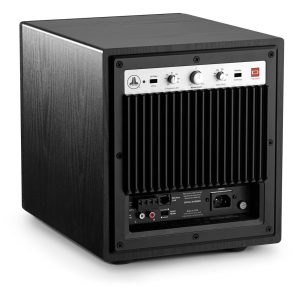
RCA inputs accept an unbalanced stereo or mono signal. This is a conventional choice for an amplifier or AV receiver equipped with a line-level subwoofer output. Two female XLR sockets accept a balanced stereo or mono signal.
Input grounding can be set to isolated or grounded. This option can be useful when addressing ground-related hum within the system. The subwoofer has no high-level input, so it cannot be connected directly to speaker terminals.
Master and Slave modes allow a Master/Slave configuration to be created. One male XLR connector carries a balanced signal to the Slave unit. Conventional line outputs are not provided.
Controls and initial setup
The level control offers fixed reference-gain and variable modes. The variable range extends from full mute to 15 dB above reference gain. Begin with a conservative level, then adjust it from the listening position.
The low-pass filter is adjustable from 30 to 130 Hz. A slope of either 12 or 24 dB per octave can be selected. The filter bypass is useful when crossover duties are already being handled by an AV amplifier or audio processor.
Polarity can be switched between 0° and 180°, while phase is continuously adjustable from 0° to 280°. Compare the settings from the main listening position. Choose the setting that produces the most seamless transition between the main speakers and the subwoofer.
E.L.F. trim at 25 Hz is adjustable from -12 to +3 dB. Use it only after setting the level, filter and phase. This avoids changing several related parameters at the same time.
Calibration and placement
D.A.R.O. digital room optimisation calibrates the subwoofer to suit the room’s acoustics. A laboratory-grade microphone is included for calibration. Carry out the procedure with the subwoofer and listening position in their final locations.
Moving a sealed enclosure closer to a wall will generally increase bass output. The effect is usually even more pronounced in a corner. Select the position first, then adjust the level and run D.A.R.O. calibration.
The 53 kg weight must be considered when choosing a stable supporting surface and when moving the subwoofer. Leave sufficient space to reach the rear connections and controls as well.
Technical specifications
| Type | Active subwoofer |
| Enclosure | Sealed |
| Finish | Black gloss |
| Anechoic frequency response | 21-119 Hz, ±1.5 dB |
| -3 dB limits | 19 Hz and 150 Hz |
| -10 dB limits | 17 Hz and 167 Hz |
| Effective piston area | 84 sq. in. / 0.0542 m² |
| Effective displacement | 287 cu. in. / 4.7 l |
| Amplifier power | 1.8 kW RMS short-term power |
| Power modes | Off, on or automatic signal sensing |
| Lighting modes | Off, on or dim |
| Unbalanced inputs | Two RCA, stereo or mono signal |
| Balanced inputs | Two female XLR sockets, stereo or mono signal |
| High-level input | None |
| Input grounding | Isolated or grounded |
| Input modes | Master or Slave |
| Level control | Fixed reference or variable |
| Level adjustment range | From full mute to +15 dB above reference gain |
| Filter type | Low-pass filter |
| Filter slope | 12 or 24 dB per octave |
| Filter frequency | 30-130 Hz |
| Filter bypass | Yes |
| Polarity | 0° or 180° |
| Phase | Continuously adjustable from 0° to 280° |
| E.L.F. trim | -12 to +3 dB at 25 Hz |
| Line outputs | None |
| Slave output | One balanced male XLR connector |
| Calibration | D.A.R.O.; laboratory-grade microphone included |
| Width | 15.0625 in. / 384 mm |
| Height | 18.5 in. / 470 mm |
| Depth | 17.75 in. / 451 mm |
| Net weight | 117 lb / 53 kg |
FAQ
Can the subwoofer be connected directly to an amplifier’s speaker terminals?
No. It has no high-level input, so a line-level RCA or XLR output is required.
When should I use RCA, and when should I use XLR?
Use the output supported by your source equipment. If both are available, XLR may be useful with a longer cable or when seeking to reduce possible grounding noise, while RCA is suitable for a typical short domestic connection.
Where should I start when setting the frequency filter?
Begin around the lower playback limit of the main speakers. Then adjust the setting by listening for a smooth and seamless transition between frequency ranges.
How should I match the phase and polarity?
Compare several settings from your normal listening position. Keep the setting that provides the smoothest transition and the clearest bass reproduction.
Where is the best place to position the subwoofer?
Start away from the very corner of the room. Move it towards the wall in small steps while monitoring the strength and evenness of the bass.
How do I connect a second subwoofer as a Slave unit?
Connect the balanced XLR output of the Master unit to the XLR input of the Slave unit. Then select the corresponding input modes on both units.