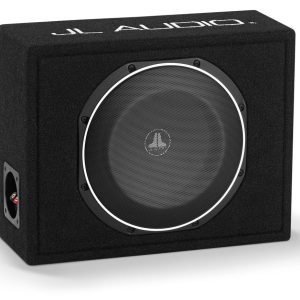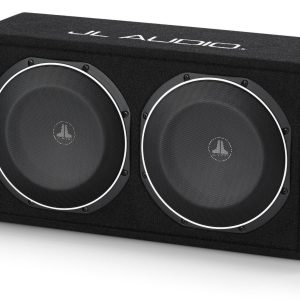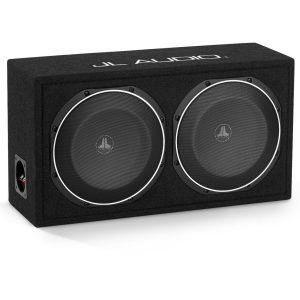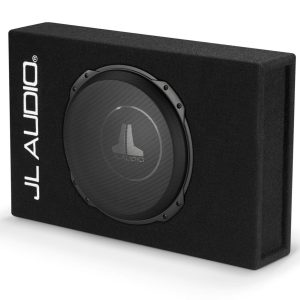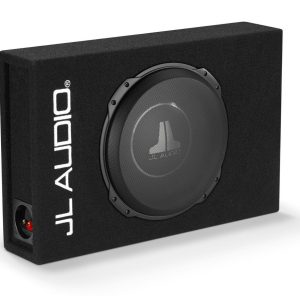
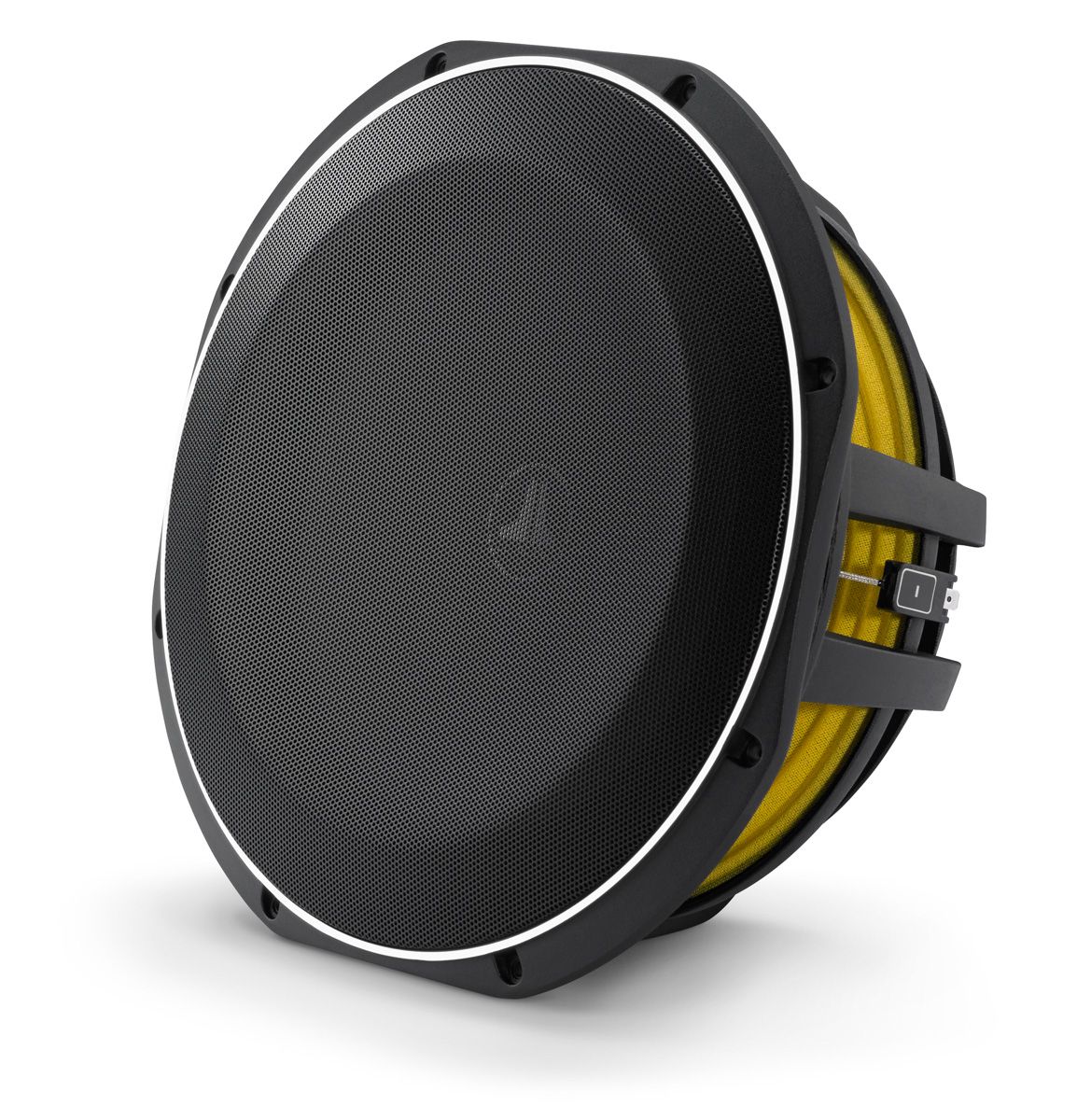




JL Audio 12TW1 Subwoofer Driver
400,00 €
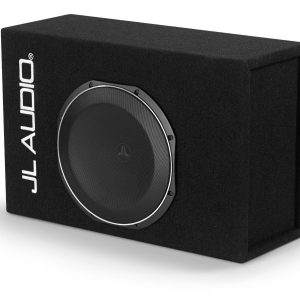
JL Audio 12TW1 is a 12-inch subwoofer driver designed for a vehicle audio system and installation in a separate enclosure. Its 117 mm mounting depth helps where space is limited. The 4 Ω nominal impedance and recommended amplifier range of 75-300 W RMS clearly define the amplifier requirements. It can be used in an 18.41 l sealed or 31.86 l ported enclosure design.
JL Audio 12TW1 is a 12-inch automotive subwoofer driver designed for installation in a separate enclosure. It has a nominal impedance of 4 Ω and continuous power handling of 300 W RMS. The recommended amplifier power range is 75-300 W RMS.
Its 117 mm mounting depth makes installation easier where space is limited. However, the cut-out diameter, motor size and front grille protrusion must also be considered when checking available space.
Amplifier selection and system setup
The amplifier must operate reliably with a 4 Ω load. Its RMS output should fall within the recommended range. When setting the gain, take care to avoid signal distortion, as the position of the gain control does not indicate the amplifier’s actual output power.
The driver is recommended for use in a separately amplified system with satellite speakers. The low-pass filter is best applied actively through the amplifier or an audio processor. A passive inductor-based filter is not recommended because it may impair reproduction.
If the amplifier includes a phase control, compare its settings from the listening position. Choose the setting that produces the smoothest transition between the subwoofer and the rest of the system.
Choosing an enclosure
The specified sealed enclosure has a net internal volume of 18.41 l. Its F3 frequency is 45.44 Hz, while the system Qtc is 0.89. This design occupies less space than the specified ported alternative.
The ported enclosure requires a net volume of 31.86 l. It is tuned to 34 Hz and has a stated F3 of 31.79 Hz. The lower F3 indicates greater extension into the low-frequency range.
The dimensions for both enclosure designs are calculated using 19 mm material. If 16 mm material is used, subtract 6.5 mm from every external dimension. Material thinner than 16 mm may not provide sufficient enclosure rigidity.
The stated enclosure volumes are net figures. When calculating total internal volume, add the displacement of the driver, port and internal bracing. The supplied external design dimensions already account for these elements.
Installation in a vehicle
The mounting cut-out must have a diameter of 281 mm, and the mounting-hole circle must measure 297 mm. Sufficient clearance must be left behind the driver for its 145 mm-diameter motor. At the front, allow for the grille’s 22 mm protrusion.
The enclosure must be rigid and securely attached to the vehicle. Bolting it to the metal floor or frame with large washers is recommended. An unsecured enclosure may move dangerously during a collision.
This driver can exceed a sound pressure level of 100 dB. Prolonged exposure at this volume may cause permanent hearing damage.
Technical specifications
| Type | Automotive subwoofer driver |
|---|---|
| Nominal diameter | 12 inches / 300 mm |
| Continuous power handling | 300 W RMS |
| Recommended amplifier power | 75-300 W RMS |
| Nominal impedance | 4 Ω |
| Overall diameter | 314 mm |
| Mounting cut-out diameter | 281 mm |
| Bolt-hole circle diameter | 297 mm |
| Motor outside diameter | 145 mm |
| Mounting depth | 117 mm |
| Front grille protrusion | 22 mm |
| Driver displacement | 2.04 l |
| Net weight | 7.5 kg |
| Free-air resonance Fs | 32.35 Hz |
| Electrical quality factor Qes | 0.555 |
| Mechanical quality factor Qms | 11.066 |
| Total quality factor Qts | 0.529 |
| Equivalent compliance volume Vas | 33.67 l |
| One-way linear excursion Xmax | 10.0 mm |
| Xmax measurement method | One-way voice-coil overhang without correction factors |
| Sensitivity | 85.15 dB SPL, measured at 1 W / 1 m |
| Sensitivity rating note | This figure alone does not indicate the potential low-frequency output level |
| Effective cone area Sd | 0.0436 m² |
| DC resistance Re | 3.514 Ω |
| Sealed enclosure wall and front-panel thickness | 19 mm |
| Sealed enclosure net volume | 18.41 l |
| Sealed enclosure external dimensions | 673 × 356 × 140 mm |
| Sealed enclosure F3 / Fc / Qtc | 45.44 Hz / 54.41 Hz / 0.89 |
| Ported enclosure wall and front-panel thickness | 19 mm |
| Ported enclosure net volume | 31.86 l |
| Ported enclosure external dimensions | 806 × 406 × 178 mm |
| Internal port width and height | 140 × 57 mm |
| Internal port length | 575 mm |
| Port extension length | 527 mm |
| Ported enclosure tuning frequency Fb | 34.0 Hz |
| Ported enclosure F3 | 31.79 Hz |
FAQ
Which amplifier should I choose?
Choose a model that operates reliably with a 4 Ω load. Its RMS output per channel should fall within the recommended 75-300 W range.
Which enclosure takes up less space?
The sealed 18.41 l design is smaller. The ported version requires 31.86 l of net volume as well as space for its internal port.
Can I use a passive crossover?
A passive inductor-based filter is not recommended. It is better to control the frequency range with an active filter in the amplifier or audio processor.
Is the 117 mm depth enough to assess the required installation space?
No. You must also allow for the 281 mm cut-out, clearance around the motor and the front grille’s 22 mm protrusion.
Can several drivers be installed in one enclosure?
Yes, but the enclosure volume and port dimensions must be recalculated for the selected number of drivers.