

Hasselblad X1D II 50C Mirrorless Camera
6 100,00 €
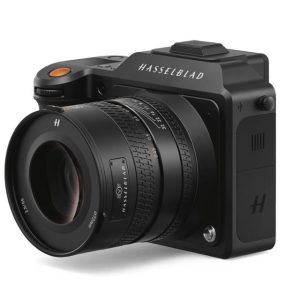
Hasselblad X1D II 50C is a mirrorless medium-format camera for photographers who value highly detailed files. Its 50 MP CMOS sensor records 16-bit RAW and full-resolution JPEG images. A 3.6-inch touchscreen and OLED viewfinder assist with composition and autofocus-point selection. Two UHS-II SD slots can increase capacity or create a backup while shooting.
Hasselblad X1D II 50C is a mirrorless medium-format digital camera designed for high-resolution photography. It belongs to the Hasselblad X System and accepts interchangeable lenses. Its 50 MP CMOS sensor captures 16-bit RAW files or full-resolution JPEG images in-camera.
Medium-format sensor and colour
The 43.8 × 32.9 mm CMOS sensor is individually calibrated for optimum performance. A stated dynamic range of 14 stops helps retain more highlight and shadow information within a single frame.
Hasselblad Natural Colour Solution technology manages colour reproduction. The 16-bit RAW format preserves more information for subsequent tonal and colour adjustments, while full-resolution JPEG is useful when a finished file is required directly from the camera.
Composition and image review
The 3.6-inch touchscreen has 2.36 million dots and a resolution of 1024 × 768. You can enlarge an image with a two-finger gesture and swipe through photographs during review. These controls make it easier to inspect sharpness directly on the screen.
The OLED electronic viewfinder provides 3.69 million dots and 0.87× magnification. The camera menu can be accessed without taking your eye away from the viewfinder, which is especially practical when photographing in bright ambient light.
Focusing and operating speed
The autofocus point can be repositioned by dragging it across the rear display. Pinch and spread gestures change the point size, allowing the focusing area to be adapted quickly for either a small detail or a larger subject.
Live view refreshes at up to 60 frames per second on both the rear screen and the viewfinder. According to the seller, image review and menu operation are faster than on the first-generation X1D. Start-up time, shutter lag and blackout between frames have also been reduced compared with the first-generation X1D.
Connections and shooting workflow
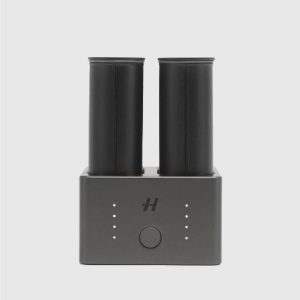
The USB-C connection supports wired image export, tethered shooting and battery charging. The battery can be charged from a computer, charger or external battery. Integrated Wi-Fi provides a wireless option for transferring data.
Phocus Mobile 2 is intended for mobile export and tethered shooting, while desktop editions of Phocus are available for Mac and PC. Operation depends on the versions of the device, operating system, application and camera firmware being used.
An internal GPS module can optionally record shooting-location data automatically. This can help photographers organise archives from travel, location work or commissioned assignments.
Storage, video and body
Two SD card slots support UHS-II cards. The second card can provide additional capacity or store a backup copy of recorded files. Backup recording is worth considering when photographing scenes that cannot be repeated.
Video recording is enabled by firmware version 1.2.0. The camera records 2.7K video at 29.97 frames per second using an 8-bit 4:2:0 colour format.
The body is milled from a solid block of aluminium and incorporates a deep grip. Essential commands remain on physical buttons, while other settings are available through the touchscreen. The battery compartment is housed inside the grip, and a release catch assists with battery removal. The leaf shutter is built into Hasselblad lenses.
Technical specifications
| Type | Mirrorless medium-format digital camera |
|---|---|
| System | Hasselblad X System with interchangeable lenses |
| Sensor | 50 MP CMOS, 43.8 × 32.9 mm |
| Sensor preparation | Individually calibrated |
| Dynamic range | 14 stops |
| Colour technology | Hasselblad Natural Colour Solution |
| Still-image formats | 16-bit RAW and full-resolution in-camera JPEG |
| Rear display | 3.6 inches, 2.36 million dots, 1024 × 768, touchscreen |
| Touchscreen controls | Two-finger image zoom, swipe review, autofocus-point positioning and size adjustment |
| Viewfinder | OLED, 3.69 million dots, 0.87× magnification, menu access |
| Live view | Up to 60 frames per second on the display and in the viewfinder |
| Video recording | 2.7K at 29.97 fps, 8-bit 4:2:0; firmware version 1.2.0 required |
| Memory cards | Two SD slots, both supporting UHS-II |
| Card modes | Additional capacity or backup recording to the second card |
| Connections | USB-C and integrated Wi-Fi |
| Tethered shooting | Phocus Mobile 2 and desktop Phocus |
| Location data | Internal GPS module with optional automatic geotagging |
| Charging | Via USB from a computer, charger or external battery |
| Body material | Milled from a solid block of aluminium |
| Controls | Physical buttons for essential functions and a rear touchscreen |
| Battery location | Internal compartment in the grip with a release catch |
| Shutter | Leaf shutter built into Hasselblad lenses |
FAQ
Who is this camera intended for?
It is intended for photographers who value a medium-format sensor, 16-bit RAW files and an interchangeable-lens system.
Which connection should I use to transfer photographs?
Choose USB-C for wired export or tethered shooting. Integrated Wi-Fi is suitable for wireless operation with supported software.
How can I use the two memory-card slots?
The second UHS-II card can provide extra storage capacity or hold a backup copy of your files. Backup mode reduces the consequences of a failure affecting one card.
What is required for video recording?
Firmware version 1.2.0 must be installed. Video recording is limited to 2.7K resolution at 29.97 frames per second with an 8-bit 4:2:0 colour format.
How can I change the focusing area quickly?
Drag the point to the required position on the screen. Pinch or spread your fingers to adjust its size according to the area occupied by the subject.
Must the battery be removed for charging?
No. The camera supports battery charging over USB from a computer, suitable charger or external battery.
Related products