JL Audio Fathom f113v2-GLOSS Active Subwoofer
5 500,00 €
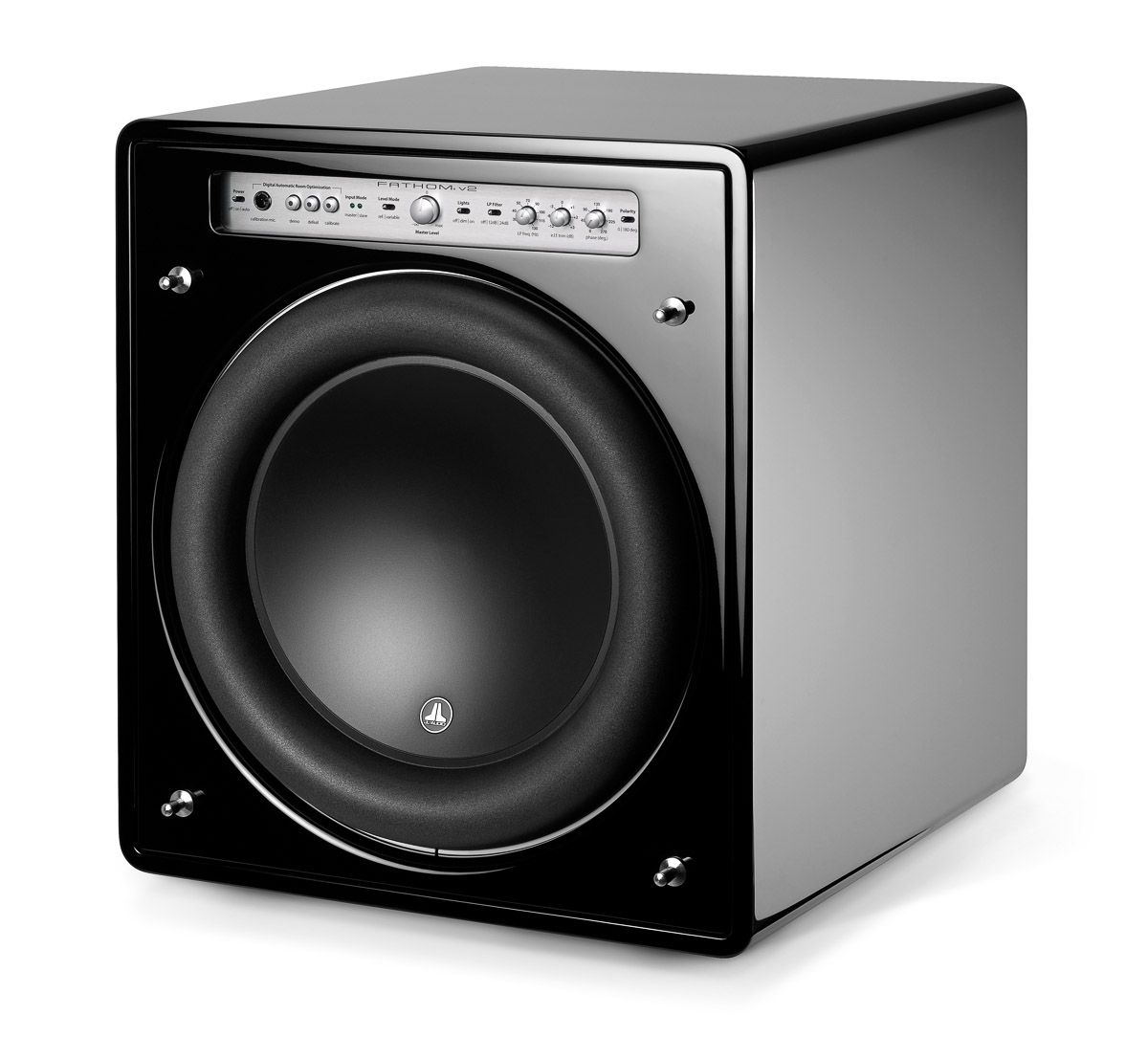
JL Audio Fathom f113v2-GLOSS is an active sealed subwoofer designed for stereo and home cinema systems. Its 3000 W RMS short-term amplifier power provides headroom for sudden low-frequency transients. RCA and XLR inputs allow connection to different types of line-level electronics. D.A.R.O. calibration, using the included microphone, adapts playback to the selected position and the room’s acoustics.
JL Audio Fathom f113v2-GLOSS is an active sealed subwoofer for stereo and home cinema systems. Its anechoic frequency response extends from 20-86 Hz with a ±1.5 dB tolerance. 3000 W RMS short-term power provides headroom for sudden low-frequency transients.
Sealed enclosure and placement
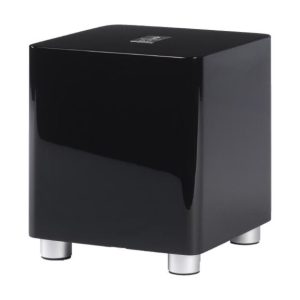
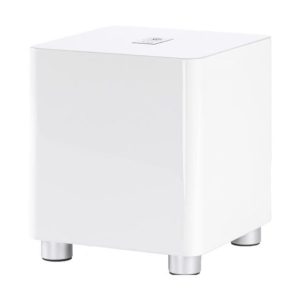
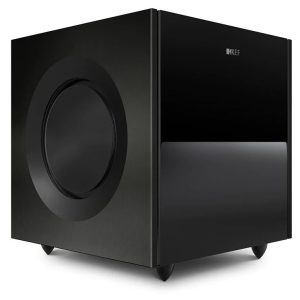
The sealed enclosure has no bass reflex port, so placement does not need to account for port direction or additional clearance around a port opening. The gloss black finish is suited to a visible position within a home audio system.
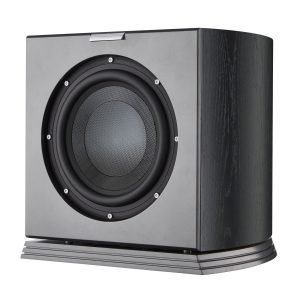
The subwoofer is almost 42 cm wide, while both its height and depth are 48.9 cm. Its 60 kg weight calls for a stable supporting surface and careful planning before moving it. Leave enough room behind the enclosure for the connections and for the cables to bend without strain.
Moving the subwoofer closer to a wall or corner may allow the room to reinforce low frequencies. Compare several possible locations from the main listening position. Choose the final location before carrying out room calibration.
RCA and XLR connections
You can use either two unbalanced RCA inputs or two balanced XLR inputs. Both input pairs accept stereo or mono line-level signals. RCA is convenient with a conventional preamplifier or AV receiver output, while XLR is suitable for electronics equipped with balanced outputs.
There are no speaker-level inputs, so the speaker terminals on an amplifier cannot be used. The input ground can be switched between isolated and grounded modes, helping you match signal grounding to the connected audio system.
Conventional line outputs are not provided. A dedicated balanced XLR output is intended for a compatible second subwoofer. One unit is configured as the Master and the other as the Slave.
Filter, level and phase settings
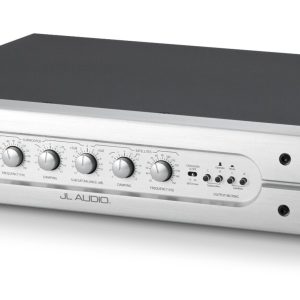
The low-pass filter can be adjusted from 30 to 130 Hz, with a choice of 12 or 24 dB per octave slopes. If no external crossover management is being used, begin with a setting close to the lower-frequency limit of the main speakers.
If an AV receiver is managing the crossover, the built-in filter can be switched off. The fixed Reference mode maintains constant gain. Variable mode allows the level to be adjusted from full mute to 15 dB above reference.
Polarity can be set to either 0 or 180 degrees, while phase is continuously adjustable from 0 to 280 degrees. Compare the settings methodically from the listening position and select the option that gives the smoothest transition between the main speakers and subwoofer.
The E.L.F. control adjusts output around 25 Hz from -12 to +3 dB. Use it only after assessing how the room affects the lowest-frequency region.
Automatic operation and calibration
Automatic power mode switches the subwoofer on when a signal is detected. It can also be set to remain on continuously or be switched off completely. The indicator can be on, off or dimmed.
D.A.R.O. automatic optimisation adapts playback to the room’s acoustics. A laboratory-grade calibration microphone is included. Run calibration only after selecting the subwoofer location and main listening position. If the subwoofer is moved, it is worth repeating the procedure.
Technical specifications
| Type | Active sealed subwoofer |
| Model | JL Audio Fathom f113v2-GLOSS |
| Finish | Gloss black |
| Anechoic frequency response | 20-86 Hz, ±1.5 dB |
| -3 dB limits | 18 Hz and 127 Hz |
| -10 dB limits | 16 Hz and 154 Hz |
| Effective piston area | 107.35 sq. in. / 0.0693 m² |
| Effective displacement | 386 cu. in. / 6.3 l |
| Amplifier power | 3000 W RMS short-term |
| Power modes | Off, on or automatic signal sensing |
| Indicator modes | Off, on or dimmed |
| Unbalanced inputs | Stereo or mono, 2 RCA connectors |
| Balanced inputs | Stereo or mono, 2 female XLR connectors |
| Speaker-level inputs | None |
| Input grounding | Isolated or grounded |
| Input modes | Master or Slave |
| Level control | Fixed reference gain or variable level |
| Variable level range | Full mute to +15 dB above reference |
| Filter type | Low-pass filter |
| Filter slope | 12 or 24 dB/octave |
| Filter frequency range | 30-130 Hz |
| Filter bypass | Yes |
| Polarity | 0 or 180° |
| Phase | Continuously adjustable from 0 to 280° |
| E.L.F. adjustment | -12 to +3 dB at 25 Hz |
| Line outputs | None |
| Slave output | 1 balanced male XLR connector |
| Calibration mode | D.A.R.O. automatic room-acoustic optimisation |
| Calibration microphone | Laboratory-grade microphone included |
| Dimensions | 419 × 489 × 489 mm |
| Net weight | 60 kg |
FAQ
Can this subwoofer be connected to an amplifier’s speaker outputs?
No. It has no high-level inputs. A line-level output from a preamplifier, processor or AV receiver is required, using an RCA or XLR connection.
Which input should I choose: RCA or XLR?
Choose RCA for a conventional unbalanced line output. Use XLR with electronics that provide a balanced signal. Both connection options support mono and stereo signals.
How should I begin setting the filter and phase?
If an AV receiver manages the crossover frequencies, switch off the internal filter. Otherwise, match its cutoff to the main speakers. Adjust phase while listening for a smooth transition between the speakers and subwoofer.
Where is the best place to position this subwoofer?
Begin with a stable location near the system, but do not assume that a corner is automatically best. A wall or corner may reinforce low frequencies. Evaluate every potential location from the listening position.
Can two of these subwoofers be used together?
Yes. A compatible second unit can be connected through the dedicated balanced XLR output. The units are then configured in Master and Slave modes.
What does anechoic frequency response mean?
It describes a measurement taken without the influence of room reflections. In a listening room, the result will be affected by placement, walls and the room’s acoustics.